


Bariatric and metabolic surgery during and after the COVID-19 pandemic: DSS recommendations for management of surgical candidates and postoperative patients and prioritisation of access to surgery
- PMID: 32386567
- PMCID: PMC7252156
- DOI: 10.1016/S2213-8587(20)30157-1
Bariatric and metabolic surgery during and after the COVID-19 pandemic: DSS recommendations for management of surgical candidates and postoperative patients and prioritisation of access to surgery
Abstract
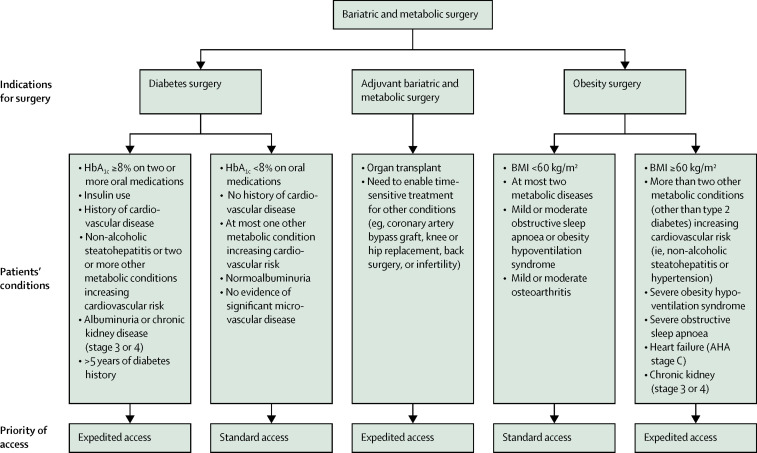
The coronavirus disease 2019 pandemic is wreaking havoc on society, especially health-care systems, including disrupting bariatric and metabolic surgery. The current limitations on accessibility to non-urgent care undermine postoperative monitoring of patients who have undergone such operations. Furthermore, like most elective surgery, new bariatric and metabolic procedures are being postponed worldwide during the pandemic. When the outbreak abates, a backlog of people seeking these operations will exist. Hence, surgical candidates face prolonged delays of beneficial treatment. Because of the progressive nature of obesity and diabetes, delaying surgery increases risks for morbidity and mortality, thus requiring strategies to mitigate harm. The risk of harm, however, varies among patients, depending on the type and severity of their comorbidities. A triaging strategy is therefore needed. The traditional weight-centric patient-selection criteria do not favour cases based on actual clinical needs. In this Personal View, experts from the Diabetes Surgery Summit consensus conference series provide guidance for the management of patients while surgery is delayed and for postoperative surveillance. We also offer a strategy to prioritise bariatric and metabolic surgery candidates on the basis of the diseases that are most likely to be ameliorated postoperatively. Although our system will be particularly germane in the immediate future, it also provides a framework for long-term clinically meaningful prioritisation.
Copyright © 2020 Elsevier Ltd. All rights reserved.
Figures
Comment in
-
Bariatric and metabolic surgery during and after the COVID-19 pandemic.Lancet Diabetes Endocrinol. 2020 Sep;8(9):741-742. doi: 10.1016/S2213-8587(20)30276-X. Epub 2020 Aug 18. Lancet Diabetes Endocrinol. 2020. PMID: 32822594 Free PMC article. No abstract available.
-
Bariatric and metabolic surgery during and after the COVID-19 pandemic.Lancet Diabetes Endocrinol. 2020 Sep;8(9):742-743. doi: 10.1016/S2213-8587(20)30278-3. Epub 2020 Aug 18. Lancet Diabetes Endocrinol. 2020. PMID: 32822595 Free PMC article. No abstract available.
-
Bariatric and metabolic surgery during and after the COVID-19 pandemic.Lancet Diabetes Endocrinol. 2020 Sep;8(9):742. doi: 10.1016/S2213-8587(20)30277-1. Epub 2020 Aug 18. Lancet Diabetes Endocrinol. 2020. PMID: 32822596 Free PMC article. No abstract available.
-
Bariatric and metabolic surgery during and after the COVID-19 pandemic - Authors' reply.Lancet Diabetes Endocrinol. 2020 Sep;8(9):743-744. doi: 10.1016/S2213-8587(20)30279-5. Epub 2020 Aug 18. Lancet Diabetes Endocrinol. 2020. PMID: 32822597 Free PMC article. No abstract available.
References
-
- Rubino F, Nathan DM, Eckel RH, et al. Metabolic surgery in the treatment algorithm for type 2 diabetes: a joint statement by international diabetes organizations. Diabetes Care. 2016;39:861–877. - PubMed
Publication types
MeSH terms
LinkOut - more resources
Full Text Sources
Medical
