


Quantifying Downstream Healthcare Utilization in Studies of Genomic Testing
- PMID: 32389220
- PMCID: PMC7293136
- DOI: 10.1016/j.jval.2020.01.017
Quantifying Downstream Healthcare Utilization in Studies of Genomic Testing
Abstract
Objectives: The challenges of understanding how interventions influence follow-up medical care are magnified during genomic testing because few patients have received it to date and because the scope of information it provides is complex and often unexpected. We tested a novel strategy for quantifying downstream healthcare utilization after genomic testing to more comprehensively and efficiently identify related services. We also evaluated the effectiveness of different methods for collecting these data.
Methods: We developed a risk-based approach for a trial of newborn genomic sequencing in which we defined primary conditions based on existing diagnoses and family histories of disease and defined secondary conditions based on unexpected findings. We then created patient-specific lists of services associated with managing primary and secondary conditions. Services were quantified based on medical record reviews, surveys, and telephone check-ins with parents.
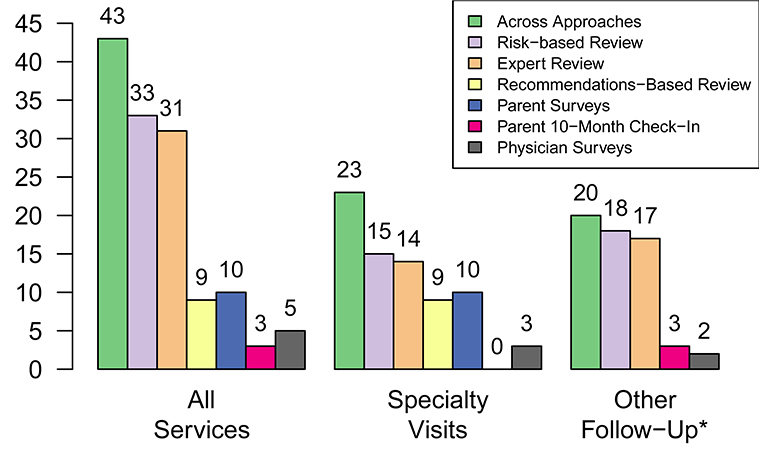
Results: By focusing on services that genomic testing would most likely influence in the short-term, we reduced the number of services in our analyses by more than 90% compared with analyses of all observed services. We also identified the same services that were ordered in response to unexpected findings as were identified during expert review and by confirming whether recommendations were completed. Data also showed that quantifying healthcare utilization with surveys and telephone check-ins alone would have missed the majority of attributable services.
Conclusions: Our risk-based strategy provides an improved approach for assessing the short-term impact of genomic testing and other interventions on healthcare utilization while conforming as much as possible to existing best-practice recommendations.
Keywords: genetic testing; genomics; health services; healthcare utilization; humans; infant; medical records; newborn; risk factors; surveys and questionnaires; whole exome sequencing.
Copyright © 2020 ISPOR–The Professional Society for Health Economics and Outcomes Research. Published by Elsevier Inc. All rights reserved.
Figures
References
-
- Sanders GD, Neumann PJ, Basu A, et al. Recommendations for conduct, methodological practices, and reporting of cost-effectiveness analyses: Second panel on cost-effectiveness in health and medicine. JAMA. 2016;316:1093–103. - PubMed
-
- Glick HA. Economic Evaluation in Clinical Trials. 2nd ed. New York: Oxford University Press, 2015.
-
- Caro JJ, Briggs AH, Siebert U, et al. Modeling good research practices--overview: a report of the ISPOR-SMDM Modeling Good Research Practices Task Force-1. Med Decis Making. 2012;32:667–77. - PubMed
-
- Diehr P, Yanez D, Ash A, et al. Methods for analyzing health care utilization and costs. Annu Rev Public Health. 1999;20:125–44. - PubMed
