


An Azidoribose Probe to Track Ketoamine Adducts in Histone Ribose Glycation
- PMID: 32390412
- PMCID: PMC8052992
- DOI: 10.1021/jacs.0c01325
An Azidoribose Probe to Track Ketoamine Adducts in Histone Ribose Glycation
Abstract
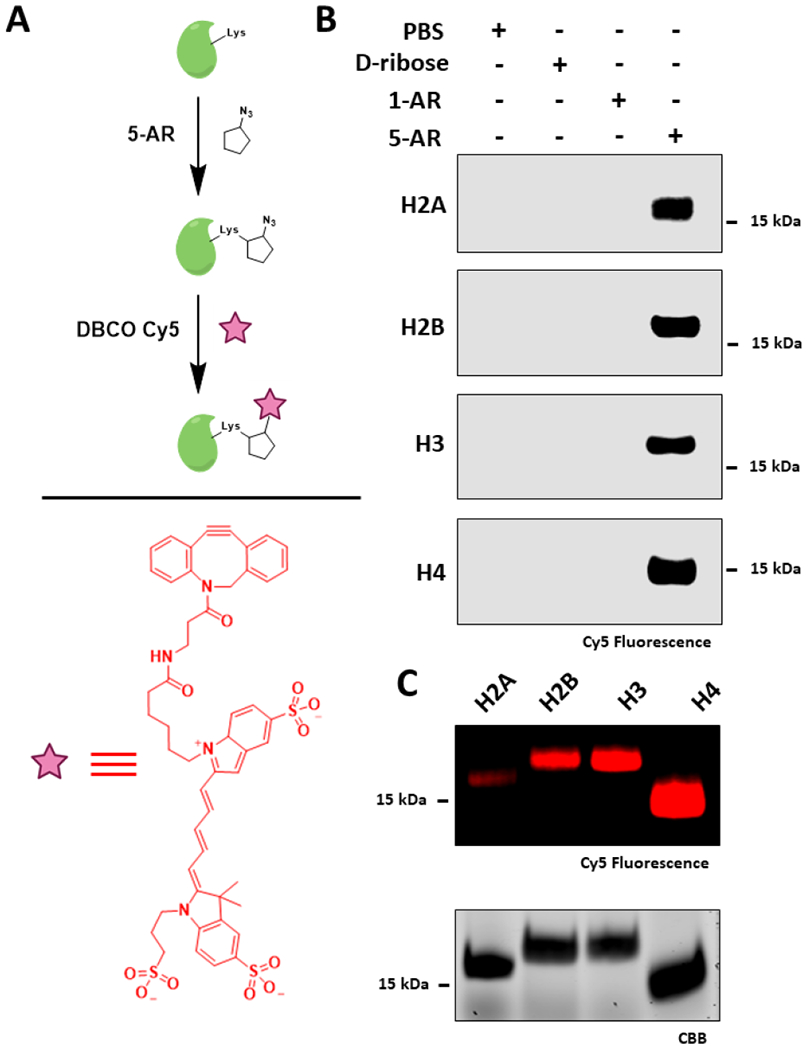
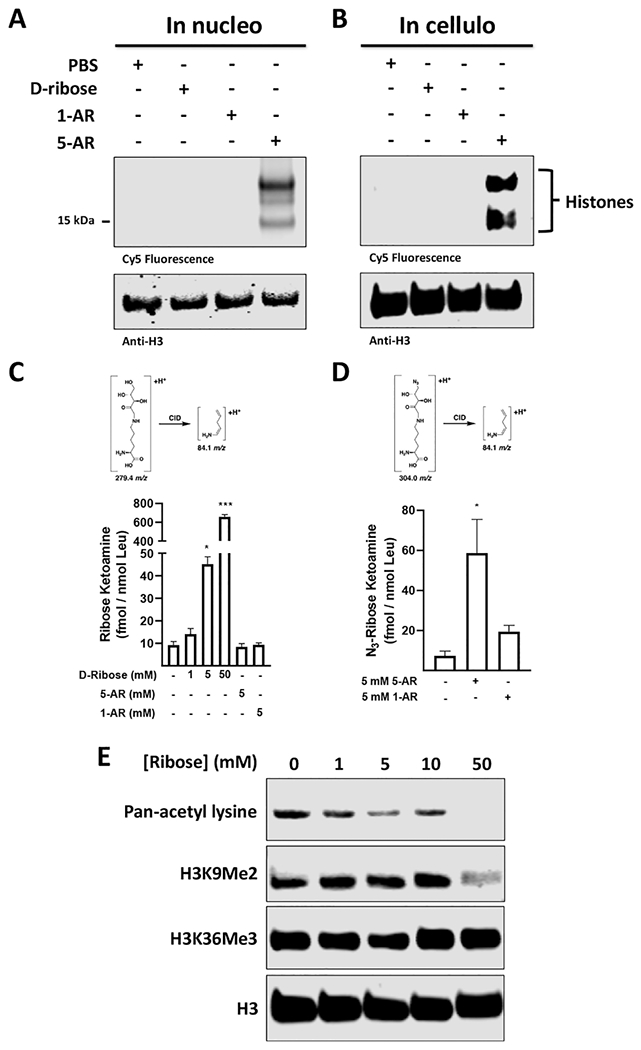
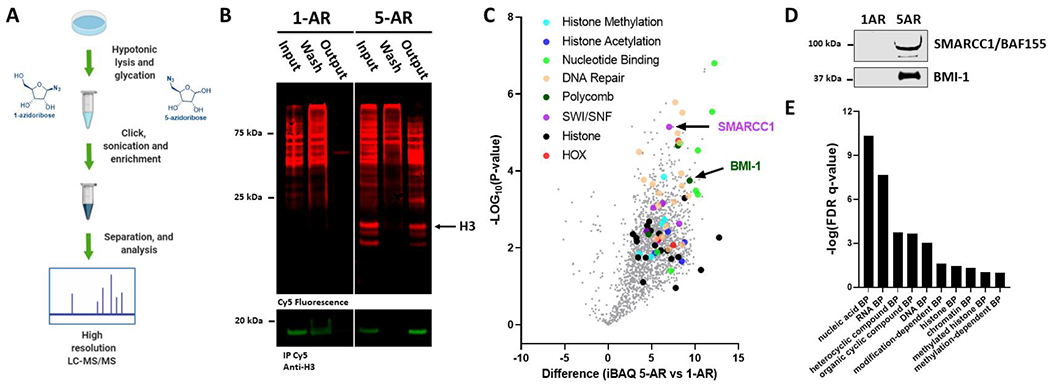
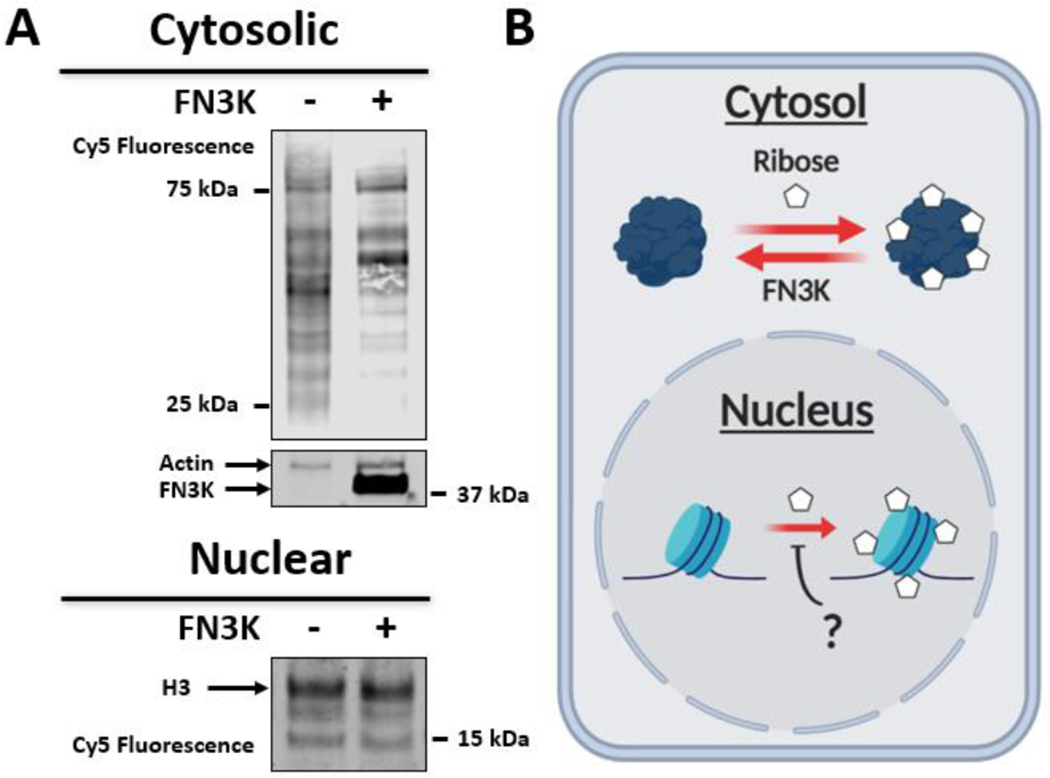
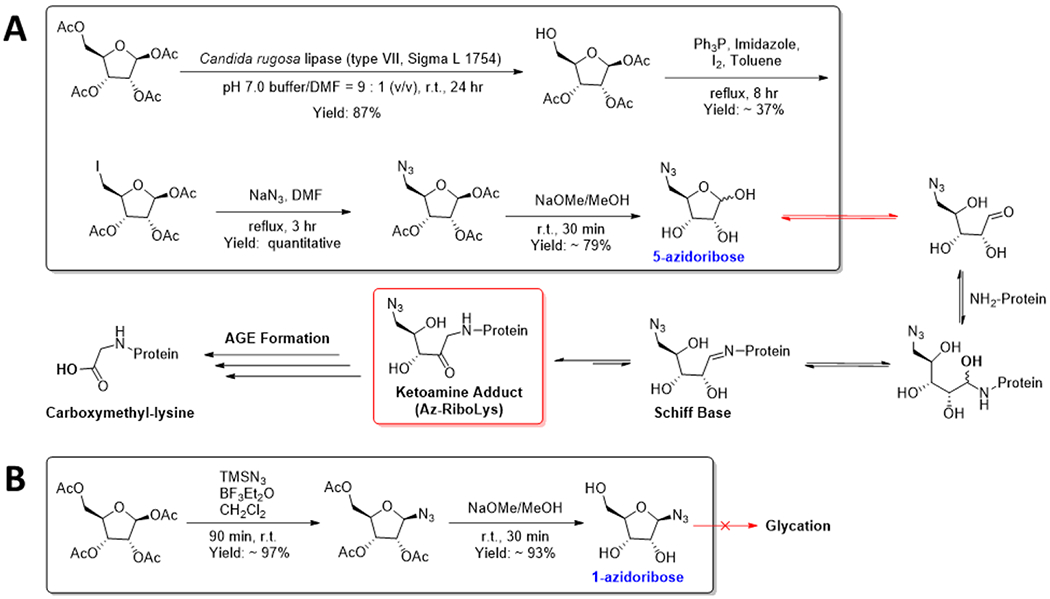
Reactive cellular metabolites can modify macromolecules and form adducts known as nonenzymatic covalent modifications (NECMs). The dissection of the mechanisms, regulation, and consequences of NECMs, such as glycation, has been challenging due to the complex and often ambiguous nature of the adducts formed. Specific chemical tools are required to directly track the formation of these modifications on key targets in order to uncover their underlying physiological importance. Here, we present the novel chemoenzymatic synthesis of an active azido-modified ribose analog, 5-azidoribose (5-AR), as well as the synthesis of an inactive control derivative, 1-azidoribose (1-AR), and their application toward understanding protein ribose-glycation in vitro and in cellulo. With these new probes we found that, similar to methylglyoxal (MGO) glycation, ribose glycation specifically accumulates on histones. In addition to fluorescent labeling, we demonstrate the utility of the probe in enriching modified targets, which were identified by label-free quantitative proteomics and high-resolution MS/MS workflows. Finally, we establish that the known oncoprotein and hexose deglycase, fructosamine 3-kinase (FN3K), recognizes and facilitates the removal of 5-AR glycation adducts in live cells, supporting the dynamic regulation of ribose glycation as well as validating the probe as a new platform to monitor FN3K activity. Altogether, we demonstrate this probe's utilities to uncover ribose-glycation and deglycation events as well as track FN3K activity toward establishing its potential as a new cancer vulnerability.
Conflict of interest statement
The authors declare no competing financial interest.
Figures
References
-
- Cloos PA; Christgau S Non-enzymatic covalent modifications of proteins: mechanisms, physiological consequences and clinical applications. Matrix Biol. 2002, 21 (1), 39–52. - PubMed
-
- Harmel R; Fiedler D Features and regulation of non-enzymatic post-translational modifications. Nat. Chem. Biol. 2018, 14 (3), 244–252. - PubMed
-
- Hellwig M; Henle T Baking, ageing, diabetes: a short history of the Maillard reaction. Angew. Chem., Int. Ed 2014, 53 (39), 10316–29. - PubMed
Publication types
MeSH terms
Substances
Grants and funding
LinkOut - more resources
Full Text Sources
Other Literature Sources
Molecular Biology Databases
Research Materials
