


Retip: Retention Time Prediction for Compound Annotation in Untargeted Metabolomics
- PMID: 32390414
- PMCID: PMC8715951
- DOI: 10.1021/acs.analchem.9b05765
Retip: Retention Time Prediction for Compound Annotation in Untargeted Metabolomics
Abstract
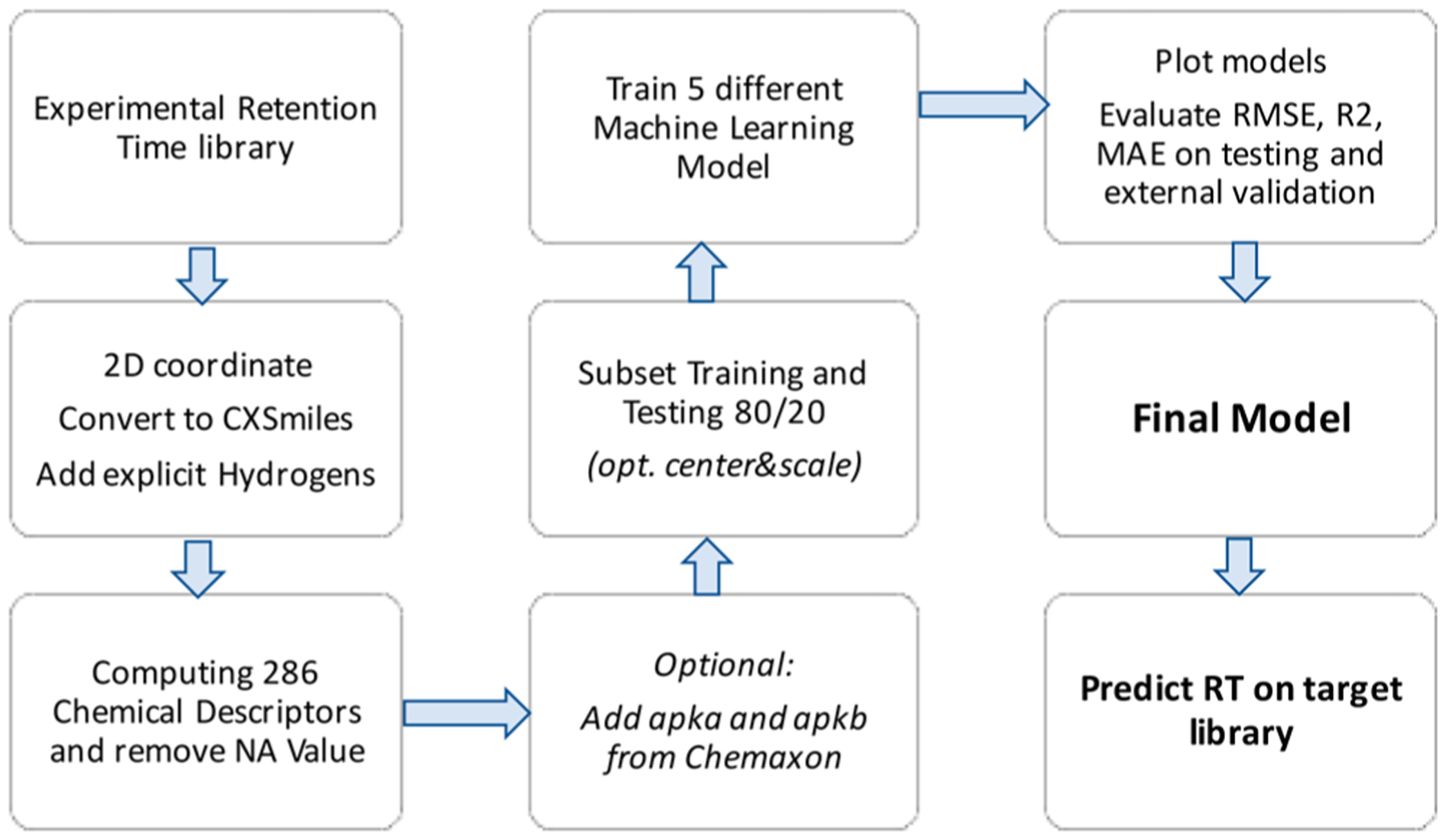
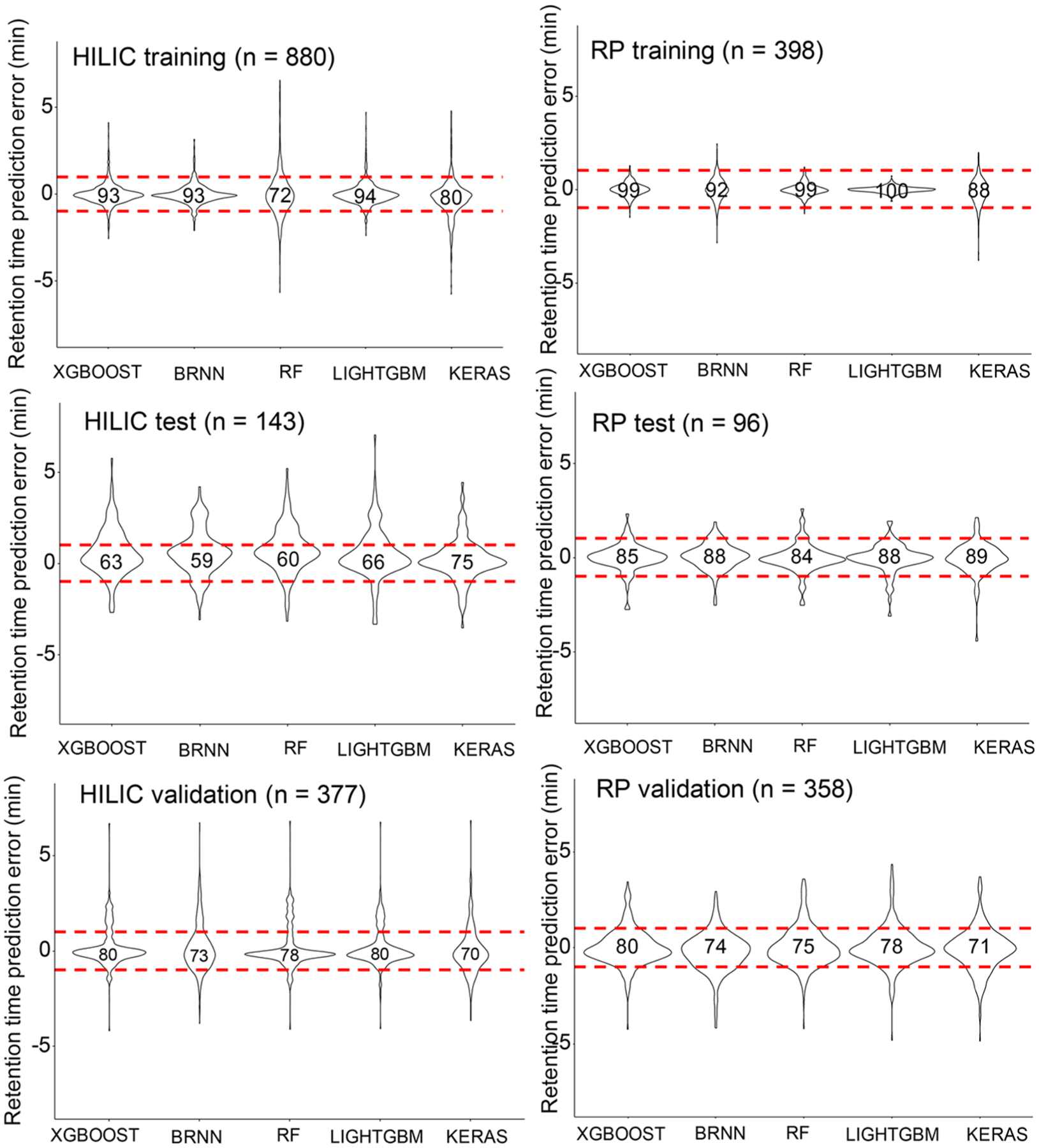
Unidentified peaks remain a major problem in untargeted metabolomics by LC-MS/MS. Confidence in peak annotations increases by combining MS/MS matching and retention time. We here show how retention times can be predicted from molecular structures. Two large, publicly available data sets were used for model training in machine learning: the Fiehn hydrophilic interaction liquid chromatography data set (HILIC) of 981 primary metabolites and biogenic amines,and the RIKEN plant specialized metabolome annotation (PlaSMA) database of 852 secondary metabolites that uses reversed-phase liquid chromatography (RPLC). Five different machine learning algorithms have been integrated into the Retip R package: the random forest, Bayesian-regularized neural network, XGBoost, light gradient-boosting machine (LightGBM), and Keras algorithms for building the retention time prediction models. A complete workflow for retention time prediction was developed in R. It can be freely downloaded from the GitHub repository (https://www.retip.app). Keras outperformed other machine learning algorithms in the test set with minimum overfitting, verified by small error differences between training, test, and validation sets. Keras yielded a mean absolute error of 0.78 min for HILIC and 0.57 min for RPLC. Retip is integrated into the mass spectrometry software tools MS-DIAL and MS-FINDER, allowing a complete compound annotation workflow. In a test application on mouse blood plasma samples, we found a 68% reduction in the number of candidate structures when searching all isomers in MS-FINDER compound identification software. Retention time prediction increases the identification rate in liquid chromatography and subsequently leads to an improved biological interpretation of metabolomics data.
Conflict of interest statement
The authors declare no competing financial interest.
Figures
References
-
- Seitzer PM; Searle BC J. Proteome Res 2019, 18 (2), 791–796. - PubMed
Publication types
MeSH terms
Substances
Grants and funding
LinkOut - more resources
Full Text Sources
Other Literature Sources
