


Comparison of the Start, Turn and Finish Performance of Elite Swimmers in 100 m and 200 m Races
- PMID: 32390734
- PMCID: PMC7196746
Comparison of the Start, Turn and Finish Performance of Elite Swimmers in 100 m and 200 m Races
Abstract
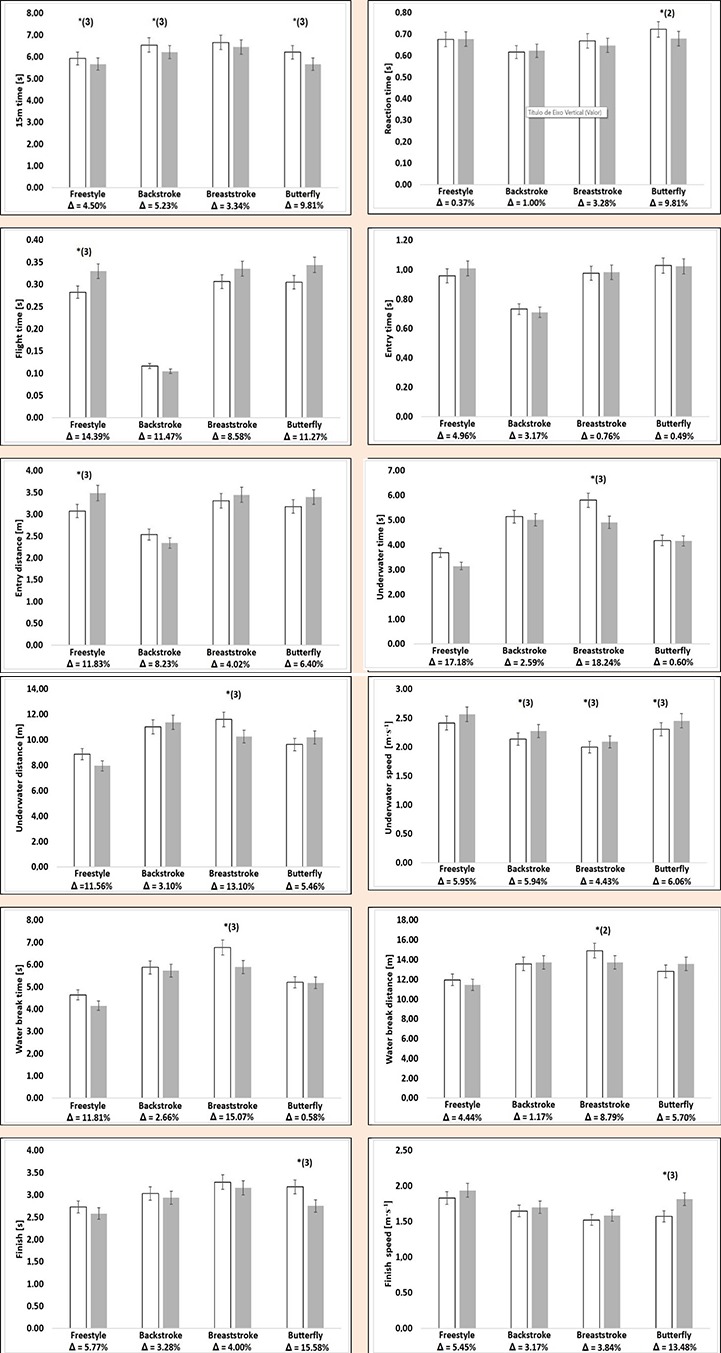
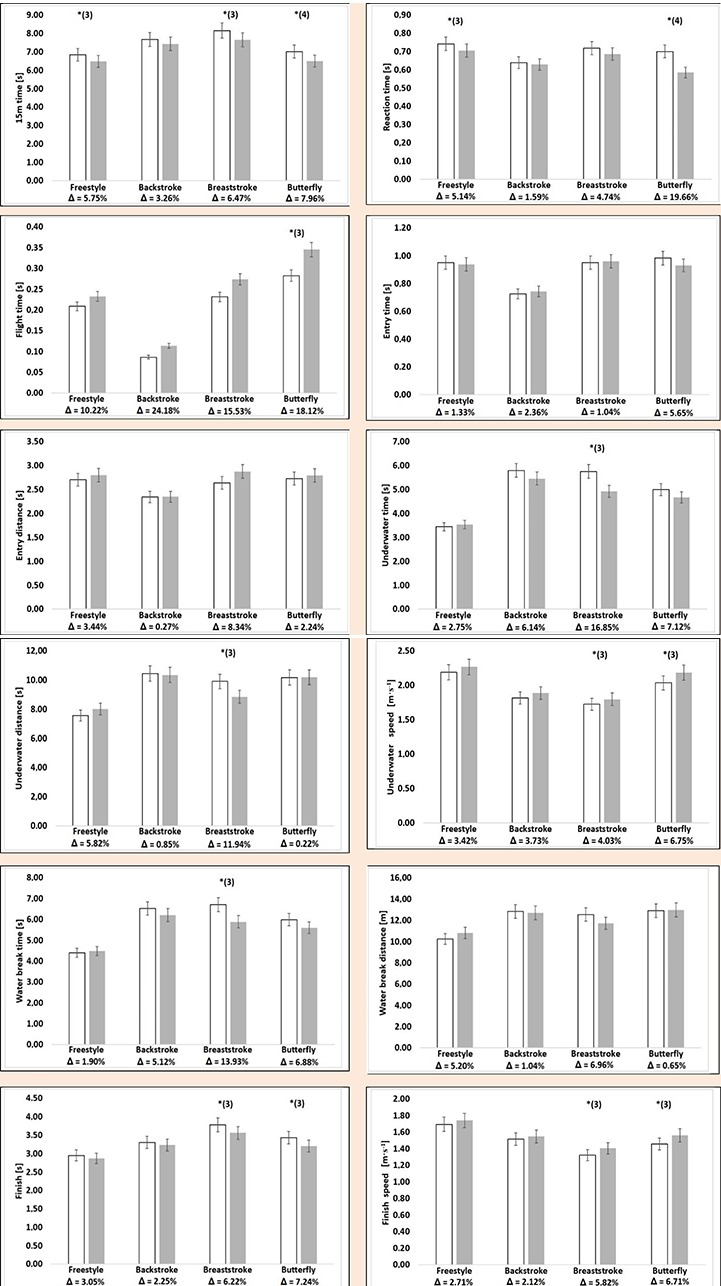
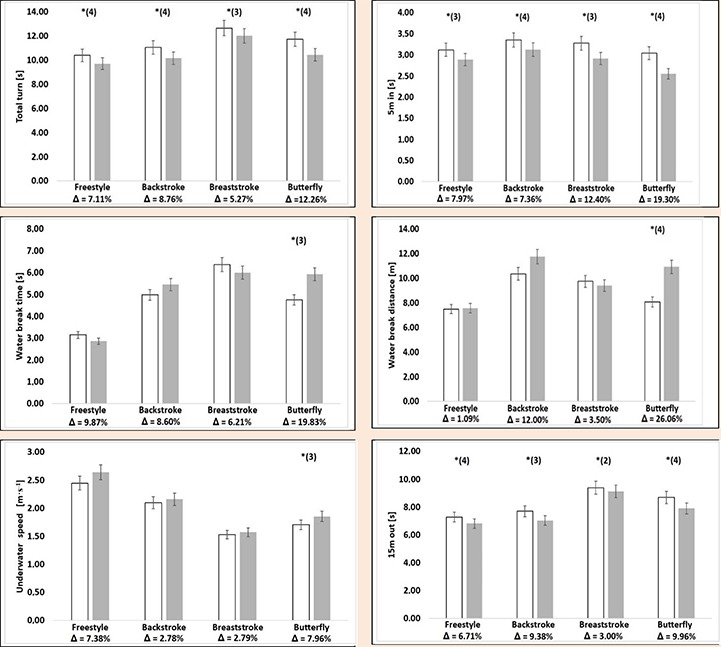
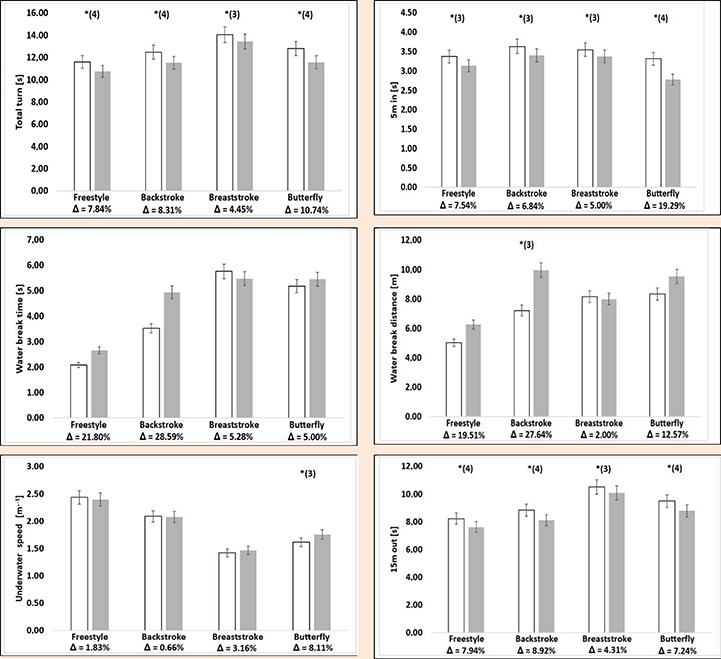
The main aim of this study was to compare the start, turn, and finish performance of 100 m and 200 m events in the four swimming strokes in elite swimmers of both sexes. The performances of all 128 finalists (64 males and 64 females) of the 100 m, and 200 m events at a major championship were analyzed. A set of variables related to the start, turn, and finish were assessed. In the start a significant and moderate race effect was verified in both sexes (100 m vs 200 m). It was highest in butterfly events (males: Δ = 9.81%, p = 0.046, η2 = 0.60; females: Δ = 7.96%, p < 0.001, η2 = 0.75). In the turn a significant and moderate-strong race effect was verified in all strokes in both sexes, the highest being in butterfly (males: Δ = 12.26%, p < 0.001, η2 = 0.93; females: Δ = 10.74%, p < 0.001, η2 = 0.92). The finish had a significant and moderate race effect in butterfly and in breaststroke (females). The underwater variables were found to be the main contributors to a faster start. Over the turn, key determinants were the surface variables. As for the finish, mixed results were observed. It can be suggested that the underwater profile was the main determinant in starting, whereas the surface profile was the main determinant in turning. Therefore, coaches are advised to focus on such race phases to enhance the total race time.
Keywords: Swimming; analysis; performance; technique.
© Journal of Sports Science and Medicine.
Figures
References
-
- Arellano R., Brown P., Cappaert J., Nelson R. (1994) Analysis of 50, 100 and 200 m freestyle swimmers at the 1992 Olympic Games. Journal of Applied Biomechanics 10, 189-199.
-
- Chengalur S. N., Brown P. L. (1992) An analysis of male and female Olympic swimmers in the 200 m events. Canadian Journal of Sport Science 17(2), 104-109. - PubMed
-
- Fardel A. C., Zapponi C. (2016) How Sung Yang caught up with Chad le Clos to claim gold in the 200 m freestyle. The Guardian. Retrieved from https://www.theguardian.com/sport/ng-interactive/2016/aug/09/how-sun-yan...
-
- Ferguson C. J. (2009) An effect size primer: a guide for clinicians and researchers. Professional Psychology-Research and Practice 40, 532-538.
Publication types
MeSH terms
LinkOut - more resources
Full Text Sources
Research Materials