


Molecular Mechanism of Hippo-YAP1/TAZ Pathway in Heart Development, Disease, and Regeneration
- PMID: 32390875
- PMCID: PMC7191303
- DOI: 10.3389/fphys.2020.00389
Molecular Mechanism of Hippo-YAP1/TAZ Pathway in Heart Development, Disease, and Regeneration
Abstract
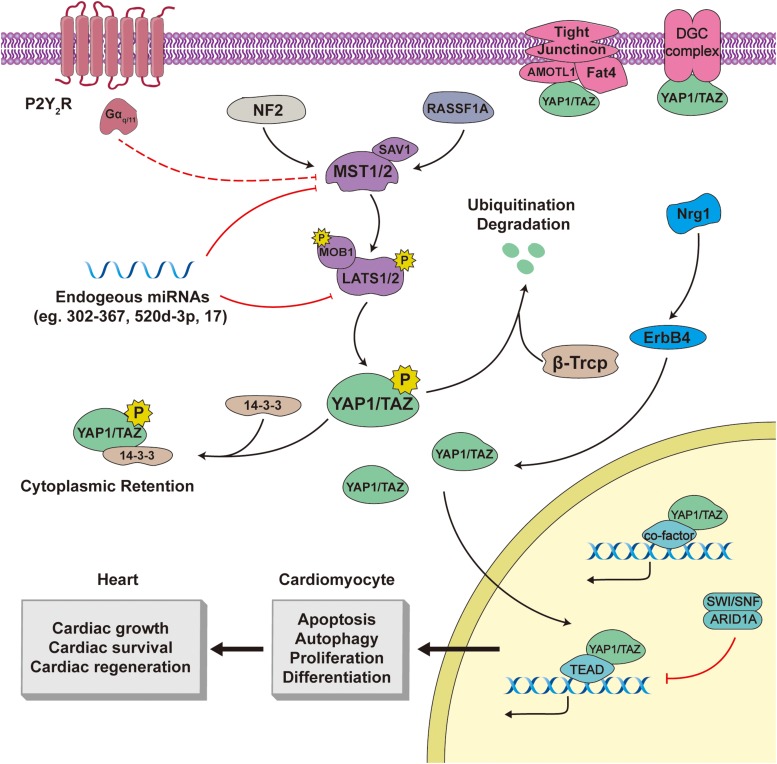
The Hippo-YAP1/TAZ pathway is a highly conserved central mechanism that controls organ size through the regulation of cell proliferation and other physical attributes of cells. The transcriptional factors Yes-associated protein 1 (YAP1) and PDZ-binding motif (TAZ) act as downstream effectors of the Hippo pathway, and their subcellular location and transcriptional activities are affected by multiple post-translational modifications (PTMs). Studies have conclusively demonstrated a pivotal role of the Hippo-YAP1/TAZ pathway in cardiac development, disease, and regeneration. Targeted therapeutics for the YAP1/TAZ could be an effective treatment option for cardiac regeneration and disease. This review article provides an overview of the Hippo-YAP1/TAZ pathway and the increasing impact of PTMs in fine-tuning YAP1/TAZ activation; in addition, we discuss the potential contributions of the Hippo-YAP1/TAZ pathway in cardiac development, disease, and regeneration.
Keywords: Hippo pathway; YAP1/TAZ; cardiac disease; heart development; post-translational modification; regeneration.
Copyright © 2020 Chen, Li, Luo and Hou.
Figures
References
-
- Badouel C., Zander M. A., Liscio N., Bagherie-Lachidan M., Sopko R., Coyaud E., et al. (2015). Fat1 interacts with Fat4 to regulate neural tube closure, neural progenitor proliferation and apical constriction during mouse brain development. Development 142 2781–2791. 10.1242/dev.123539 - DOI - PMC - PubMed
Publication types
LinkOut - more resources
Full Text Sources
Other Literature Sources
Research Materials
Miscellaneous
