


Leptin-Mediated Changes in the Human Metabolome
- PMID: 32392278
- PMCID: PMC7282709
- DOI: 10.1210/clinem/dgaa251
Leptin-Mediated Changes in the Human Metabolome
Abstract
Context: While severe obesity due to congenital leptin deficiency is rare, studies in patients before and after treatment with leptin can provide unique insights into the role that leptin plays in metabolic and endocrine function.
Objective: The aim of this study was to characterize changes in peripheral metabolism in people with congenital leptin deficiency undergoing leptin replacement therapy, and to investigate the extent to which these changes are explained by reduced caloric intake.
Design: Ultrahigh performance liquid chromatography-tandem mass spectroscopy (UPLC-MS/MS) was used to measure 661 metabolites in 6 severely obese people with congenital leptin deficiency before, and within 1 month after, treatment with recombinant leptin. Data were analyzed using unsupervised and hypothesis-driven computational approaches and compared with data from a study of acute caloric restriction in healthy volunteers.
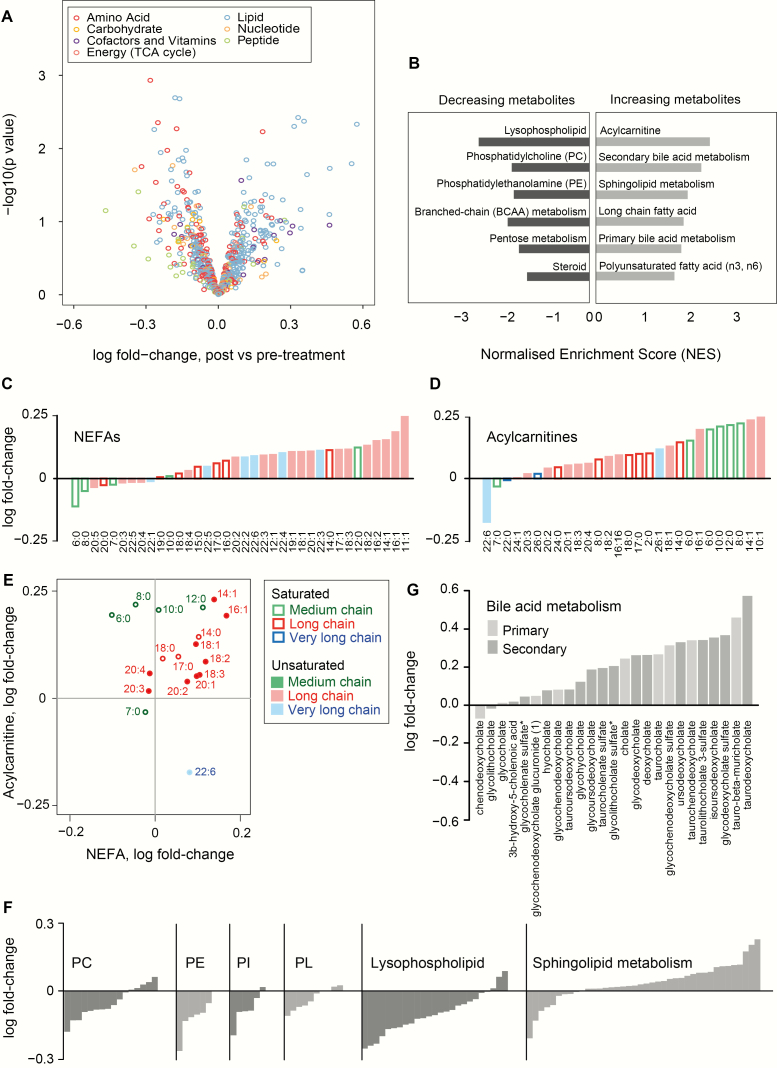
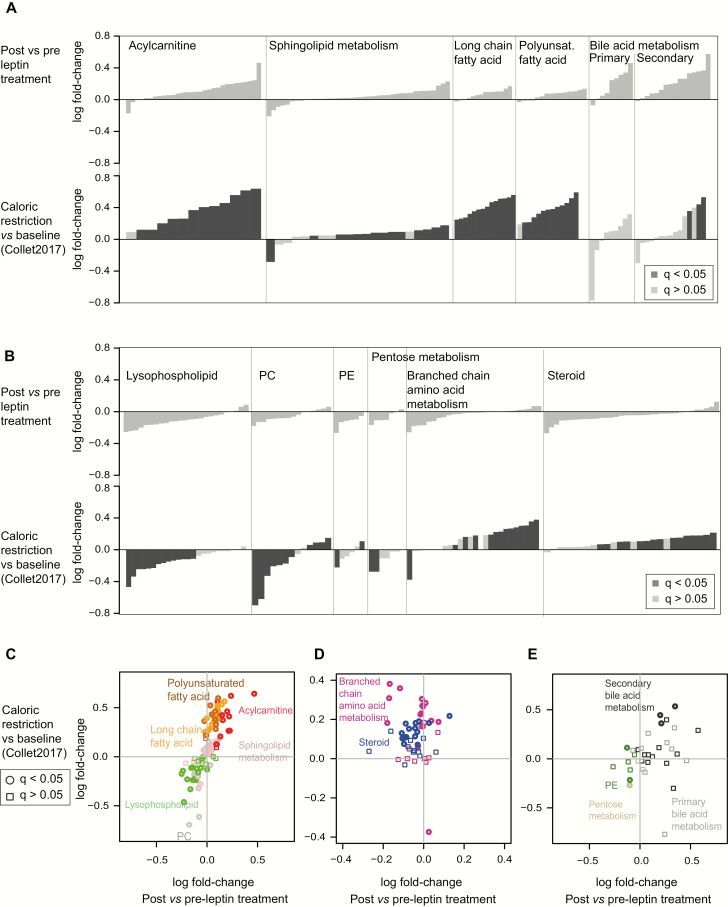
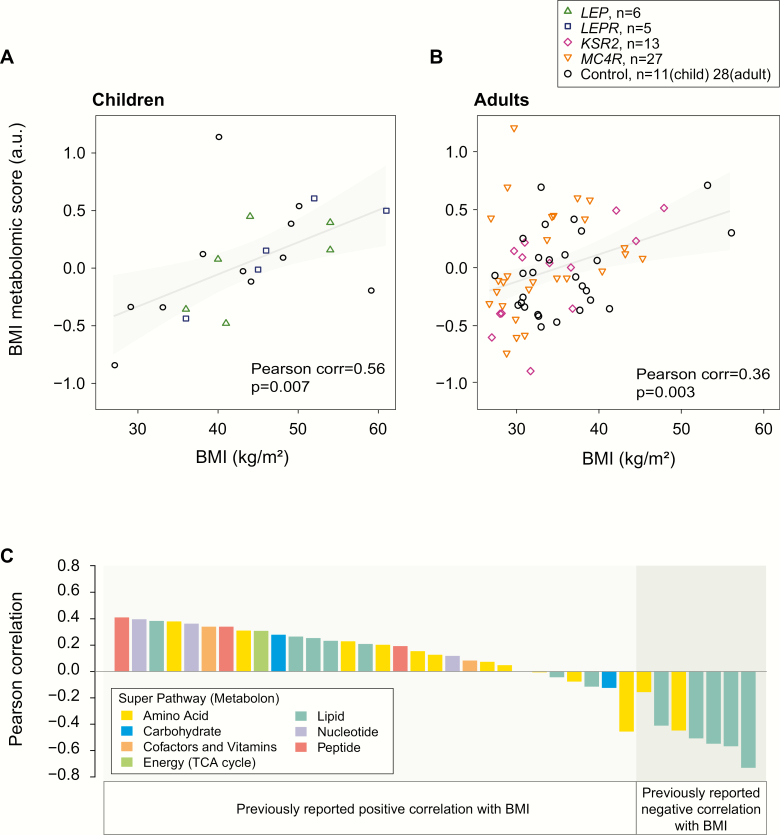
Results: Leptin replacement was associated with class-wide increased levels of fatty acids and acylcarnitines and decreased phospholipids, consistent with enhanced lipolysis and fatty acid oxidation. Primary and secondary bile acids increased after leptin treatment. Comparable changes were observed after acute caloric restriction. Branched-chain amino acids and steroid metabolites decreased after leptin, but not after acute caloric restriction. Individuals with severe obesity due to leptin deficiency and other genetic obesity syndromes shared a metabolomic signature associated with increased BMI.
Conclusion: Leptin replacement was associated with changes in lipolysis and substrate utilization that were consistent with negative energy balance. However, leptin's effects on branched-chain amino acids and steroid metabolites were independent of reduced caloric intake and require further exploration.
Keywords: bile acids; leptin; lipids; metabolomics; obesity.
© Endocrine Society 2020.
Figures
References
-
- Zhang Y, Proenca R, Maffei M, Barone M, Leopold L, Friedman JM. Positional cloning of the mouse obese gene and its human homologue. Nature. 1994;372(6505):425-432. - PubMed
-
- Halaas JL, Gajiwala KS, Maffei M, et al. Weight-reducing effects of the plasma protein encoded by the obese gene. Science. 1995;269(5223):543-546. - PubMed
-
- Pelleymounter MA, Cullen MJ, Baker MB, et al. Effects of the obese gene product on body weight regulation in ob/ob mice. Science. 1995;269(5223):540-543. - PubMed
-
- Campfield LA, Smith FJ, Guisez Y, Devos R, Burn P. Recombinant mouse OB protein: evidence for a peripheral signal linking adiposity and central neural networks. Science. 1995;269(5223):546-549. - PubMed
-
- Montague CT, Farooqi IS, Whitehead JP, et al. Congenital leptin deficiency is associated with severe early-onset obesity in humans. Nature. 1997;387(6636):903-908. - PubMed
Publication types
MeSH terms
Substances
Grants and funding
LinkOut - more resources
Full Text Sources
Medical
Miscellaneous
