Review
. 2020 Oct 1;41(5):707-732.
doi: 10.1210/endrev/bnaa014.

Transcriptional Control of Circadian Rhythms and Metabolism: A Matter of Time and Space

Affiliations
Review

Transcriptional Control of Circadian Rhythms and Metabolism: A Matter of Time and Space

Yong Hoon Kim et al. Endocr Rev. .

Abstract

All biological processes, living organisms, and ecosystems have evolved with the Sun that confers a 24-hour periodicity to life on Earth. Circadian rhythms arose from evolutionary needs to maximize daily organismal fitness by enabling organisms to mount anticipatory and adaptive responses to recurrent light-dark cycles and associated environmental changes. The clock is a conserved feature in nearly all forms of life, ranging from prokaryotes to virtually every cell of multicellular eukaryotes. The mammalian clock comprises transcription factors interlocked in negative feedback loops, which generate circadian expression of genes that coordinate rhythmic physiology. In this review, we highlight previous and recent studies that have advanced our understanding of the transcriptional architecture of the mammalian clock, with a specific focus on epigenetic mechanisms, transcriptomics, and 3-dimensional chromatin architecture. In addition, we discuss reciprocal ways in which the clock and metabolism regulate each other to generate metabolic rhythms. We also highlight implications of circadian biology in human health, ranging from genetic and environment disruptions of the clock to novel therapeutic opportunities for circadian medicine. Finally, we explore remaining fundamental questions and future challenges to advancing the field forward.

Keywords: chromatin architecture; circadian rhythms; epigenetics; metabolism.


Figures

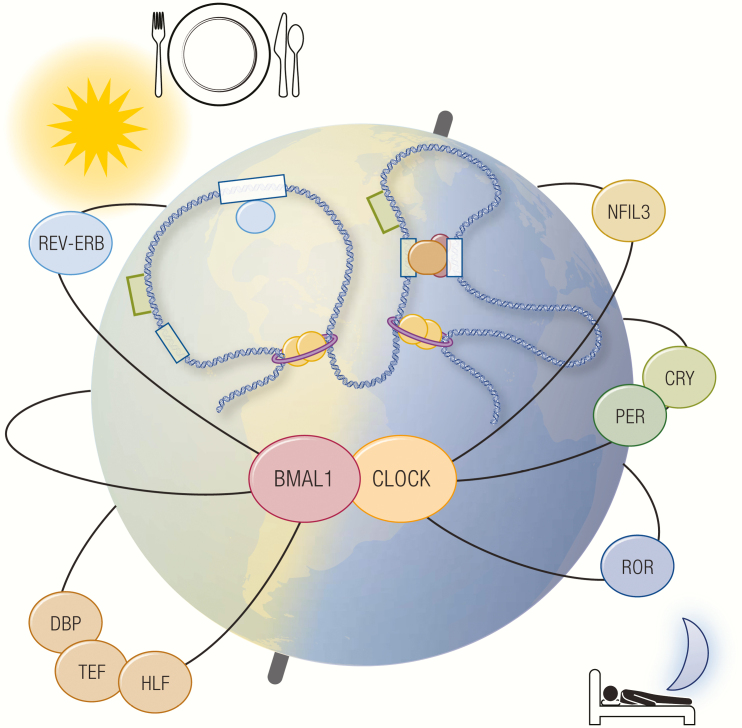
Graphical Abstract
Graphical Abstract
Figure 1.
Figure 1.
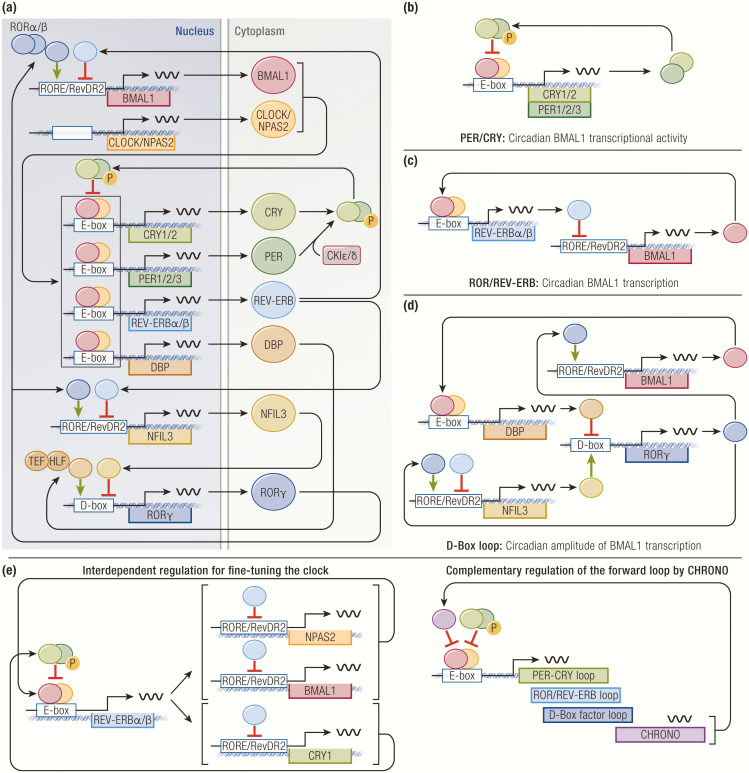
Transcriptional network of core clock transcription factors (TFs). (A) A composite illustration of all major regulatory limbs. (B) PER/CRY regulate circadian BMAL1 transcriptional activity. (C) ROR and REV-ERB regulate circadian transcription of BMAL1. (D) D-box TFs enhance circadian amplitude of BMAL1 transcription. (E) Different regulatory limbs regulate one another to further fine tune the clock.
Figure 2.
Figure 2.
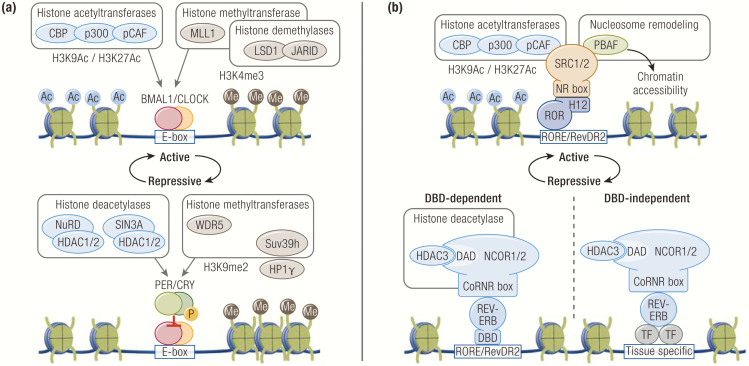
Epigenetic regulators of the molecular clock. (A) Multiple epigenetic regulators associate with BMAL1/CLOCK and PER/CRY to facilitate transcriptional activation and repression, respectively. (B) ROR and REV-ERB recruit nuclear receptor coactivators and corepressors via mechanisms conserved in nuclear receptors. REV-ERB can also tether to tissue-specific transcription factors to regulate transcription in a DNA-binding domain (DBD)-independent manner.
Figure 3.
Figure 3.
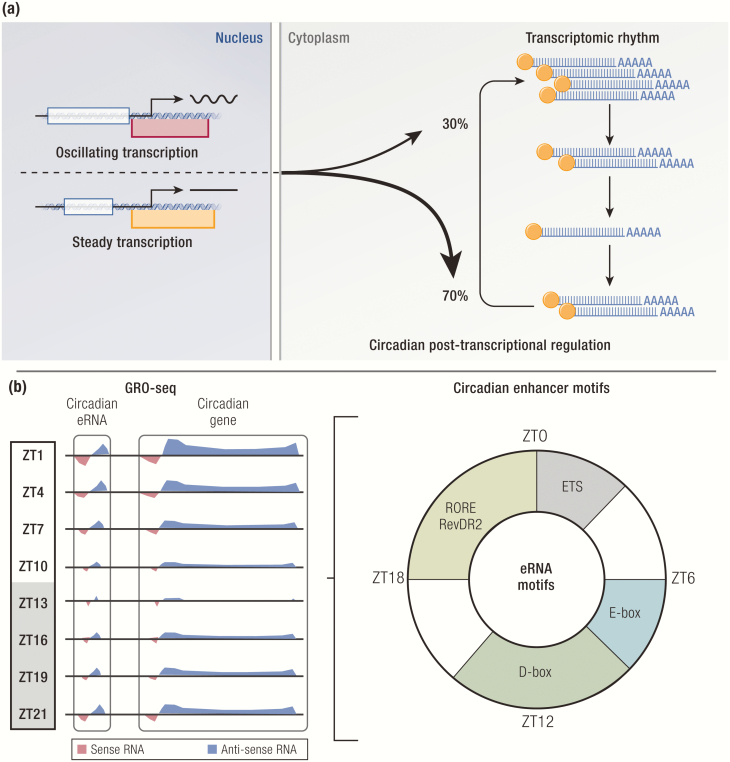
Epigenomics and transcriptomics of the molecular clock. (A) A majority of rhythmic mRNA transcripts do not exhibit underlying transcriptional rhythms. (B) Enhancers with circadian activity based on rhythmic enhancer RNA (eRNA) transcription show phase-specific enrichment of DNA binding motifs bound by both known and unknown clock transcription factors.
Figure 4.
Figure 4.
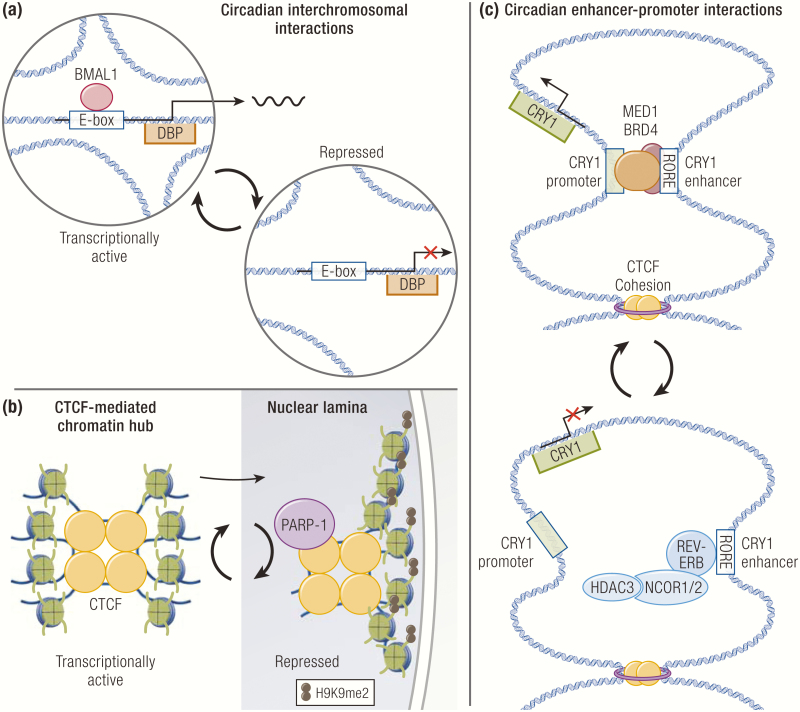
Circadian regulation of 3-dimensional chromatin architecture. (A) The DBP promoter undergoes circadian interchromosomal interactions in a BMAL1-dependent manner. (B) Chromatin hubs organized by CCCTC-binding factors (CTCFs) are repositioned to the repressive nuclear laminar environment through circadian interaction with poly ADP-ribose polymerase-1 (PARP-1). (C) Enhancer-promoter loops undergo circadian reorganization. REV-ERB opposes functional enhancer-promoter formation to repress transcription.
Figure 5.
Figure 5.
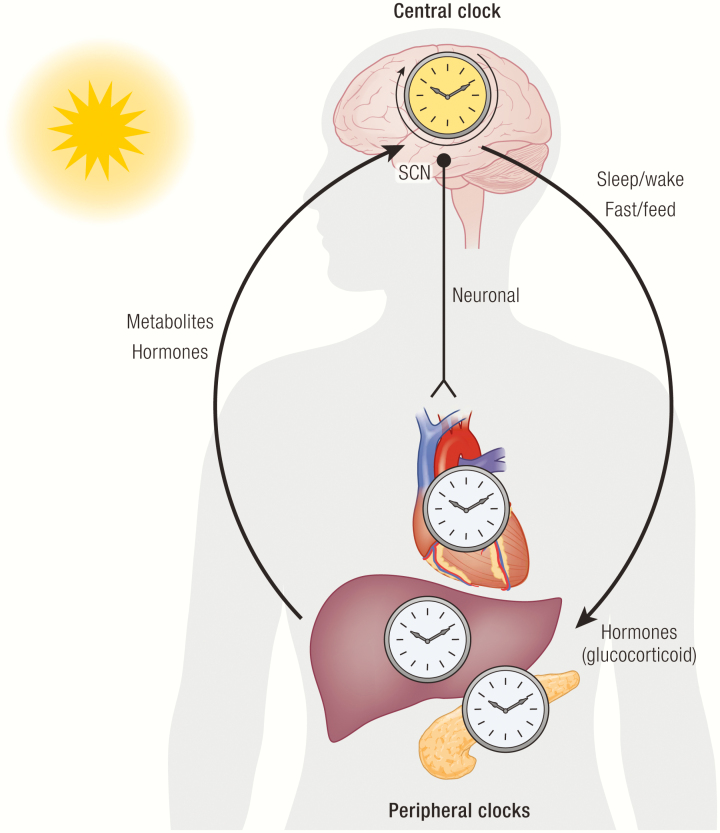
Hierarchical structure of the organismal clock. The suprachiasmatic nucleus (SCN) of the hypothalamus serves as the central clock that entrains the organismal clock by synchronizing the peripheral clocks with the environment. The peripheral organs also have tissue-specific cues related to their functions that can entrain their own clocks independently of the central clock. Reciprocally, the peripheral clocks can feedback to the central clock to further fine tune the organismal clock.
Figure 6.
Figure 6.
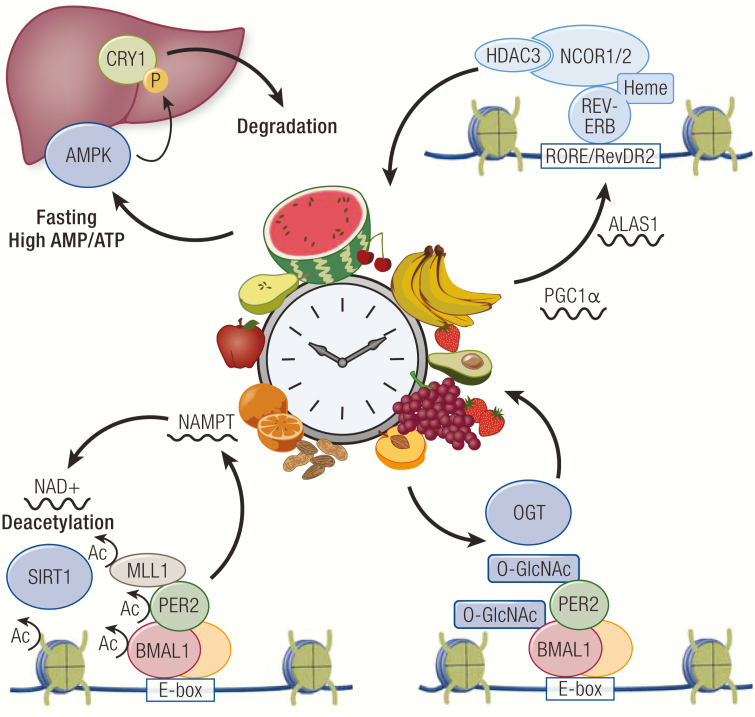
Metabolic regulation of the clock. Activated AMP-activated protein kinase (AMPK) phosphorylates CRY1 to induce its degradation, which results in reprogramming of the liver clock. Many metabolic pathways such as heme biosynthesis and NAD+ production, are regulated in a circadian manner at the transcriptional level. NAD+ regulates activity of sirtuin 1 (SIRT1) that deacetylates clock TFs and their associated factors and histones. Heme serves as an endogenous ligand that potentiates REV-ERB activity. The hexosamine biosynthesis pathway regulates O-GlcNAc transferase (OGT) activity, which controls the stability and transcriptional function of clock TFs.
Figure 7.
Figure 7.
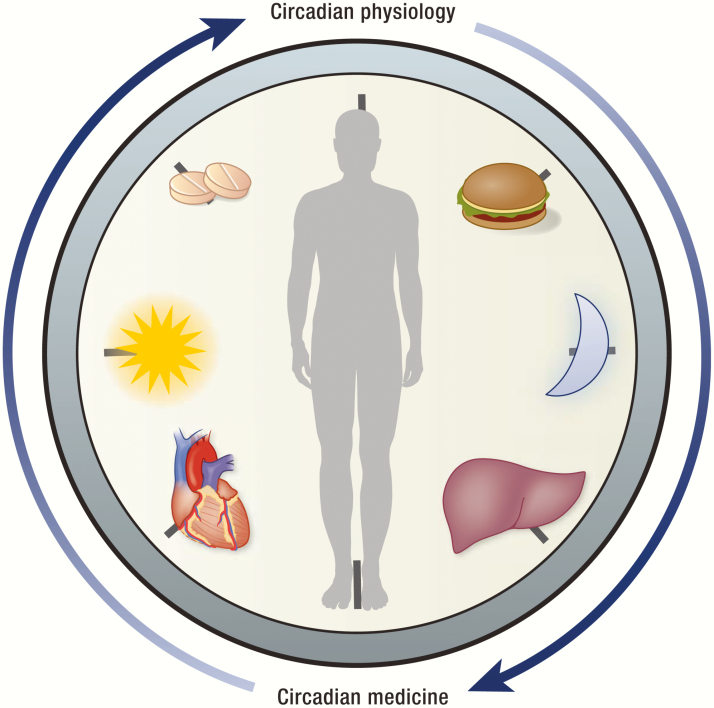
Promise of circadian medicine. Understanding circadian physiology will enable development of novel therapeutic approaches that will help improve human health in the future.

References

    1. Pittendrigh CS. Temporal organization: reflections of a Darwinian clock-watcher. Annu Rev Physiol. 1993;55:16-54. - PubMed
    1. Rosbash M. The implications of multiple circadian clock origins. PLoS Biol. 2009;7(3):e62. - PMC - PubMed
    1. de Mairan J-J D. Observation botanique. Hist Acad Roy Sci. 1792:35-36.

    1. Konopka RJ, Benzer S. Clock mutants of Drosophila melanogaster. Proc Natl Acad Sci U S A. 1971;68(9):2112-2116. - PMC - PubMed
    1. Bargiello TA, Young MW. Molecular-genetics of a biological clock in drosophila. Proc Natl Acad Sci U S A. 1984;81(7):2142-2146. - PMC - PubMed

Publication types