


Can consumer wearable activity tracker-based interventions improve physical activity and cardiometabolic health in patients with chronic diseases? A systematic review and meta-analysis of randomised controlled trials
- PMID: 32393357
- PMCID: PMC7216601
- DOI: 10.1186/s12966-020-00955-2
Can consumer wearable activity tracker-based interventions improve physical activity and cardiometabolic health in patients with chronic diseases? A systematic review and meta-analysis of randomised controlled trials
Abstract
Background: To date, it is unclear if consumer wearable activity trackers (CWATs), with or without behaviour multi-component strategies, effectively improve adherence to physical activity and health outcomes under free living conditions in populations with chronic diseases. Therefore, we systematically evaluated the efficacy of CWAT-based interventions to promote physical activity levels and cardiometabolic health in populations with chronic diseases.
Methods: Randomised controlled trials were collected from five bibliographic databases (PubMed, Embase, Web of Science, The Cochrane Central Register of Controlled Trials and CINAHL). Studies were eligible for inclusion if they evaluated a CWAT-based counselling intervention versus control intervention among patients with chronic respiratory diseases, type 2 diabetes mellitus, cardiovascular diseases, overweight/obesity, cognitive disorders, or sedentary older adults. Data were pooled using a random-effects model.
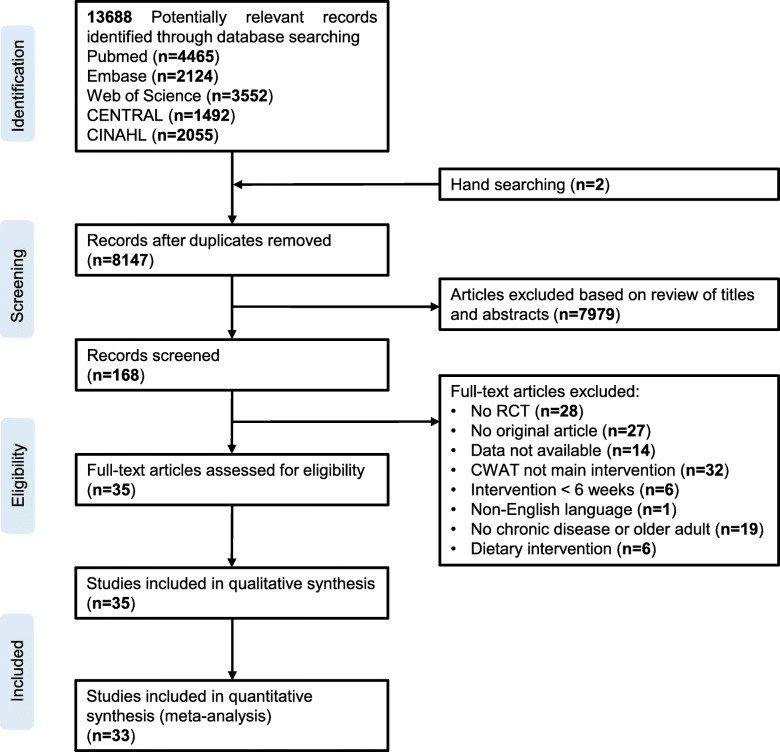
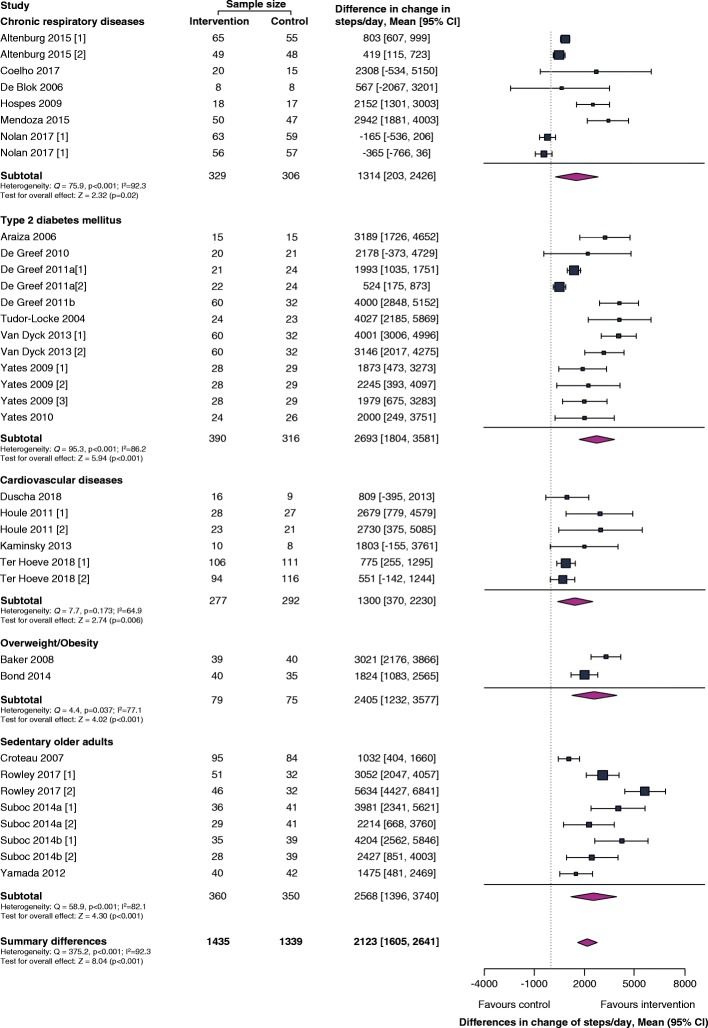
Results: After deduplication 8147 were identified of which 35 studies met inclusion criteria (chronic respiratory diseases: 7, type 2 diabetes mellitus: 12, cardiovascular diseases: 6, overweight/obesity: 3, cognitive disorders: 1, sedentary older adults: 6). Compared to control groups, CWAT-based interventions significantly increased physical activity by 2123 steps per day (95% confidence interval [CI], [1605-2641]; p < 0.001). In addition, CWAT-based interventions in these populations significantly decreased systolic blood pressure (- 3.79 mm Hg; 95% CI: [- 4.53, - 3.04] mm Hg; p < 0.001), waist circumference (- 0.99 cm; 95% CI: [- 1.48, - 0.50] cm; p < 0.001) and low-density lipoprotein cholesterol concentration (- 5.70 mg/dl; 95% CI: [- 9.24, - 2.15] mg/dl; p = 0.002).
Conclusion: CWAT-based interventions increase physical activity and have beneficial effects on important health-related outcomes such as systolic blood pressure, waist circumference and LDL cholesterol concentration in patients with chronic diseases.
Keywords: Activity tracker; Cardiometabolic health; Chronic disease; Physical activity.
Conflict of interest statement
The authors declare that they have no competing interests.
Figures
References
-
- Organization WH. Global action plan for the prevention and control of noncommunicable diseases 2013–2020. Geneva; 2013.
-
- Vos T, Barber RM, Bell B, Bertozzi-Villa A, Biryukov S, Bolliger I, et al. Global, regional, and national incidence, prevalence, and years lived with disability for 301 acute and chronic diseases and injuries in 188 countries, 1990–2013: a systematic analysis for the global burden of disease study 2013. Lancet. 2015;386(9995):743–800. doi: 10.1016/S0140-6736(15)60692-4. - DOI - PMC - PubMed
-
- WHO. Global action plan for the prevention and control of noncommunicable diseases. 2013–2020:2013.
Publication types
MeSH terms
Substances
LinkOut - more resources
Full Text Sources
Medical
Miscellaneous
