


Profiling Italian cat and dog owners' perceptions of pet food quality traits
- PMID: 32393389
- PMCID: PMC7216655
- DOI: 10.1186/s12917-020-02357-9
Profiling Italian cat and dog owners' perceptions of pet food quality traits
Abstract
Background: Over recent years, pet owners have started to demonstrate increased sensitivity toward their companion animals, which includes an increase in the attention paid towards their nutrition, seen as a way of safeguarding their pets' welfare. The aim of this study was to identify how pet food quality traits are perceived as being the most important by dog and cat owners. To this end, a survey of dog and cat owners was conducted by means of a questionnaire distributed in pet stores and trade fairs throughout Italy.
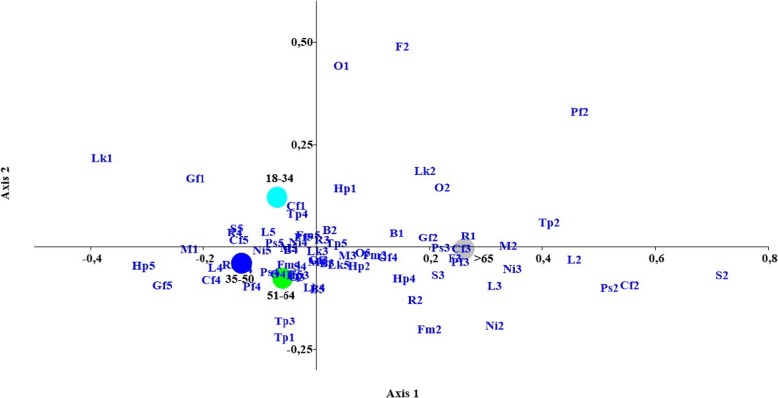
Results: A total of 935 surveys were collected; 61.8% of which were compiled by female pet owners. The respondents were relatively homogeneously distributed between cat (30.8%), dog (39.4%), and cat and dog (29.8%) owners. A quarter of the owners (25.5%) reported to have asked their veterinarian for advice on which pet food to buy, and almost a third (30.4%) trusted the advice posted on the web sites of well-known brands. "Contains natural ingredients" was the characteristic that obtained the highest mean score (4.3 out of 5). Elderly owners (> 65 years) placed most importance on whether a product had a high price, and least on feed appearance, animal satisfaction, and stool quality. Young owners (< 35y) paid most attention to the stool quality, the percentage of protein in the feed, and the presence of recyclable packaging, and least attention to feed appearance, smell, and animal satisfaction. Feed appearance, smell, a higher cost, and certain label indications (protein content, presence of fresh meat, grain free) were mostly important among the buyers of wet pet food. Some specific differences also emerged between dog, cat, and dog and cat owners.
Conclusions: In this survey of Italian pet food buyers, the presence of "natural" ingredients was considered to be the most important indicator of pet food quality, whereas characterized by a high price was considered least important. The data obtained from this survey could be used to help pet food companies identify which pet food quality traits are perceived as important by dog and cat owners.
Keywords: Perception of pet food; Pet food; Quality indicators; Survey.
Conflict of interest statement
The authors declare that they have no competing interests.
Figures
References
-
- Assalco-Zoomark. Alimentazione e cura degli animali da compagnia. Bologna. 2019. http://www.assalco.it/showattach.php?nid=8040. Accessed 28 May 2019.
-
- Contreras S. The dog food project - ingredients to avoid. 2007.
-
- Bohrer T. Pet Food Packaging: Evolution, Revolution & Innovation - Paper, Film & Foil Converter. 19/08/2011. 2011.
MeSH terms
Grants and funding
LinkOut - more resources
Full Text Sources
Miscellaneous
