


Brain natriuretic peptide to predict successful liberation from mechanical ventilation in critically ill patients: a systematic review and meta-analysis
- PMID: 32393393
- PMCID: PMC7216735
- DOI: 10.1186/s13054-020-2823-9
Brain natriuretic peptide to predict successful liberation from mechanical ventilation in critically ill patients: a systematic review and meta-analysis
Abstract
Background: Predicting successful liberation from mechanical ventilation (MV) in critically ill patients is challenging. Brain natriuretic peptide (BNP) has been proposed to help guide decision-making for readiness to liberate from MV following a spontaneous breathing trial (SBT).
Methods: We performed a systematic review and meta-analysis of randomized and prospective observational studies that measured BNP levels at the time of SBT in patients receiving MV. The primary endpoint was successful liberation from MV (absence of reintubation or non-invasive ventilation at 48 h). Statistical analyses included bi-variate and Moses-Littenberg models and DerSimonian-Laird pooling of areas under ROC curve (AUROC).
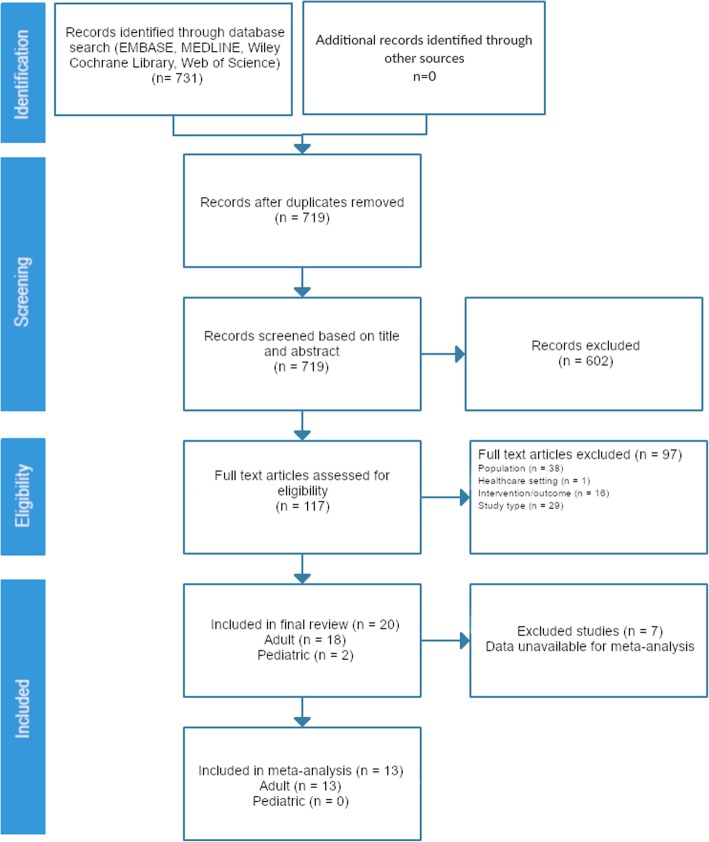
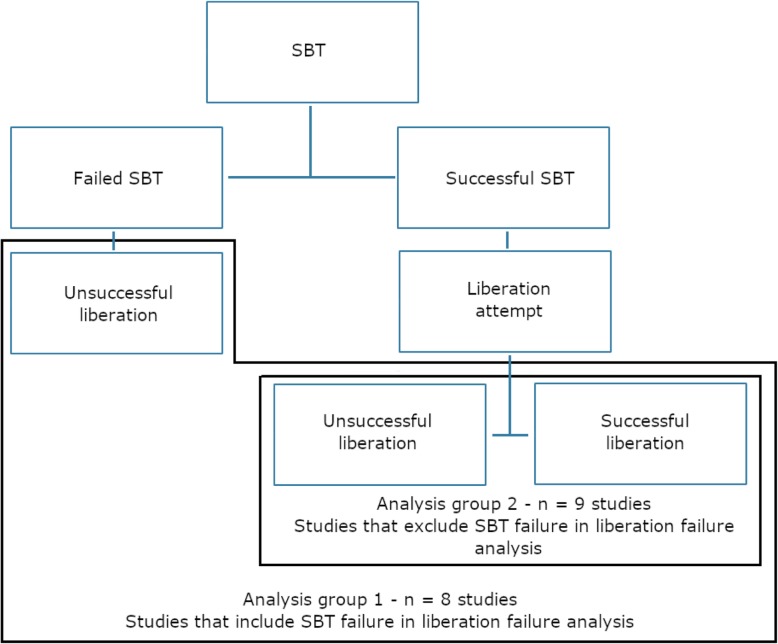
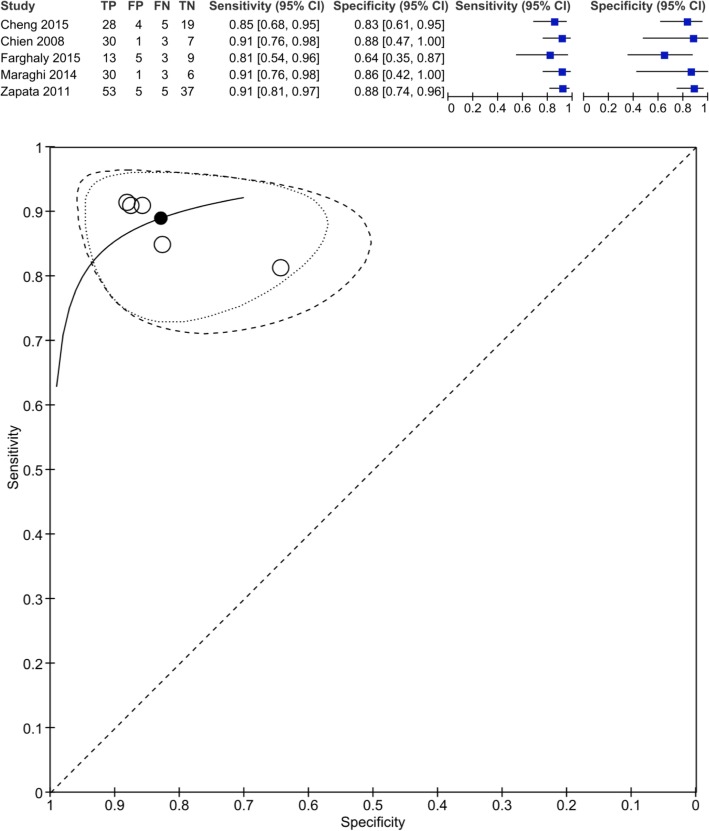
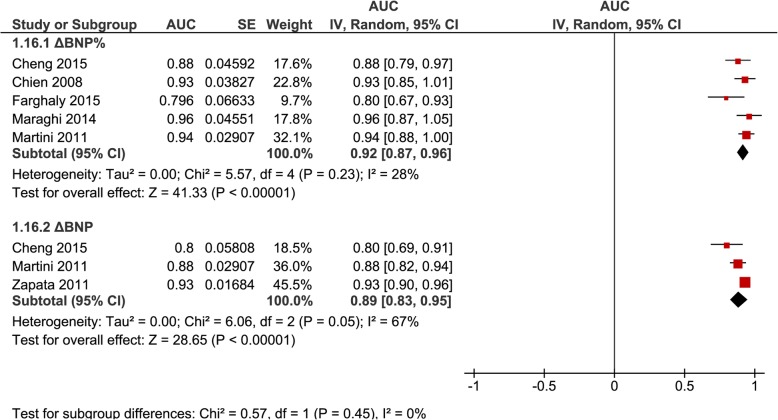
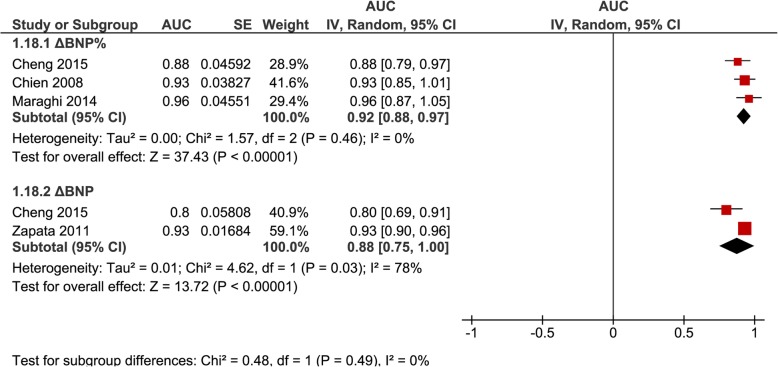
Results: A total of 731 articles were screened. Eighteen adult and 2 pediatric studies were fulfilled pre-specified eligibility. The measure of the relative variation of BNP during SBT (ΔBNP%) after exclusion of SBT failure by clinical criteria in adults yielded a sensitivity and specificity of 0.889 [0.831-0.929] and 0.828 [0.730-0.896] for successful liberation from MV, respectively, with a pooled AUROC of 0.92 [0.88-0.97]. The pooled AUROC for any method of analysis for absolute variation of BNP (ΔBNP), pre-SBT BNP, and post-SBT BNP were 0.89 [0.83-0.95], 0.77 [0.63-0.91], and 0.85 [0.80-0.90], respectively.
Conclusion: The relative change in BNP during a SBT has potential value as an incremental tool after successful SBT to predict successful liberation from MV in adults. There is insufficient data to support the use of BNP in children or as an alternate test to clinical indices of SBT, or the use of ΔBNP, BNP-pre, and BNP-post as an alternate or incremental test.
Trial registration: PROSPERO CRD42018087474 (6 February 2018).
Keywords: Critical care; Intensive care; Natriuretic peptide (brain); Respiration (artificial); Ventilator weaning.
Conflict of interest statement
The authors declare that they have no competing interests.
Figures

Comment in
-
Brain natriuretic peptide to predict successful liberation from mechanical ventilation in critically ill patients: the results need to be interpreted with more caution.Crit Care. 2020 Jul 9;24(1):403. doi: 10.1186/s13054-020-03106-y. Crit Care. 2020. PMID: 32646483 Free PMC article. No abstract available.
References
-
- Ouellette DR, Patel S, Girard TD, Morris PE, Schmidt GA, Truwit JD, et al. Liberation from mechanical ventilation in critically Ill adults: an official American College of Chest Physicians/American Thoracic Society Clinical Practice Guideline: inspiratory pressure augmentation during spontaneous breathing trials, protocols minimizing sedation, and noninvasive ventilation immediately after extubation. Chest. 2017;151:166–180. doi: 10.1016/j.chest.2016.10.036. - DOI - PubMed
Publication types
MeSH terms
Substances
Grants and funding
LinkOut - more resources
Full Text Sources
