


When It Comes to Snakebites, Kids Are Little Adults: a Comparison of Adults and Children with Rattlesnake Bites
- PMID: 32394223
- PMCID: PMC7554278
- DOI: 10.1007/s13181-020-00776-6
When It Comes to Snakebites, Kids Are Little Adults: a Comparison of Adults and Children with Rattlesnake Bites
Abstract
Background: Rattlesnake envenomations are a significant cause of morbidity in the USA. While pediatric rattlesnake envenomations are relatively common, data comparing adult and pediatric patients with rattlesnake envenomations remain limited.
Methods: This multi-center retrospective study used the North American Snakebite Registry (NASBR), a sub-registry of the Toxicology Investigator's Consortium (ToxIC). All cases of rattlesnake envenomations between January 1, 2013, and December 31, 2017, which were entered into the NASBR, were reviewed. Clinical and laboratory parameters, as well as treatment and outcome measurements, were compared between adult and pediatric patients.
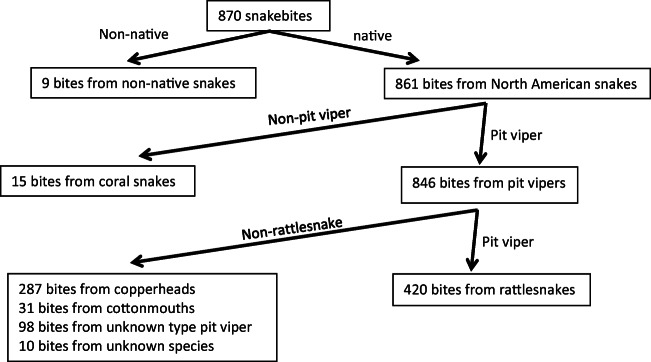
Results: A total of 420 unique cases were identified, including 94 pediatric patients. Adult patients were more likely to be male (76% vs. 62%; OR 1.98) and sustain upper extremity envenomations (57% vs. 25%; OR 4.4). After adjusting for bite location, adults were more likely to exhibit edema compared with pediatric patients. After controlling for envenomation location, there was no difference in rates of necrosis between adult and pediatric patients. Adults exhibited early hematologic toxicity less frequently than pediatric patients, but there was no difference in the rates of late hematologic toxicity. There were no differences in the rates of hypotension or intubation.
Conclusion: While adult and pediatric patients have some differences in envenomation characteristics and laboratory parameters, adults and pediatric patients had similar rates of systemic toxicity, severity, length of stay, and late hematologic toxicity.
Keywords: Antivenom; Envenomation; Pediatric; Rattlesnake; Snake.
Conflict of interest statement
None.
Figures
References
-
- Gummin DD, Mowry JB, Spyker DA, et al. 2017 annual report of the American Association of Poison Control Centers’ National Poison Data System (NPDS): 35th annual report. Clin Toxicol. 2018;21:1–203. - PubMed
