


Aberrant methylation of WD-repeat protein 41 contributes to tumour progression in triple-negative breast cancer
- PMID: 32394588
- PMCID: PMC7299681
- DOI: 10.1111/jcmm.15344
Aberrant methylation of WD-repeat protein 41 contributes to tumour progression in triple-negative breast cancer
Abstract
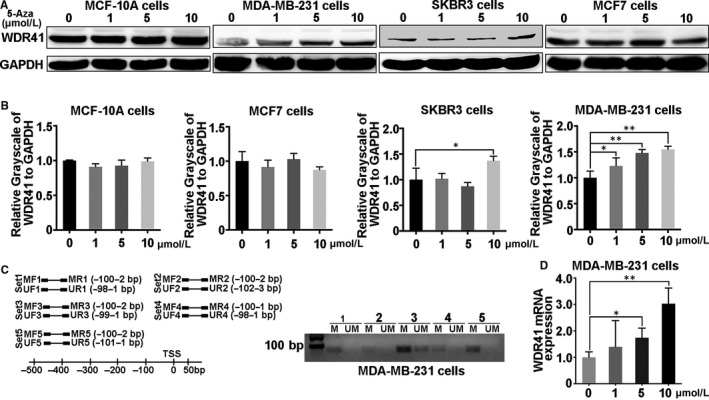
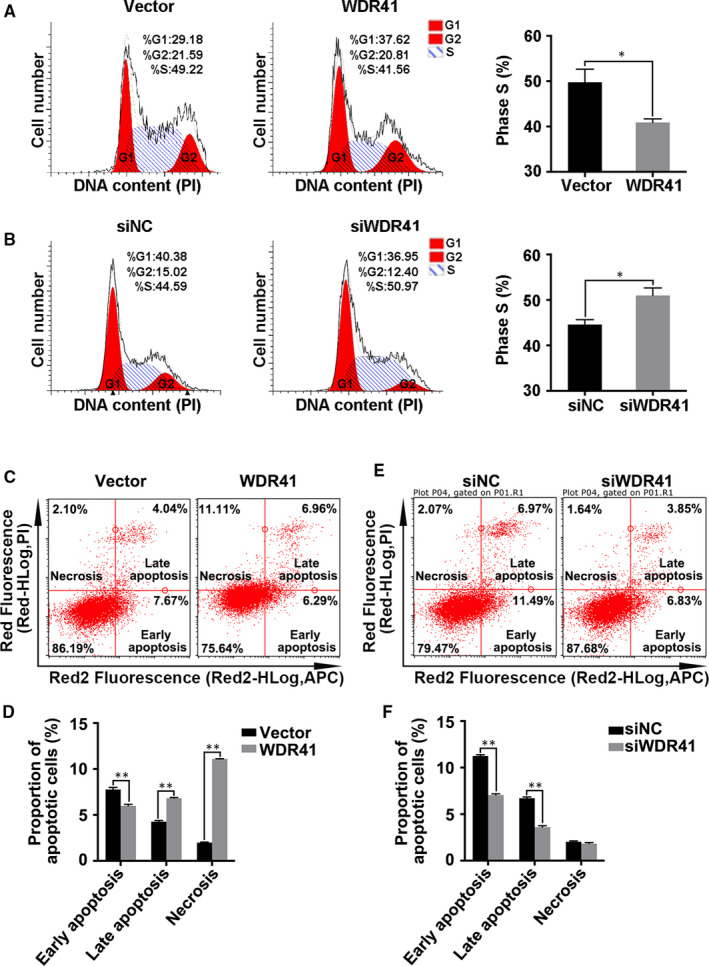
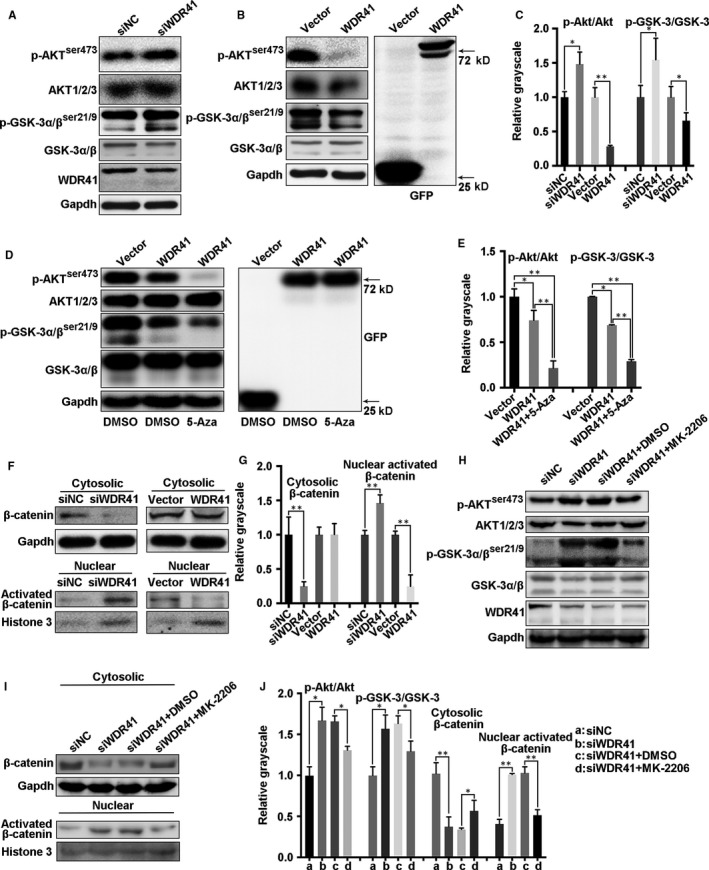
WD-repeat proteins are implicated in a variety of biological functions, most recently in oncogenesis. However, the underlying function of WD-repeat protein 41 (WDR41) in tumorigenesis remains elusive. The present study was aimed to explore the role of WDR41 in breast cancer. Combined with Western blotting and immunohistochemistry, the results showed that WDR41 was expressed at low levels in breast cancer, especially in triple-negative breast cancer (TNBC). Using methylation-specific PCR (MSP), we observed that WDR41 presented hypermethylation in MDA-MB-231 cells. Methylation inhibitor 5-aza-2'-deoxycytidine (5-aza-dC) management increased the expression of WDR41 in MDA-MB-231 cells, but not in MCF-10A (normal mammary epithelial cells) or oestrogen receptor-positive MCF-7 breast cancer cells. WDR41-down-regulation promoted, while WDR41-up-regulation inhibited the tumour characteristics of TNBC cells including cell viability, cell cycle and migration. Further, WDR41-up-regulation dramatically suppressed tumour growth in vivo. Mechanistically, WDR41 protein ablation activated, while WDR41-up-regulation repressed the AKT/GSK-3β pathway and the subsequent nuclear activation of β-catenin in MDA-MB-231 cells, and 5-aza-dC treatment enhanced this effect. After treatment with the AKT inhibitor MK-2206, WDR41-down-regulation-mediated activation of the GSK-3β/β-catenin signalling was robustly abolished. Collectively, methylated WDR41 in MDA-MB-231 cells promotes tumorigenesis through positively regulating the AKT/GSK-3β/β-catenin pathway, thus providing an important foundation for treating TNBC.
Keywords: AKT/GSK-3β/β-catenin pathway; WDR41; methylation; triple-negative breast cancer.
© 2020 The Authors. Journal of Cellular and Molecular Medicine published by Foundation for Cellular and Molecular Medicine and John Wiley & Sons Ltd.
Conflict of interest statement
No competing interests declared.
Figures




References
-
- Crozier JA, Cornell LF, Rawal B, Perez EA. Breast cancer brain metastases: molecular subtype, treatment and survival. Breast Dis. 2016;36:133‐141. - PubMed
-
- Nagini S. Breast cancer: current molecular therapeutic targets and new players. Anti‐Cancer Agent Med. 2017;17:152‐163. - PubMed
-
- Fan L, Strasser‐Weippl K, Li JJ, et al. Breast cancer in China. Lancet Oncol. 2014;15:E279‐E289. - PubMed
-
- Akdi A, Gimenez EM, Garcia‐Quispes W, et al. WDR3 gene haplotype is associated with thyroid cancer risk in a Spanish population. Thyroid. 2010;20:803‐809. - PubMed
-
- Sato N, Koinuma J, Fujita M, et al. Activation of WD repeat and high‐mobility group box DNA binding protein 1 in pulmonary and esophageal carcinogenesis. Clin Cancer Res. 2010;16:226‐239. - PubMed
Publication types
MeSH terms
Substances
LinkOut - more resources
Full Text Sources
Molecular Biology Databases
Research Materials
Miscellaneous
