


Stress, depression, diet, and the gut microbiota: human-bacteria interactions at the core of psychoneuroimmunology and nutrition
- PMID: 32395568
- PMCID: PMC7213601
- DOI: 10.1016/j.cobeha.2019.01.011
Stress, depression, diet, and the gut microbiota: human-bacteria interactions at the core of psychoneuroimmunology and nutrition
Abstract
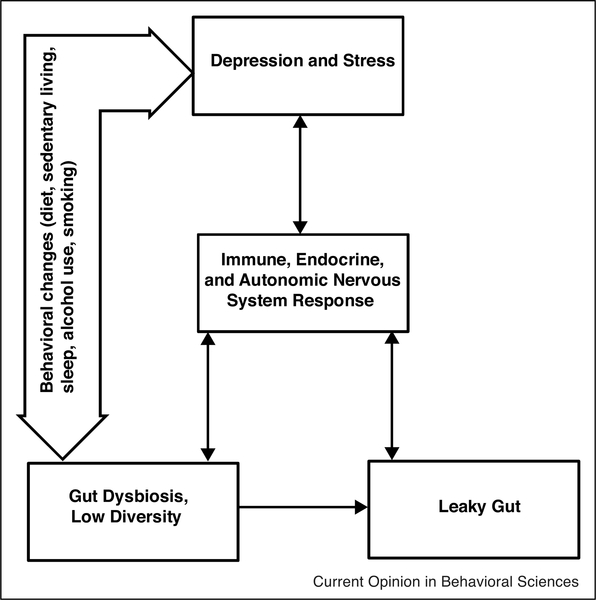
Humans and their gut bacteria have evolved multiple ways to communicate with and regulate one another. Psychological stress and depression can promote consumption of highly palatable foods, influencing which gut bacteria thrive. Additionally, stress and depression can reshape the gut bacteria's composition through stress hormones, inflammation, and autonomic alterations. In turn, the gut bacteria release metabolites, toxins, and neurohormones that can alter eating behavior and mood. Some bacterial species may encourage dysregulated eating. The gut bacteria may also upregulate stress responsiveness and heighten the risk for depression, which probiotic supplementation may attenuate. This review focuses on human studies to address the bidirectional links among diet, stress, and the gut bacteria, and their impact on immune function and health.
Conflict of interest statement
Conflict of interest statement Nothing declared.
Figures
References
-
- Fond G, Loundou A, Hamdani N, Boukouaci W, Dargel A, Oliveira J, Roger M, Tamouza R, Leboyer M, Boyer L: Anxiety and depression comorbidities in irritable bowel syndrome (IBS): a systematic review and meta-analysis. Eur Arch Psychiatry Clin Neurosci 2014, 264:651–660. - PubMed
-
- Collins SM: A role for the gut microbiota in IBS. Nat Rev Gastroenterol Hepatol 2014, 11:497. - PubMed
-
-
Rothschild D, Weissbrod O, Barkan E, Kurilshikov A, Korem T, Zeevi D, Costea PI, Godneva A, Kalka IN, Bar N: Environment dominates over host genetics in shaping human gut microbiota. Nature 2018, 555:210.
•Comparing the gut microbiota and genotypes of 1056 healthy, genetically dissimilar individuals who shared a similar living environment revealed that genetic factors play a minor role in determining the gut microbiota’s composition, and instead, diet, drugs, and anthropometrics together explain 20% of gut microbiota variability. Moreover, compared to genetic and environmental data, microbiota data function as a better predictor of host metabolic traits (e.g. glucose and obesity measures). This study illustrates the strong bi-directional relationship between the gut microbiota and human phenotype.
-
-
- Yang T, Ahmari N, Schmidt JT, Redler T, Arocha R, Pacholec K, Magee KL, Malphurs W, Owen JL, Krane GA: Shifts in the gut microbiota composition due to depleted bone marrow beta Adrenergic signaling are associated with suppressed inflammatory transcriptional networks in the mouse colon. Front Physiol 2017, 8:220. - PMC - PubMed
Grants and funding
LinkOut - more resources
Full Text Sources