


Anti-epidermal growth factor receptor therapy for glioblastoma in adults
- PMID: 32395825
- PMCID: PMC7389448
- DOI: 10.1002/14651858.CD013238.pub2
Anti-epidermal growth factor receptor therapy for glioblastoma in adults
Abstract
Background: Glioblastoma is an uncommon but highly aggressive type of brain tumour. Significant gains have been achieved in the molecular understanding and the pathogenesis of glioblastomas, however clinical improvements are difficult to obtain for many reasons. The current standard of care involves maximal safe surgical resection followed by chemoradiation and then adjuvant chemotherapy European Organisation for Research and Treatment of Cancer and the NCIC Clinical Trials Group (EORTC-NCIC) protocol with a median survival of 14.6 months. Successive phase III international randomised controlled studies have failed to significantly demonstrate survival advantage with newer drugs. Epidermal growth factor receptor (EGFR) is observed to be aberrant in 30% to 60% of glioblastomas. The receptor aberrancy is driven by abnormal gene amplification, receptor mutation, or both, in particular the extracellular vIII domain. EGFR abnormalities are common in solid tumours, and the advent of anti-EGFR therapies in non-small cell lung cancer and colorectal adenocarcinomas have greatly improved clinical outcomes. Anti-EGFR therapies have been investigated amongst glioblastomas, however questions remain about its ongoing role in glioblastoma management. This review aimed to report on the available evidence to date and perform a systematic analysis on the risks and benefits of use of anti-EGFR therapies in glioblastomas.
Objectives: To evaluate the efficacy and harms of anti-EGFR therapies for glioblastoma in adults.
Search methods: We searched CENTRAL, MEDLINE, Embase, EBM Reviews databases, with supplementary handsearches to identify all available and relevant studies to 20 April 2020.
Selection criteria: All randomised controlled trials (RCTs) using anti-EGFR therapies in adults with glioblastoma were eligible for inclusion. Anti-EGFR therapies included tyrosine kinase inhibitors, monoclonal antibodies, or vaccines. The comparison included investigational product added to standard of care versus standard of care or placebo, or investigational product against standard of care or placebo.
Data collection and analysis: The authorship team screened the search results and recorded the extracted data for analysis. We used standard Cochrane methodology to performed quantitative meta-analysis if two or more studies had appropriate and available data. Otherwise, we conducted a qualitative and descriptive analysis. We used the GRADE system to rate the certainty of the evidence. The analysis was performed along the two clinical settings: first-line (after surgery) and recurrent disease (after failure of first line treatment). Where information was available, we documented overall survival, progression-free survival, adverse events, and quality of life data from eligible studies.
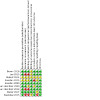
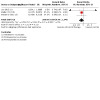
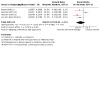
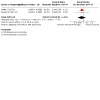
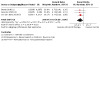
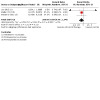
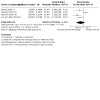
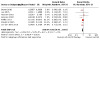
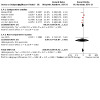
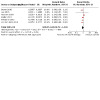
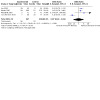
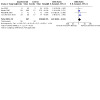
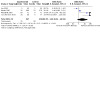
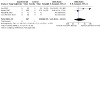
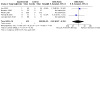
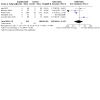
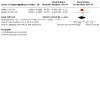
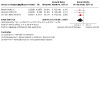
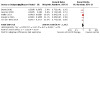
Main results: The combined searches initially identified 912 records (after removal of duplicates), and further screening resulted in 19 records for full consideration. We identified nine eligible studies for inclusion in the review. There were three first-line studies and six recurrent studies. Five studies used tyrosine kinase inhibitors (TKIs); two studies used monoclonal antibodies; and two studies used targeted vaccines. More recent studies presented greater detail in the conduct of their studies and thus had a lower risk of bias. We observed no evidence benefit in overall survival with the use of anti-EGFR therapy in the first-line or recurrent setting (hazard ratio (HR) 0.89, 95% confidence interval (CI) 0.76 to 1.04; 3 RCTs, 1000 participants, moderate-certainty evidence; and HR 0.79, 95% CI 0.51 to 1.21, 4 RCTs, 489 participants, low-certainty evidence, respectively). All the interventions were generally well tolerated with low-certainty evidence for lymphopenia (odds ratio (OR) 0.97, 95% CI 0.19 to 4.81; 4 RCTs, 1146 participants), neutropenia (OR 1.29, 95% CI 0.82 to 2.03; 4 RCTs, 1146 participants), and thrombocytopenia (OR 3.69, 95% CI 0.51 to 26.51; 4 RCTs, 1146 participants). A notable toxicity relates to ABT-414, where significant ocular issues were detected. The addition of anti-EGFR therapy showed no evidence of an increase in progression-free survival (PFS) in the first-line setting (HR 0.94, 95% CI 0.81 to 1.10; 2 RCTs, 894 participants, low-certainty evidence). In the recurrent setting, there was an increase in PFS with the use of anti-EGFR therapy (HR 0.75, 95% CI 0.58 to 0.96, 3 RCTs, 275 participants, low-certainty evidence). The available quality of life assessment data showed that anti-EGFR therapies were neither detrimental or beneficial when compared to standard care (not estimable).
Authors' conclusions: In summary, there is no evidence of a demonstrable overall survival benefit with the addition of anti-EGFR therapy in first-line and recurrent glioblastomas. Newer drugs that are specially designed for glioblastoma targets may raise the possibility of success in this population, but data are lacking at present. Future studies should be more selective in pursuing people displaying specific EGFR targets.
Copyright © 2020 The Cochrane Collaboration. Published by John Wiley & Sons, Ltd.
Conflict of interest statement
AL: has received honorarium and grants from Eisai, Mundipharma, Sanofi, and Bayer for non‐glioma conditions. MA: none known. DC: has received honoraria from Novartis and Ipsen for educational activities outside the submitted work. MK: has served on AbbVie GBM advisory boards, and his institution received research grants from AbbVie and BMS to fund clinical trials in glioblastoma. VH: none known. HW: the analysis for this Cochrane Review is based on peer‐reviewed data prepared by an independent steering trials committee. My involvement in the Australian Roche advisory board was to discuss completed trial results and how the drug may be introduced into the clinic in Australian centres. My participation on the Merck Serono‐centric steering committee was to review ongoing trial recruitment and severe adverse events. None of these activities influenced the analysis of the review data or contributed to any presented/published conclusions.
Figures

Update of
References
References to studies included in this review
Brown 2016 {published data only}
Lee 2015 {published data only}
McNeill 2014 {published data only}
-
- McNeill K, Iwamoto F, Kreisl T, Sul J, Shih J, Fine H. A randomized phase II trial of vandetanib (ZD6474) in combination with carboplatin versus carboplatin alone in adults with recurrent glioblastoma. Neuro-Oncology 2014;16:v17.
Reardon 2015 {published data only}
Reardon 2020 {published data only}
-
- Reardon DA, Desjardins A, Vredenburgh JJ, O'Rouke DM, Tran DD, Fink KL, et al. Rindopepimut with Bevacizumab for patients with relapsed EGFRvIII-expressing glioblastoma (ReACT): results of a double-blind randomized phase II trial. Clinical Cancer Research 2020;Feb 7:[Epub ahead of print]. [DOI: 10.1158/1078-0432.CCR-18-1140] - DOI - PubMed
van den Bent 2009 {published data only}
van den Bent 2019 {published data only}
-
- den Bent M, Eoli M, Sepulveda JM, Smits M, Walenkamp A, Frenel J, et al. Intellance2/EORTC 1410 randomized phase II study of Depatux-M alone and with temozolomide vs temozolomide or lomustine in recurrent EGFR amplified glioblastoma. Neuro-Oncology 2019;Nov 20:pii: noz222. [DOI: 10.1093/neuonc/noz222] - DOI - PMC - PubMed
Weller 2017 {published data only}
-
- Weller M, Butowski N, Tran DD, Recht LD, Lim M, Hirte H, et al. Rindopepimut with temozolomide for patients with newly diagnosed, EGFRvIII-expressing glioblastoma (ACT IV): a randomised, double-blind, international phase 3 trial. Lancet Oncology 2017;18(10):1373-85. - PubMed
Westphal 2015 {published data only}
-
- Westphal M, Heese O, Steinbach JP, Schnell O, Schackert G, Mehdorn M, et al. A randomised, open label phase III trial with nimotuzumab, an anti-epidermal growth factor receptor monoclonal antibody in the treatment of newly diagnosed adult glioblastoma. European Journal of Cancer 2015;51(4):522-32. - PubMed
References to studies excluded from this review
Daugherty 2014 {published data only}
-
- Daugherty LC, Fisher BJ, Morales S, Kim J, Li L, Quang TS, et al. A phase II study of surgical excision, temozolomide, radiotherapy, and anti-EGFR radioimmunotherapy (EXTRA) as adjuvant therapy in high-grade gliomas. Journal of Radiation Oncology 2014;3(4):347-53.
Hong 2012 {published data only}
Neyns 2009 {published data only}
-
- Neyns B, Sadones J, Joosens E, Bouttens F, Verbeke L, Baurain JF, et al. Stratified phase II trial of cetuximab in patients with recurrent high-grade glioma. Annals of Oncology 2009;20(9):1596-603. - PubMed
Schuster 2015 {published data only}
Sepulveda 2015 {published data only}
-
- Sepulveda JM, Vaz MA, Gil M, Reynes G, Gallego O, Bolos MV, et al. GEINO-11: A prospective multicenter, open label, phase II pilot clinical trial to evaluate safety and efficacy of Dacomitinib, a pan-HER irreversible inhibitor, in patients with recurrent glioblastoma with EGFR amplification or presence of EGFRvIII mutation. European Journal of Cancer 2015;51:S585.
Solomon 2013 {published data only}
van den Bent 2016 {published data only}
-
- Van Den Bent MJ, Gan HK, Lassman AB, Kumthekar P, Merrell R, Butowski NA, et al. Efficacy of a novel antibody-drug conjugate (ADC), ABT-414, as monotherapy in epidermal growth factor receptor (EGFR) amplified, recurrent glioblastoma (GBM). Neuro-Oncology 2016;18(18):iv44.
Wen 2014 {published data only}
Wygoda 2002 {published data only}
-
- Wygoda Z, Tarnawski R, Brady L, Steplewski Z, Bazowski P, Wojtacha M, et al. Simultaneous radiotherapy and radioimmunotherapy of malignant gliomas with anti-EGFR antibody labelled with iodine 125. Nuclear Medicine Review. Central & Eastern Europe 2002;5(1):29-33. - PubMed
Wygoda 2006 {published data only}
-
- Wygoda Z, Kula D, Bierzynska-Macyszyn G, Larysz D, Jarzab M, Wlaszczuk P, et al. Use of monoclonal anti-EGFR antibody in the radioimmunotherapy of malignant gliomas in the context of EGFR expression in grade III and IV tumors. Hybridoma (2005) 2006;25(3):125-32. - PubMed
References to ongoing studies
NCT02573324 {published data only}
-
- AbbVie Inc and Radiation Therapy Oncology Group. A study of ABT-414 in subjects with newly diagnosed glioblastoma with epidermal growth factor receptor amplification (Intellance 1). clinicaltrials.gov/show/NCT02573324 D.
Additional references
AIHW 2017
-
- Australian Institute of Health and Welfare. Cancer in Australia 2017. Cancer Series no. 101. www.aihw.gov.au/reports/cancer/cancer-in-australia-2017/contents/table-o... (accessed prior to 3 December 2018).
Aldape 2015
-
- Aldape K, Zadeh G, Mansouri S, Reifenberger G, Deimling A. Glioblastoma: pathology, molecular mechanisms and markers. Acta Neuropathologica 2015;129(6):829-48. - PubMed
An 2018
Bastien 2015
-
- Bastien JI, McNeill KA, Fine HA. Molecular characterizations of glioblastoma, targeted therapy, and clinical results to date. Cancer 2015;121(4):502-16. - PubMed
Brennan 2013
Castillo 2004
-
- Castillo L, Etienne-Grimaldi MC, Fischel JL, Formento P, Magné N, Milano G. Pharmacological background of EGFR targeting. Annals of Oncology 2004;15(7):1007-12. - PubMed
Chinot 2014
-
- Chinot OL, Wick W, Mason W, Henriksson R, Saran F, Nishikawa R, et al. Bevacizumab plus radiotherapy–temozolomide for newly diagnosed glioblastoma. New England Journal of Medicine 2014;370(8):709-22. - PubMed
Cloughesy 2014
-
- Cloughesy TF, Cavenee WK, Mischel PS. Glioblastoma: from molecular pathology to targeted treatment. Annual Review of Pathology 2014;9(1):1-25. - PubMed
Eder 2014
-
- Eder K, Kalman B. Molecular heterogeneity of glioblastoma and its clinical relevance. Pathology & Oncology Research 2014;20(4):777-87. - PubMed
Gilbert 2014
GRADEpro GDT [Computer program]
-
- GRADEpro GDT. Hamilton (ON): McMaster University (developed by Evidence Prime), 2015. Available at gradepro.org.
Haas‐Kogan 2005
-
- Haas-Kogan DA, Prados MD, Lamborn KR, Tihan T, Berger MS, Stokoe D. Biomarkers to predict response to epidermal growth factor receptor inhibitors. Cell Cycle 2005;4(10):1369-72. - PubMed
Hauschild 2012
-
- Hauschild A, Grob JJ, Demidov LV, Jouary T, Gutzmer R, Millward M, et al. Dabrafenib in BRAF-mutated metastatic melanoma: a multicentre, open-label, phase 3 randomised controlled trial. Lancet 2012;380(9839):358-65. - PubMed
Heimberger 2005
-
- Heimberger AB, Hlatky R, Suki D, Yang D, Weinberg J, Gilbert M, et al. Prognostic effect of epidermal growth factor receptor and EGFRvIII in glioblastoma multiforme patients. Clinical Cancer Research 2005;11(4):1462. - PubMed
Higgins 2011
-
- Higgins JP, Green S, editor(s). Cochrane Handbook for Systematic Reviews of Interventions Version 5.1.0 (updated March 2011). The Cochrane Collaboration, 2011. Available from handbook.cochrane.org.
Huang 2009
-
- Huang PH, Xu AM, White FM. Oncogenic EGFR signaling networks in glioma. Science Signaling 2009;2(87):re6. - PubMed
Inda 2014
Karapetis 2008
-
- Karapetis CS, Khambata-Ford S, Jonker DJ, O'Callaghan CJ, Tu D, Tebbutt NC, et al. K-ras mutations and benefit from cetuximab in advanced colorectal cancer. New England Journal of Medicine 2008;359(17):1757-65. - PubMed
Karnofsky 1948
-
- Karnofsky DA, Burchenal JH. The evaluation of chemotherapeutic agents against neoplastic disease. In: MacLeod CM, editors(s). Evaluation of Chemotherapeutic Agents. New York (NY): Columbia University Press, 1949:196.
Khasraw 2016
-
- Khasraw M, Lee A, McCowatt S, Kerestes Z, Buyse ME, Back M, et al. Cilengitide with metronomic temozolomide, procarbazine, and standard radiotherapy in patients with glioblastoma and unmethylated MGMT gene promoter in ExCentric, an open-label phase II trial. Journal of Neuro-oncology 2016;128(1):163-71. - PubMed
Langendam 2013
Lapointe 2015
Macdonald 1990
-
- Macdonald DR, Cascino TL, Schold SC Jr, Cairncross JG. Response criteria for phase II studies of supratentorial malignant glioma. Journal of Clinical Oncology 1990;8(7):1277-80. - PubMed
Magnus 2013
-
- Magnus N, D'Asti E, Garnier D, Meehan B, Rak J. Brain neoplasms and coagulation. Seminars in Thrombosis & Hemostasis 2013;39(8):881-95. - PubMed
Meader 2014
Mok 2009
-
- Mok TS, Wu YL, Thongprasert S, Yang CH, Chu DT, Saijo N, et al. Gefitinib or carboplatin–paclitaxel in pulmonary adenocarcinoma. New England Journal of Medicine 2009;361(10):947-57. - PubMed
Nabors 2015
-
- Nabors LB, Fink KL, Mikkelsen T, Grujicic D, Tarnawski R, Nam DH, et al. Two cilengitide regimens in combination with standard treatment for patients with newly diagnosed glioblastoma and unmethylated MGMT gene promoter: results of the open-label, controlled, randomized phase II CORE study. Neuro-Oncology 2015;17(5):708-17. [PMID: ] - PMC - PubMed
NCI 2017
-
- National Cancer Institute. Common Terminology Criteria for Adverse Events (CTCAE) v5.0, November 2017. https://ctep.cancer.gov/protocolDevelopment/electronic_applications/docs... (accessed 20 Feb 2020).
Nilsson 2017
Parker 2016
Perry 2012
Qian 2016
-
- Qian C, Yan H, Hu X, Zhang W, Liu H. Increased risk of venous thromboembolism in patients with brain tumors: a systematic review and meta-analysis. Thrombosis Research 2016;137:58-63. - PubMed
Reardon 2017
Review Manager 2014 [Computer program]
-
- Review Manager (RevMan). Version 5.3. Copenhagen: The Nordic Cochrane Centre, The Cochrane Collaboration, 2014.
Sampson 2010
-
- Sampson JH, Heimberger AB, Archer GE, Aldape KD, Friedman AH, Friedman HS, et al. Immunologic escape after prolonged progression-free survival with epidermal growth factor receptor variant III peptide vaccination in patients with newly diagnosed glioblastoma. Journal of Clinical Oncology 2010;28(31):4722-9. - PMC - PubMed
Scott 2008
-
- Scott NW, Fayers PM, Aaronson NK, Bottomley A, Graeff A, Groenvold M, et al, on behalf of the EORTC Quality of Life Group. EORTC QLQ-C30 reference values, 2008. www.eortc.org/app/uploads/sites/2/2018/02/reference_values_manual2008.pdf (accessed prior to 3 December 2018).
Shaw 2013
-
- Shaw AT, Kim DW, Nakagawa K, Seto T, Crinó L, Ahn MJ, et al. Crizotinib versus chemotherapy in advanced ALK-positive lung cancer. New England Journal of Medicine 2013;368(25):2385-94. - PubMed
Shinojima 2003
-
- Shinojima N, Tada K, Shiraishi S, Kamiryo T, Kochi M, Nakamura H, et al. Prognostic value of epidermal growth factor receptor in patients with glioblastoma multiforme. Cancer Research 2003;63(20):6962. - PubMed
Sottoriva 2013
Stupp 2014
-
- Stupp R, Hegi ME, Gorlia T, Erridge SC, Perry J, Hong YK, et al. Cilengitide combined with standard treatment for patients with newly diagnosed glioblastoma with methylated MGMT promoter (CENTRIC EORTC 26071-22072 study): a multicentre, randomised, open-label, phase 3 trial. Lancet Oncology 2014;15(10):1100-8. - PubMed
Stupp 2005
-
- Stupp R, Mason WP, den Bent MJ, Weller M, Fisher B, Taphoorn MJ, et al. Radiotherapy plus concomitant and adjuvant temozolomide for glioblastoma. New England Journal of Medicine 2005;352(10):987-96. - PubMed
Stupp 2017
Taphoorn 2010
-
- Taphoorn MJ, Claassens L, Aaronson NK, Coens C, Mauer M, Osoba D, et al. An international validation study of the EORTC brain cancer module (EORTC QLQ-BN20) for assessing health-related quality of life and symptoms in brain cancer patients. European Journal of Cancer 2010;46(6):1033-40. - PubMed
Thaler 2013
-
- Thaler J, Preusser M, Ay C, Kaider A, Marosi C, Zielinski C, et al. Intratumoral tissue factor expression and risk of venous thromboembolism in brain tumor patients. Thrombosis Research 2013;131(2):162-5. - PubMed
Thaler 2014
Thompson 2011
Tierney 2007
Verhaak 2010
Wen 2010
-
- Wen PY, Macdonald DR, Reardon DA, Cloughesy TF, Sorensen AG, Galanis E, et al. Updated response assessment criteria for high-grade gliomas: response assessment in neuro-oncology working group. Journal of Clinical Oncology 2010;28(11):1963-72. - PubMed
Westphal 2017
Wick 2016
Zhou 2011
-
- Zhou C, Wu YL, Chen G, Feng J, Liu XQ, Wang C, et al. Erlotinib versus chemotherapy as first-line treatment for patients with advanced EGFR mutation-positive non-small-cell lung cancer (OPTIMAL, CTONG-0802): a multicentre, open-label, randomised, phase 3 study. Lancet Oncology 2011;12(8):735-42. - PubMed
Publication types
MeSH terms
Substances
LinkOut - more resources
Full Text Sources
Medical
Research Materials
Miscellaneous
