


Examination of the ocean as a source for atmospheric microplastics
- PMID: 32396561
- PMCID: PMC7217454
- DOI: 10.1371/journal.pone.0232746
Examination of the ocean as a source for atmospheric microplastics
Abstract
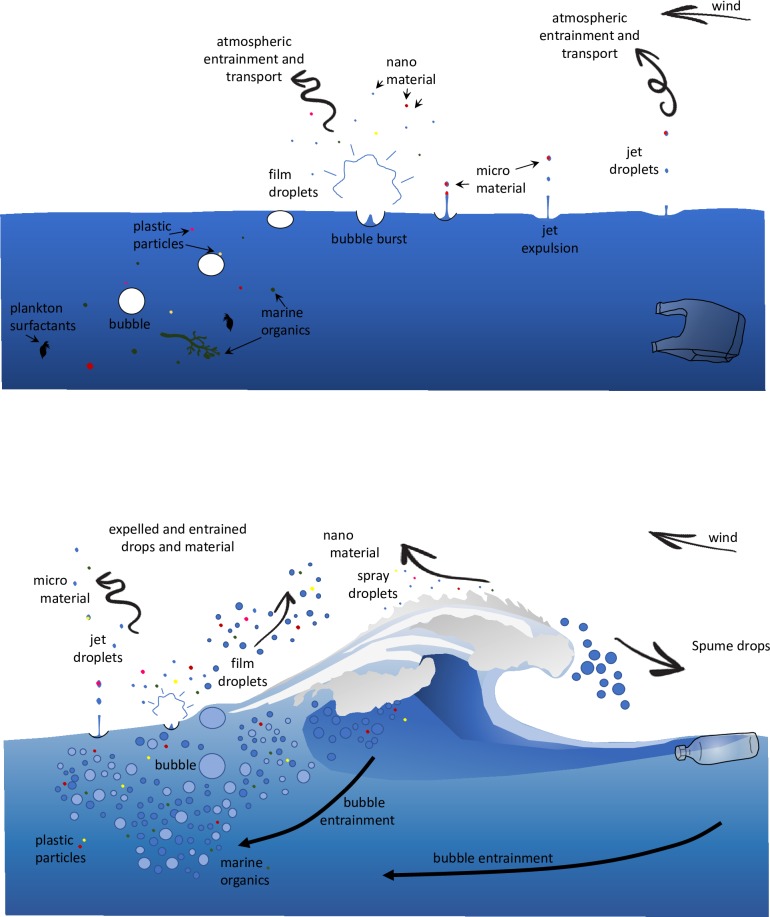
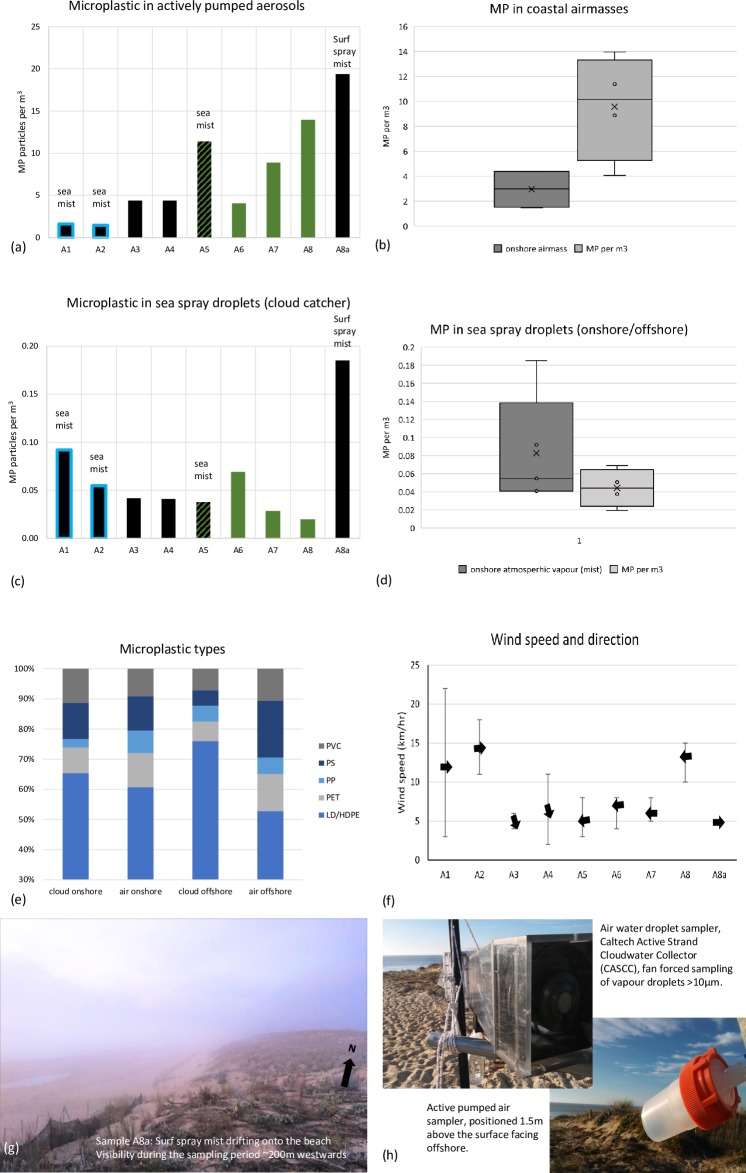
Global plastic litter pollution has been increasing alongside demand since plastic products gained commercial popularity in the 1930's. Current plastic pollutant research has generally assumed that once plastics enter the ocean they are there to stay, retained permanently within the ocean currents, biota or sediment until eventual deposition on the sea floor or become washed up onto the beach. In contrast to this, we suggest it appears that some plastic particles could be leaving the sea and entering the atmosphere along with sea salt, bacteria, virus' and algae. This occurs via the process of bubble burst ejection and wave action, for example from strong wind or sea state turbulence. In this manuscript we review evidence from the existing literature which is relevant to this theory and follow this with a pilot study which analyses microplastics (MP) in sea spray. Here we show first evidence of MP particles, analysed by μRaman, in marine boundary layer air samples on the French Atlantic coast during both onshore (average of 2.9MP/m3) and offshore (average of 9.6MP/m3) winds. Notably, during sampling, the convergence of sea breeze meant our samples were dominated by sea spray, increasing our capacity to sample MPs if they were released from the sea. Our results indicate a potential for MPs to be released from the marine environment into the atmosphere by sea-spray giving a globally extrapolated figure of 136000 ton/yr blowing on shore.
Conflict of interest statement
The authors have declared that no competing interests exist.
Figures
References
-
- Kenyon K w, Kridler E. Laysan Albatrosses Swallow Indigestible Matter. AUK. 1969;86: 339–343.
-
- Moser ML, Lee DS. A Fourteen-Year Survey of Plastic Ingestion by Western North Atlantic Seabirds. Colon Waterbirds. 1992;15: 883–94. 10.2307/1521357 - DOI
-
- Plastics Europe. Plastics–the Facts 2019. 2019.
Publication types
MeSH terms
Substances
LinkOut - more resources
Full Text Sources
