The conditional survival analysis of relapsed DLBCL after autologous transplant: a subgroup analysis of LY.12 and CORAL
- PMID: 32396614
- PMCID: PMC7218426
- DOI: 10.1182/bloodadvances.2020001646
The conditional survival analysis of relapsed DLBCL after autologous transplant: a subgroup analysis of LY.12 and CORAL
Abstract
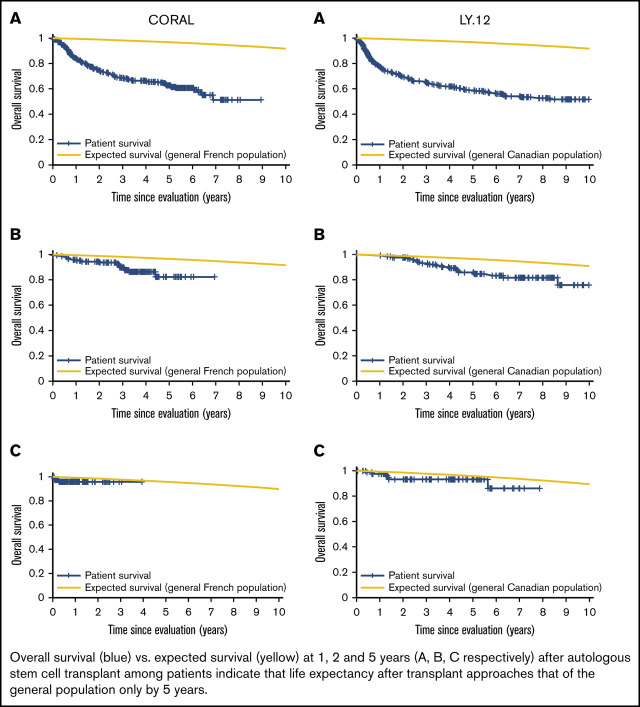
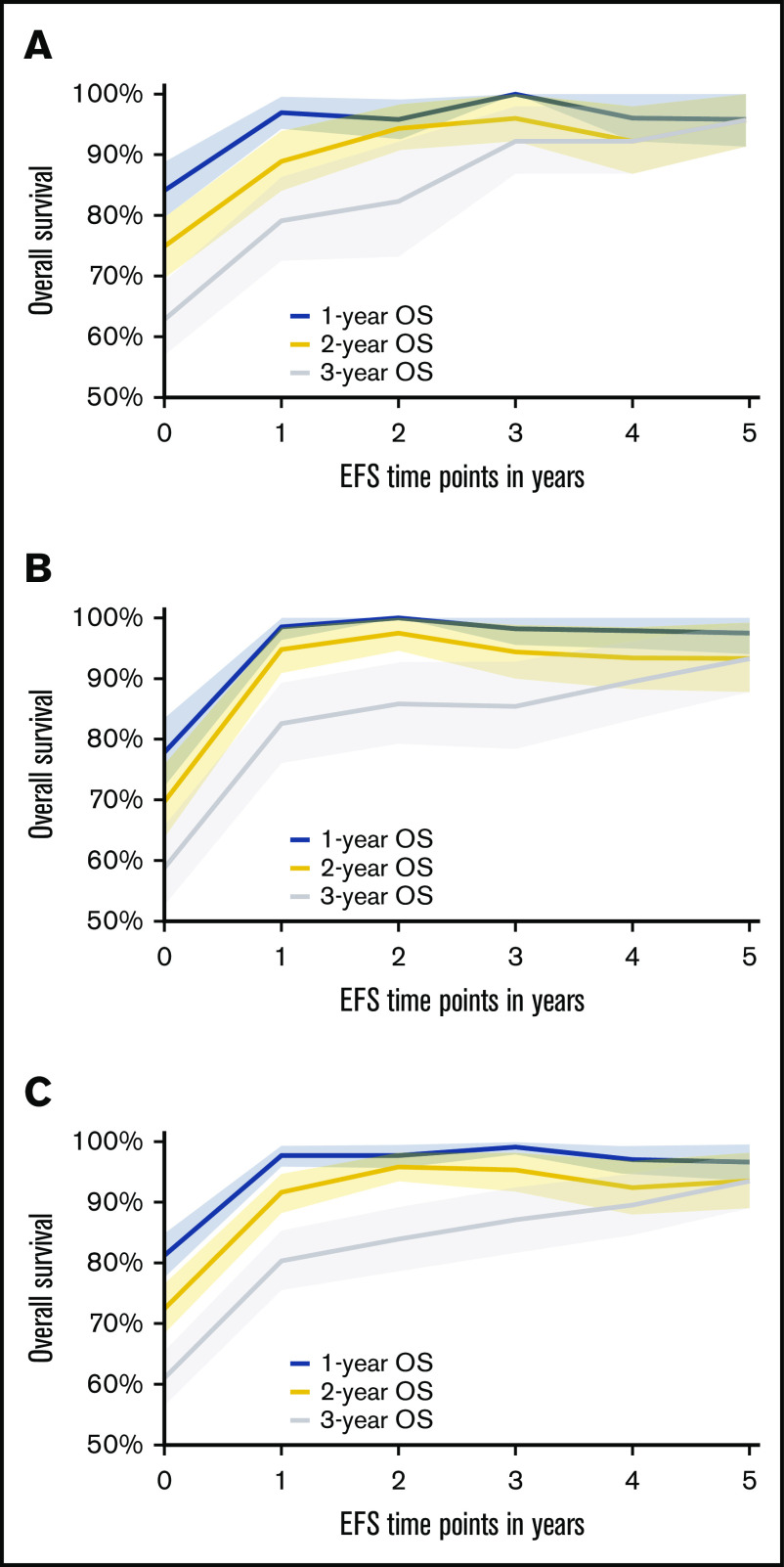
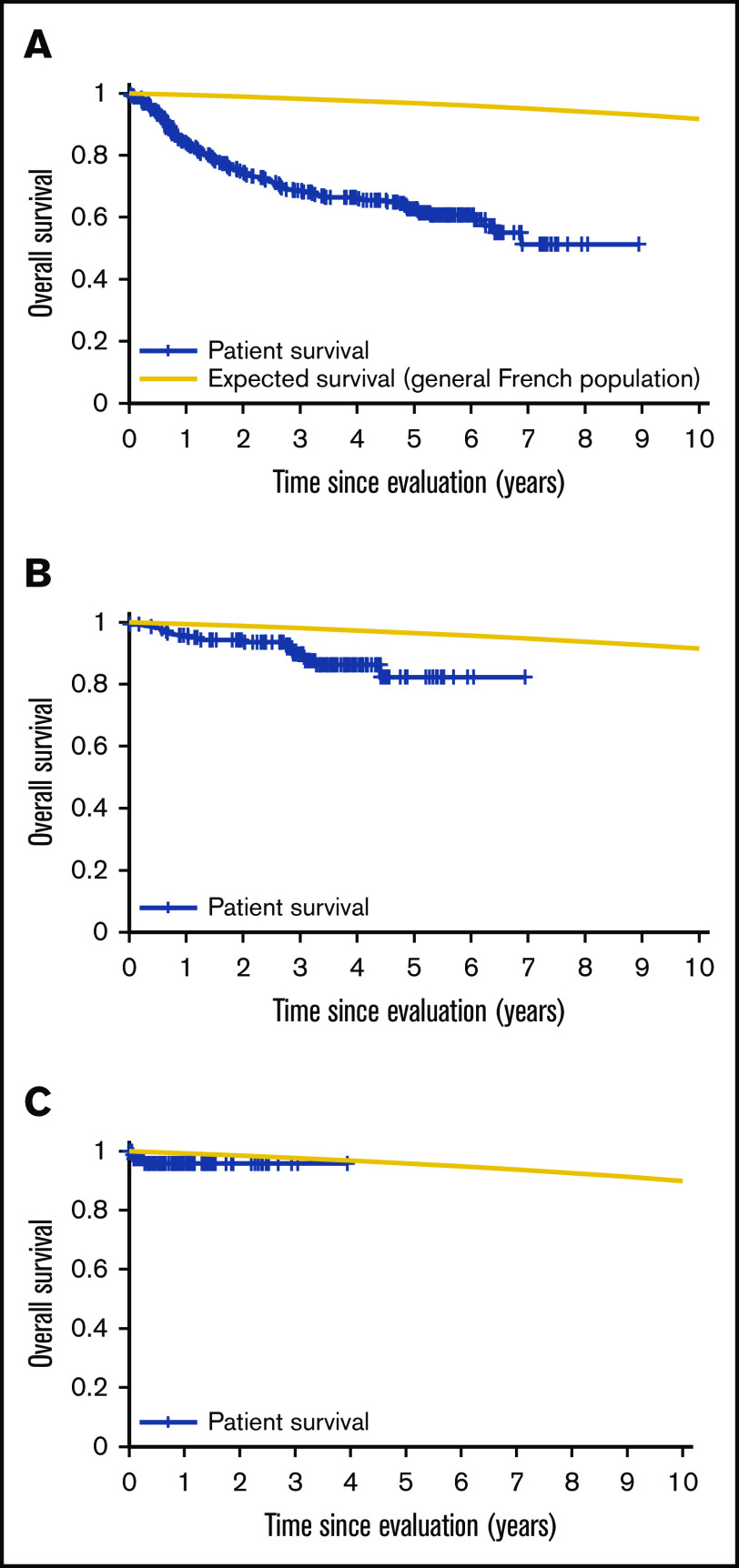
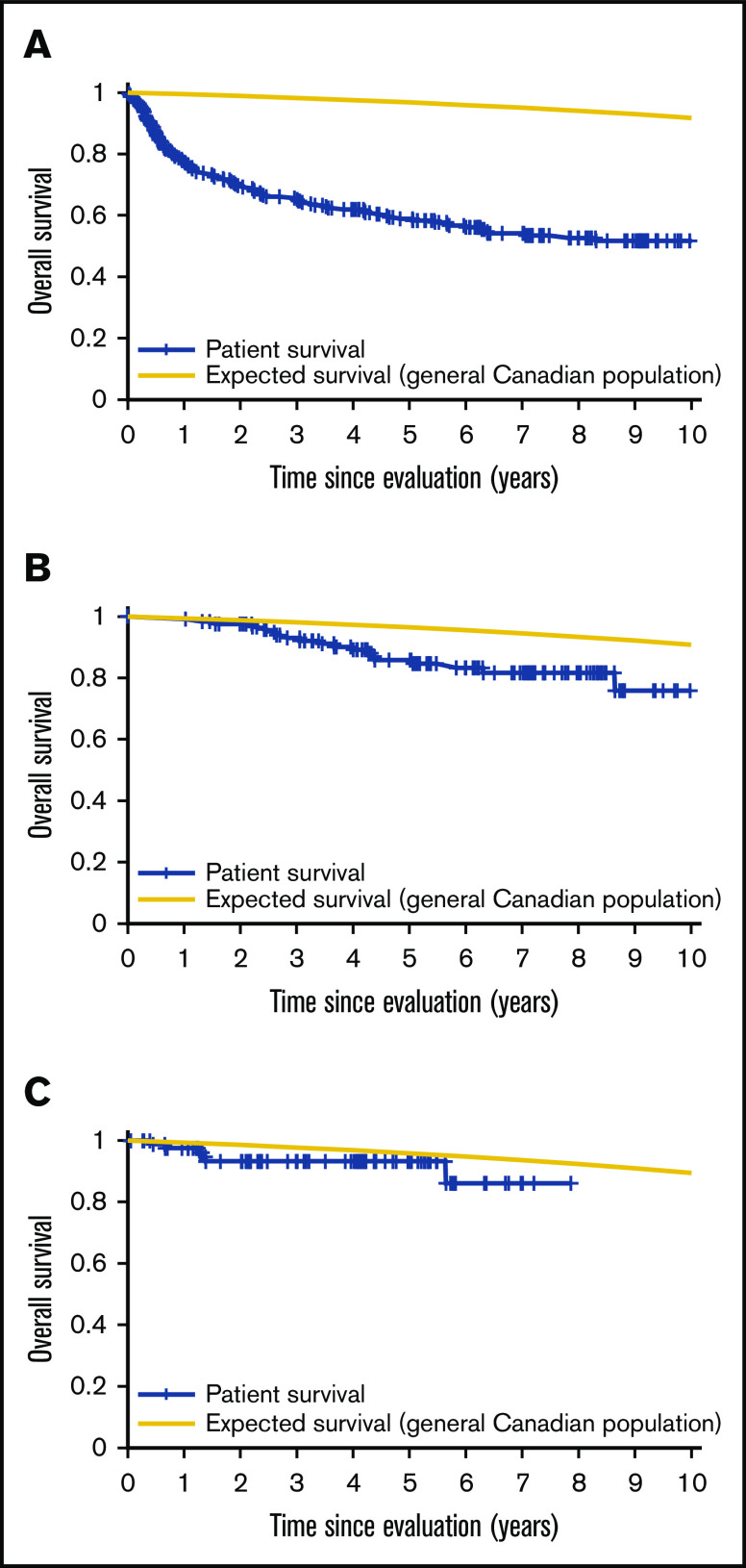
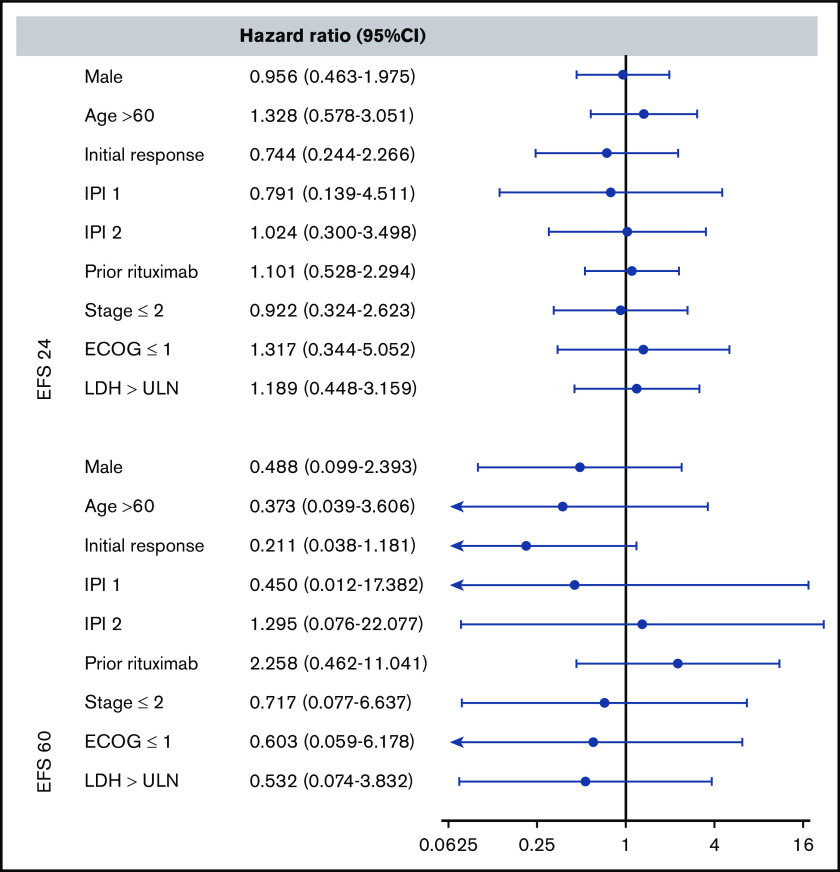
The conditional survival of patients after frontline therapy for diffuse large B-cell lymphoma (DLBCL) approaches that of the general population once patients have survived disease free for 2 years. We sought to determine the conditional survival of patients among patients with relapsed de novo DLBCL successfully undergoing an autologous stem-cell transplant (ASCT) after first relapse. A total of 478 patients with de novo DLBCL, relapsed after 1 treatment from the Collaborative Trial in Relapsed Aggressive Lymphoma (CORAL) and LY.12, were included. Patients were followed prospectively after ASCT for a median of 5.3 and 8.2 years, respectively. Individual patient data were analyzed for event-free survival (EFS) and overall survival. Standardized mortality ratios (SMRs) were estimated using French and Canadian life tables. The EFS estimates declined with each year of follow-up after ASCT and were 50.1% (95% confidence interval [CI]: 43.7% to 56.3%) and 43.4% (95% CI: 36.7% to 49.9%) at 5 years in CORAL and LY.12, respectively. The rate of death stabilized once patients achieved at least 4 years of EFS. Compared with the age- and sex-matched population, the SMR was significantly higher until 5 years after ASCT, when values were no longer statistically significant. Patients undergoing ASCT for relapsed DLBCL continue to have a higher rate of death at least until they have survived event free for 5 years. These observations can help to determine endpoints for future clinical trials in this population and for patient counseling. This trial was registered at www.clinicaltrials.gov as #NCT00078949.
© 2020 by The American Society of Hematology.
Conflict of interest statement
Conflict-of-interest disclosure: S.A. reports contributions to advisory boards for Roche Canada, Janssen, Pfizer, and AbbVie. The remaining authors declare no competing financial interests.
Figures
References
-
- Coiffier B, Lepage E, Briere J, et al. CHOP chemotherapy plus rituximab compared with CHOP alone in elderly patients with diffuse large-B-cell lymphoma. N Engl J Med. 2002;346(4):235-242. - PubMed
-
- Pfreundschuh M, Kuhnt E, Trümper L, et al. ; MabThera International Trial (MInT) Group . CHOP-like chemotherapy with or without rituximab in young patients with good-prognosis diffuse large-B-cell lymphoma: 6-year results of an open-label randomised study of the MabThera International Trial (MInT) Group. Lancet Oncol. 2011;12(11):1013-1022. - PubMed
-
- Jakobsen LH, Bøgsted M, Brown PN, et al. Minimal loss of lifetime for patients with diffuse large B-cell lymphoma in remission and event free 24 months after treatment: a Danish Population-Based Study. J Clin Oncol. 2017;35(7):778-784. - PubMed
MeSH terms
Associated data
LinkOut - more resources
Full Text Sources
Medical