Myelodysplastic syndrome unrelated to lentiviral vector in a patient treated with gene therapy for sickle cell disease
- PMID: 32396618
- PMCID: PMC7218414
- DOI: 10.1182/bloodadvances.2019001330
Myelodysplastic syndrome unrelated to lentiviral vector in a patient treated with gene therapy for sickle cell disease
Abstract
Ability to accurately attribute adverse events post–gene therapy is required to describe the benefit-risk of these novel treatments.
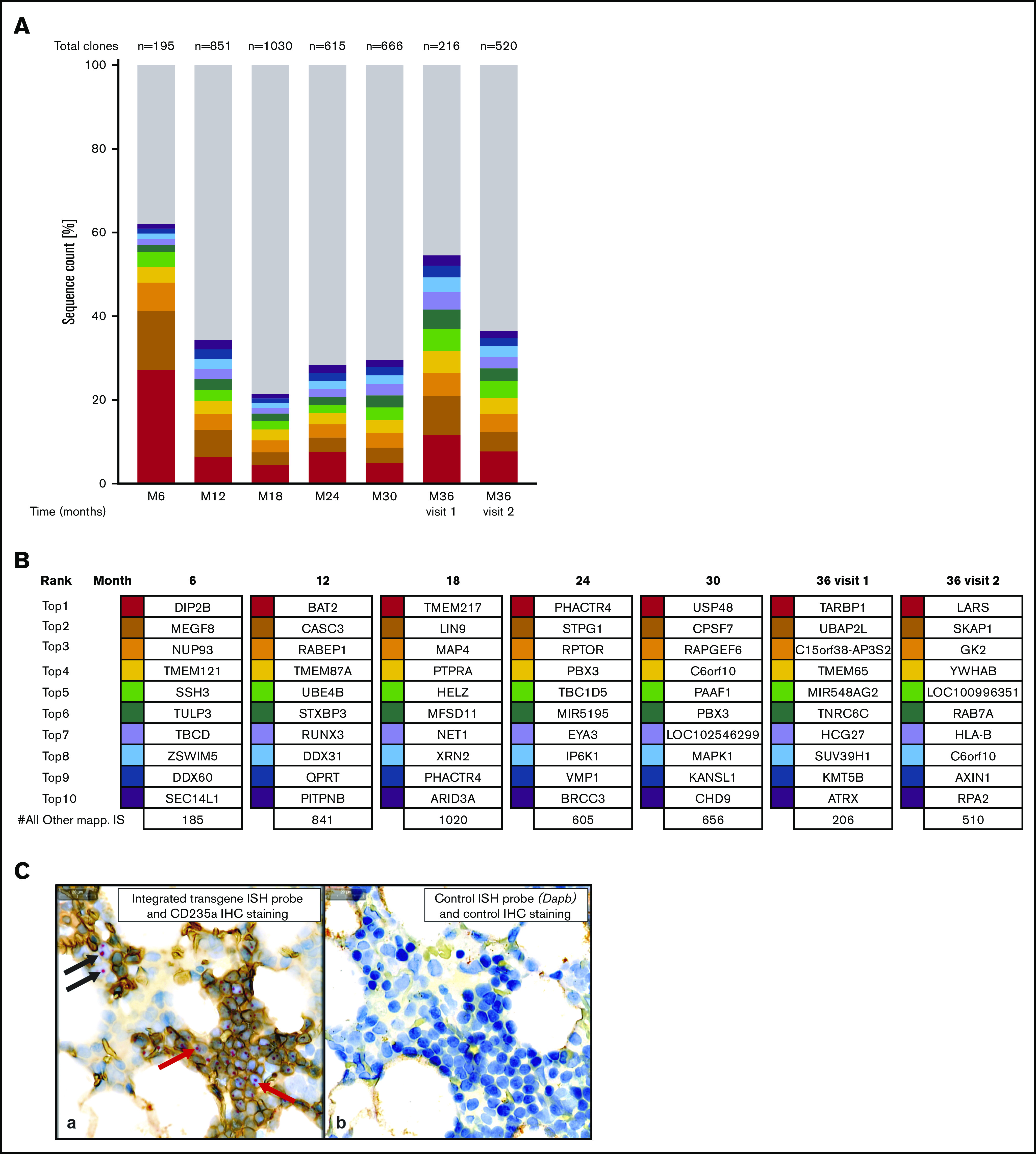
A SCD patient developed myelodysplastic syndrome post-LentiGlobin treatment; we show how insertional oncogenesis was excluded as the cause.
Conflict of interest statement
Conflict-of-interest disclosure: A.A.T. provided consultancy services for bluebird bio, Inc, Celgene, and Novartis, and receives research funding from Baxalta, bluebird bio, Inc, Celgene, and Novartis. J.K. provided consultancy services for bluebird bio, Inc, Cowen, Imara, Jeffries, Modus, Novartis, and Sangamo; provides consultancy for Guidepoint Global, GLG, and Novartis; received honoraria from Medscape, Peerview, and Rockpointe; and has membership on an entity’s board of directors or on advisory committees for the National Heart, Lung, and Blood Institute and the Sickle Cell Disease Association of America. M.B., F.J.P., J.R., and L.D. are employees of, and own stock in, bluebird bio, Inc. M.A. was employed by, and owns stock in, bluebird bio, Inc. M.C.W. is consulting for Editas, All Cells, Inc, and Veevo, and provided consulting services for TruCode. The remaining authors declare no competing financial interests.
Figures
References
-
- Ribeil JA, Hacein-Bey-Abina S, Payen E, et al. Gene therapy in a patient with sickle cell disease. N Engl J Med. 2017;376(9):848-855. - PubMed
-
- Leone G, Mele L, Pulsoni A, Equitani F, Pagano L. The incidence of secondary leukemias. Haematologica. 1999;84(10):937-945. - PubMed
-
- Pagano L, Pulsoni A, Tosti ME, et al. Acute lymphoblastic leukaemia occurring as second malignancy: report of the GIMEMA archive of adult acute leukaemia. Gruppo Italiano Malattie Ematologiche Maligne dell’Adulto. Br J Haematol. 1999;106(4):1037-1040. - PubMed
-
- Booth C, Gaspar HB, Thrasher AJ. Treating immunodeficiency through HSC gene therapy. Trends Mol Med. 2016;22(4):317-327. - PubMed