


Epidemiological, clinical, and virological characteristics of 465 hospitalized cases of coronavirus disease 2019 (COVID-19) from Zhejiang province in China
- PMID: 32397011
- PMCID: PMC7273099
- DOI: 10.1111/irv.12758
Epidemiological, clinical, and virological characteristics of 465 hospitalized cases of coronavirus disease 2019 (COVID-19) from Zhejiang province in China
Abstract
Background: The severe acute respiratory syndrome coronavirus 2 (SARS-CoV-2) and the associated coronavirus disease (COVID-19) have spread throughout China. Previous studies predominantly focused on its place of origin, Wuhan, causing over estimation of the disease severity due to selection bias. We analyzed 465 confirmed cases in Zhejiang province to determine the epidemiological, clinical, and virological characteristics of COVID-19.
Methods: Epidemiological, demographic, clinical, laboratory, and management data from qRT-PCR confirmed COVID-19 patients from January 17, 2020, to January 31, 2020, were collected, followed by multivariate logistic regression analysis for independent predictors of severe/critical-type COVID-19 and bioinformatic analysis for features of SARS-CoV-2 from Zhejiang province.
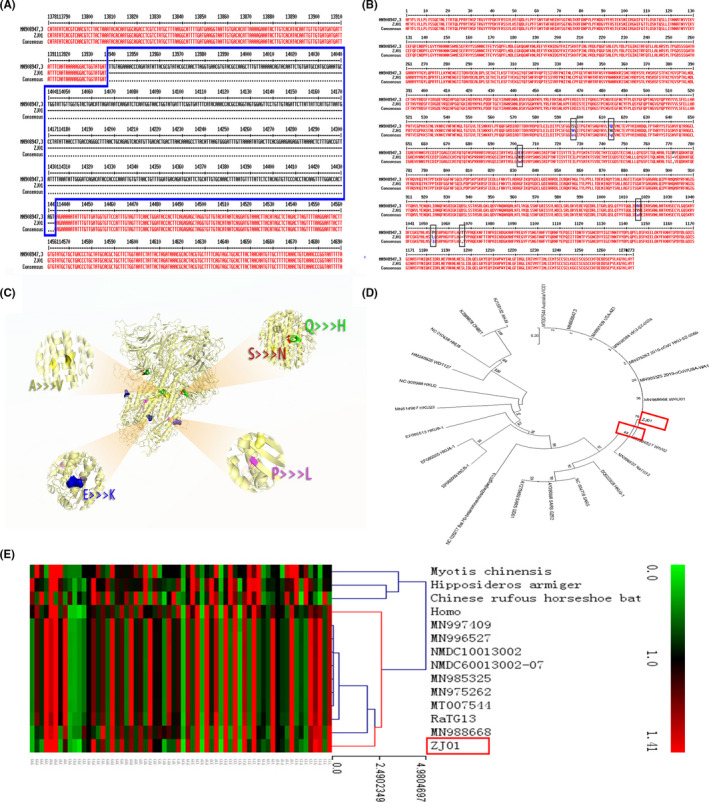
Results: Among 465 COVID-19 patients, median age was 45 years, while hypertension, diabetes, and chronic liver disease were the most common comorbidities. History of exposure to the epidemic area was present in 170 (36.56%) and 185 (39.78%) patients were clustered in 77 families. Severe/critical-type of COVID-19 developed in 49 (10.54%) patients. Fever and cough were the most common symptoms, while diarrhea/vomiting was reported in 58 (12.47%) patients. Multivariate analysis revealed eight risk factors for severe/critical COVID-19. Glucocorticoids and antibiotics were administered to 60 (12.90%) and 218(46.88%) patients, respectively. Bioinformatics showed four single amino acid mutations and one amino acid position loss in SARS-CoV-2 from Zhejiang province, with more similarity to humans than to viruses.
Conclusions: SARS-CoV-2 showed virological mutations and more human transmission in Zhejiang province, indicating considerable epidemiological and clinical changes. Caution in glucocorticoid and antibiotics use is advisable.
Keywords: Zhejiang province; coronavirus disease 2019 (COVID-19); risk factors; severe acute respiratory syndrome coronavirus 2 (SARS-CoV-2).
© 2020 The Authors. Influenza and Other Respiratory Viruses published by John Wiley & Sons Ltd.
Figures
References
-
- WHO . Clinical management of severe acute respiratory infection when Novel coronavirus (nCoV) infection is suspected: interim guidance. Jan 11, 2020. https://wwwwhoint/internal‐publications‐detail/clinical‐management‐of‐se... (accessed Jan 30 2020 2020).
-
- Drosten C, Gunther S, Preiser W, et al. Identification of a novel coronavirus in patients with severe acute respiratory syndrome. N Engl J Med. 2003;348(20):1967‐1976. - PubMed
Publication types
MeSH terms
Grants and funding
LinkOut - more resources
Full Text Sources
Miscellaneous
