


Mechanical Properties of Thermoplastic Polymers for Aligner Manufacturing: In Vitro Study
- PMID: 32397575
- PMCID: PMC7345642
- DOI: 10.3390/dj8020047
Mechanical Properties of Thermoplastic Polymers for Aligner Manufacturing: In Vitro Study
Abstract
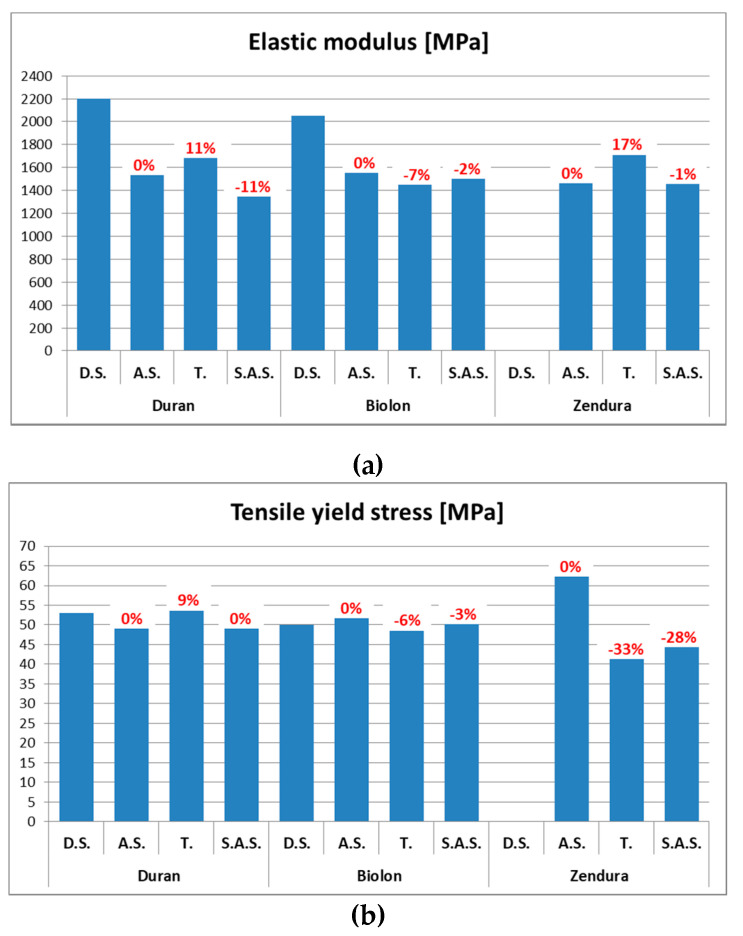
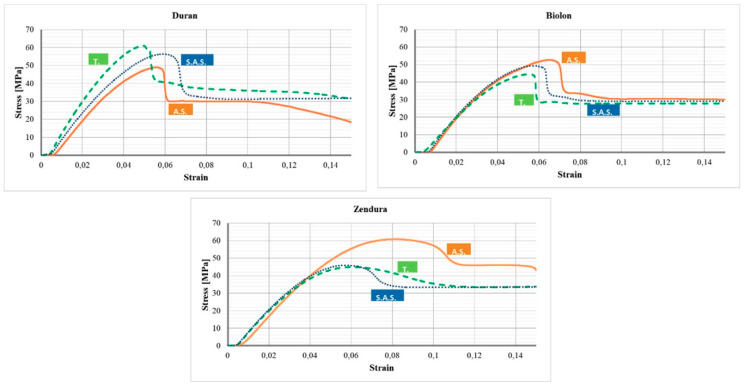
The use of metal-free thermoplastic materials plays a key role in the orthodontic digital workflow due to the increasing demand for clear aligner treatments. Three thermoplastic polymers commonly used to fabricate clear aligners, namely Duran®, Biolon® and Zendura®, were investigated to evaluate the effect of thermoforming (T.), storage in artificial saliva (S.A.S.) and their combination on their mechanical properties. Elastic modulus and yield stress of the specimens were characterized. Each material was characterized for each condition through tensile tests (ISO527-1). The results showed that thermoforming does not lead to a significant decrease in yield stress, except for Zendura® that showed about a 30% decrease. An increase of the elastic modulus of Duran® and Zendura®, instead, was observed after thermoforming. The same increase was noticed for the yield stress of Duran®. For S.A.S. specimens, the elastic modulus generally decreases compared to supplier condition (A.S.) and simply thermoformed material. A decrease of yield stress, instead, is significant for Zendura®. The results demonstrated that the impact of the operating conditions on the mechanical properties can vary according to the specific polymer. To design reliable and effective orthodontic treatments, the materials should be selected after their mechanical properties are characterized in the simulated intraoral environment.
Keywords: mechanical properties; orthodontic aligners; simulated oral environment; thermoplastic polymers.
Conflict of interest statement
The authors declare no conflict of interest.
Figures
References
-
- Bucci R., Rongo R., Zito E., Valletta R., Michelotti A., D’Antò V. Translation and validation of the italian version of the Psychosocial Impact of Dental Aesthetics Questionnaire (pidaq) among adolescents. Eur. J. Paediatr. Dent. 2017;18:158–162. - PubMed
-
- Miller K.B., McGorray S.P., Womack R., Quintero J.C., Perelmuter M., Gibson J., Dolan T.A., Wheeler T.T. A comparison of treatment impacts between Invisalign aligner and fixed appliance therapy during the first week of treatment. Am. J. Orthod. Dentofac. Orthop. 2007;131:302.e1–302.e9. doi: 10.1016/j.ajodo.2006.05.031. - DOI - PubMed
LinkOut - more resources
Full Text Sources
