


Association between serum uric acid and metabolic syndrome: a cross-sectional study in Bangladeshi adults
- PMID: 32398834
- PMCID: PMC7217902
- DOI: 10.1038/s41598-020-64884-7
Association between serum uric acid and metabolic syndrome: a cross-sectional study in Bangladeshi adults
Abstract
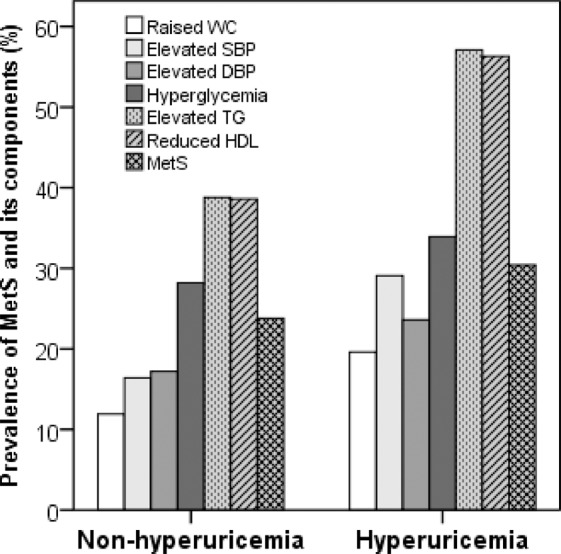
Elevated levels of serum uric acid (SUA) have been suggested to associate with cardiovascular disease, diabetes and metabolic syndrome (MetS). However, information is limited on the association between SUA and MetS in general adults. This study aimed to assess the relationship of SUA with MetS and its components in general adults in Bangladesh. A total of 420 participants were enrolled in this study and biochemical parameters including SUA, fasting blood glucose (FBG) and lipid profile were analyzed using standard methods. The NECP criteria were applied to define MetS. The association of SUA with MetS and its components were evaluated by multinomial logistic regression models. The overall prevalence of MetS was 22% with 21.9% in males and 22.1% in female participants. Male subjects had a high prevalence of elevated components of MetS than in the female subjects (p < 0.05 for all cases). The mean concentration of SUA was significantly higher in subjects of the MetS group compared to the non-MetS group (p < 0.05). The components of MetS were raised with the increasing concentrations of SUA across the quartiles. In regression analysis, SUA was significantly associated with the prevalence of MetS in Bangladeshi adults. In conclusion, elevated SUA was significantly associated with the prevalence of MetS and its components.
Conflict of interest statement
The authors declare no competing interests.
Figures
References
MeSH terms
Substances
LinkOut - more resources
Full Text Sources
Medical
