


Molecular and cellular mechanisms underlying brain metastasis of breast cancer
- PMID: 32399646
- PMCID: PMC7497304
- DOI: 10.1007/s10555-020-09881-y
Molecular and cellular mechanisms underlying brain metastasis of breast cancer
Abstract
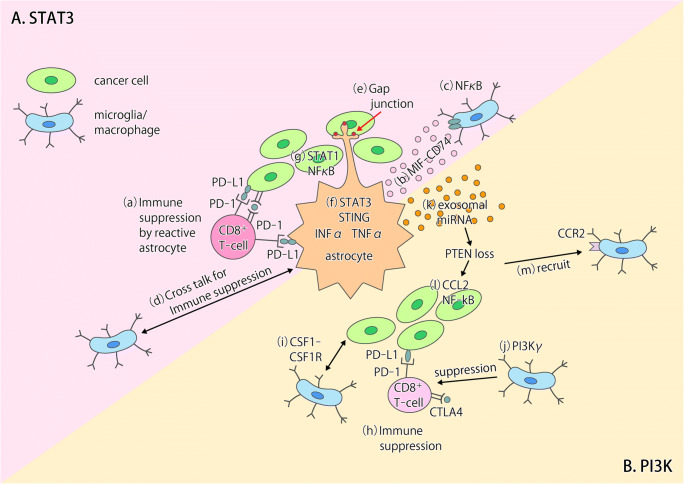
Metastasis of cancer cells to the brain occurs frequently in patients with certain subtypes of breast cancer. In particular, patients with HER2-positive or triple-negative breast cancer are at high risk for the development of brain metastases. Despite recent advances in the treatment of primary breast tumors, the prognosis of breast cancer patients with brain metastases remains poor. A better understanding of the molecular and cellular mechanisms underlying brain metastasis might be expected to lead to improvements in the overall survival rate for these patients. Recent studies have revealed complex interactions between metastatic cancer cells and their microenvironment in the brain. Such interactions result in the activation of various signaling pathways related to metastasis in both cancer cells and cells of the microenvironment including astrocytes and microglia. In this review, we focus on such interactions and on their role both in the metastatic process and as potential targets for therapeutic intervention.
Keywords: Astrocyte; Brain metastasis; Breast cancer; PI3K-Akt; STAT3; xCT.
Conflict of interest statement
The authors declare that they have no conflict of interest.
Figures
References
-
- Lin NU, Bellon JR, Winer EP. CNS metastases in breast cancer. Journal of Clinical Oncology. 2004;22(17):3608–3617. - PubMed
-
- Nussbaum ES, Djalilian HR, Cho KH, Hall WA. Brain metastases: Histology, multiplicity, surgery, and survival. Cancer. 1996;78(8):1781–1788. - PubMed
-
- Kennecke H, Yerushalmi R, Woods R, Cheang MC, Voduc D, Speers CH, et al. Metastatic behavior of breast cancer subtypes. Journal of Clinical Oncology. 2010;28(20):3271–3277. - PubMed
-
- Perou CM, Sorlie T, Eisen MB, van de Rijn M, Jeffrey SS, Rees CA, et al. Molecular portraits of human breast tumours. Nature. 2000;406:747–752. - PubMed
Publication types
MeSH terms
Substances
LinkOut - more resources
Full Text Sources
Medical
Research Materials
Miscellaneous
