


Pharmacological sex hormone manipulation as a risk model for depression
- PMID: 32399989
- PMCID: PMC7383584
- DOI: 10.1002/jnr.24632
Pharmacological sex hormone manipulation as a risk model for depression
Abstract
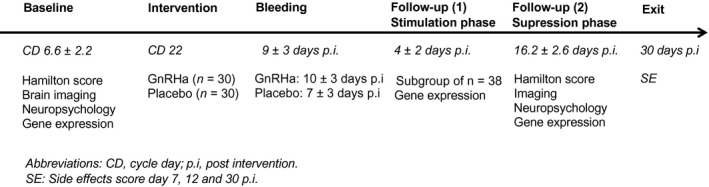
Sex hormone transition may trigger severe depressive episodes in some women. In order to map mechanisms related to such phenomena we developed a pharmacological preclinical human model using sex hormone manipulation with gonadotropin releasing hormone agonist (GnRHa) in a placebo-controlled design. Here the findings from this model is synthesized and discussed in the context of related literature on hormonal contributions to reproductive mental health disorders. The GnRha model work points to an estradiol-dependent depressive response in healthy women undergoing short-term sex hormone manipulation with GnRHa, which is linked to serotonin transporter changes (a key regulator of synaptic serotonin), a disengagement of hippocampus, and overengagement of brain networks recruited when processing emotional salient information. Further, the GnRHa model suggest that key brain regions in the reward circuit are less engaged in positive stimuli when undergoing sex hormone manipulation, which may underlie anhedonia. Also, the work supports that enhanced sensitivity to estrogen signaling at the level of gene expression may drive increased risk for depressive symptoms when exposed to sex steroid hormone fluctuations. In conclusion, the GnRHa model work highlights the brain signatures of rapid and profound changes in sex steroid hormone milieu, which reflect plausible mechanisms by which risk for mood disorders works. This model points to the role of estrogen dynamics and sensitivity, and offers a rationale for personalized prevention in hormonal transition phases, for example pregnancy to postpartum transition, perimenopause, and hormone treatments, which now can move into clinical translation and ideally pave the way for protecting mental and cognitive health.
© 2020 The Authors. Journal of Neuroscience Research published by Wiley Periodicals LLC.
Conflict of interest statement
VGF declares that she has received honorarium as consultant for SAGE therapeutics.
Figures
References
-
- Bixo, M. , Ekberg, K. , Poromaa, I. S. , Hirschberg, A. L. , Jonasson, A. F. , Andreen, L. , … Backstrom, T. (2017). Treatment of premenstrual dysphoric disorder with the GABAA receptor modulating steroid antagonist Sepranolone (UC1010)‐A randomized controlled trial. Psychoneuroendocrinology, 80, 46–55. 10.1016/j.psyneuen.2017.02.031 - DOI - PubMed
Publication types
MeSH terms
Substances
LinkOut - more resources
Full Text Sources
Medical
