


Comparative Exposure Assessment Using Silicone Passive Samplers Indicates That Domestic Dogs Are Sentinels To Support Human Health Research
- PMID: 32401030
- PMCID: PMC7655112
- DOI: 10.1021/acs.est.9b06605
Comparative Exposure Assessment Using Silicone Passive Samplers Indicates That Domestic Dogs Are Sentinels To Support Human Health Research
Abstract
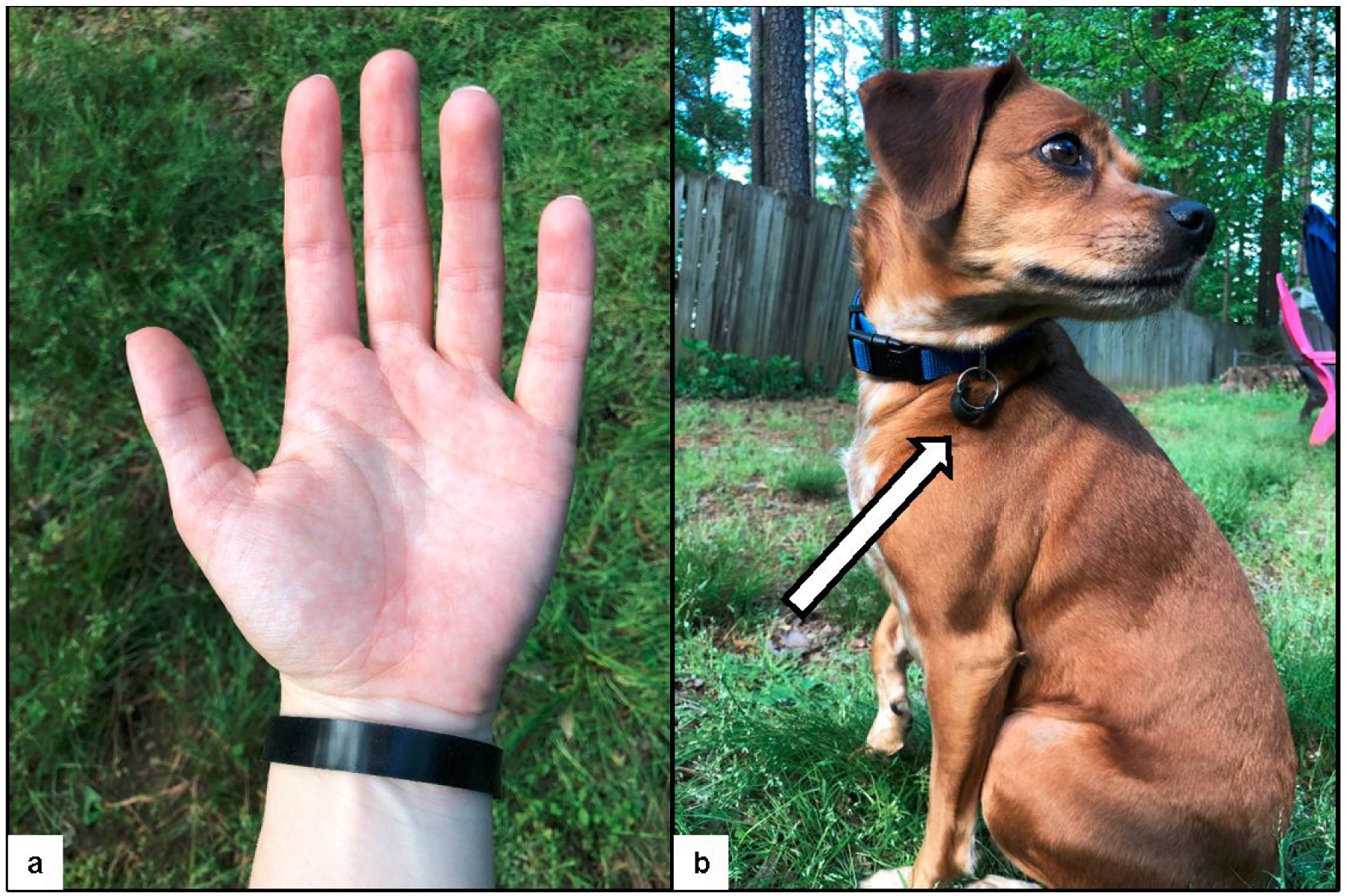
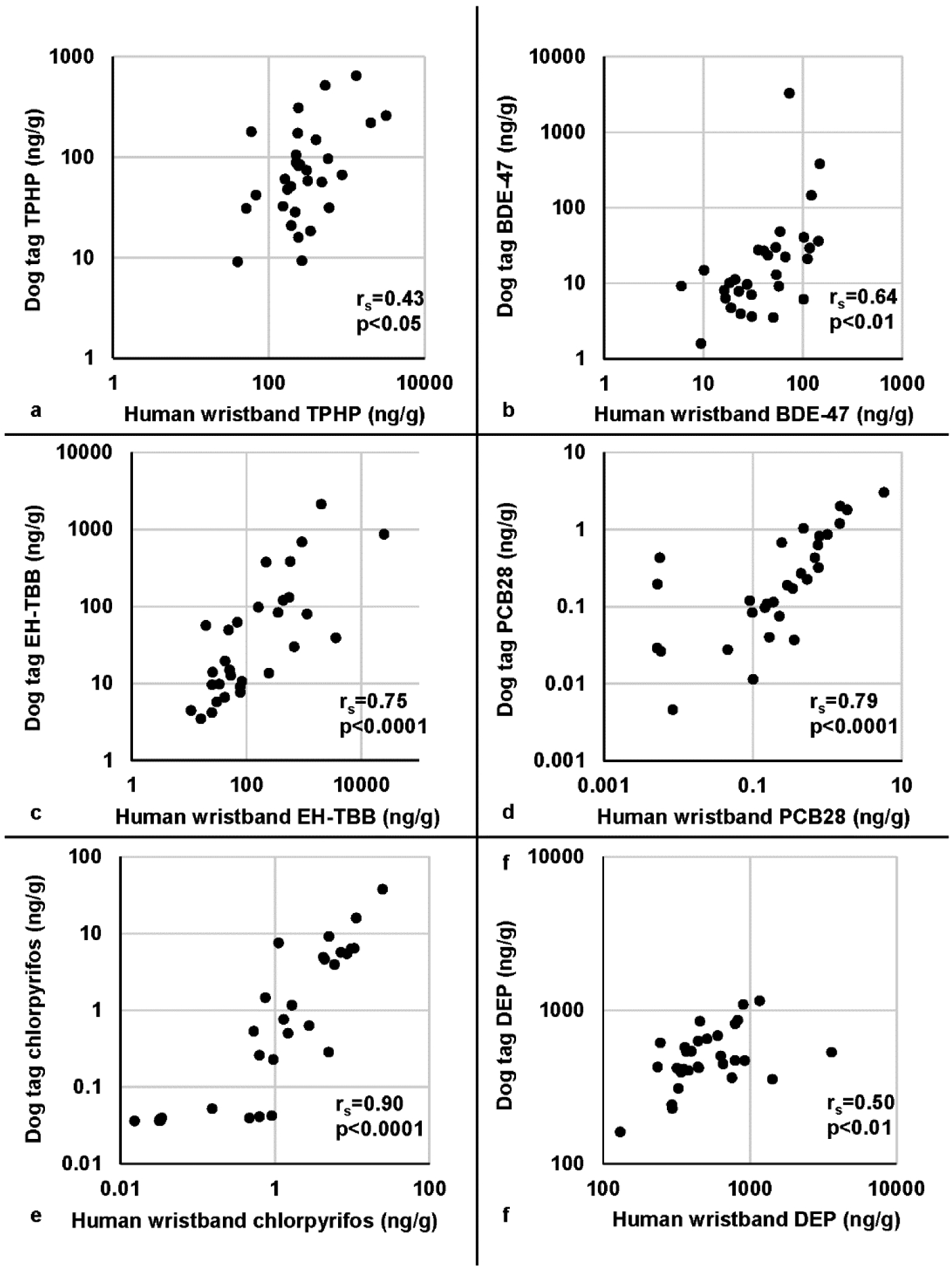
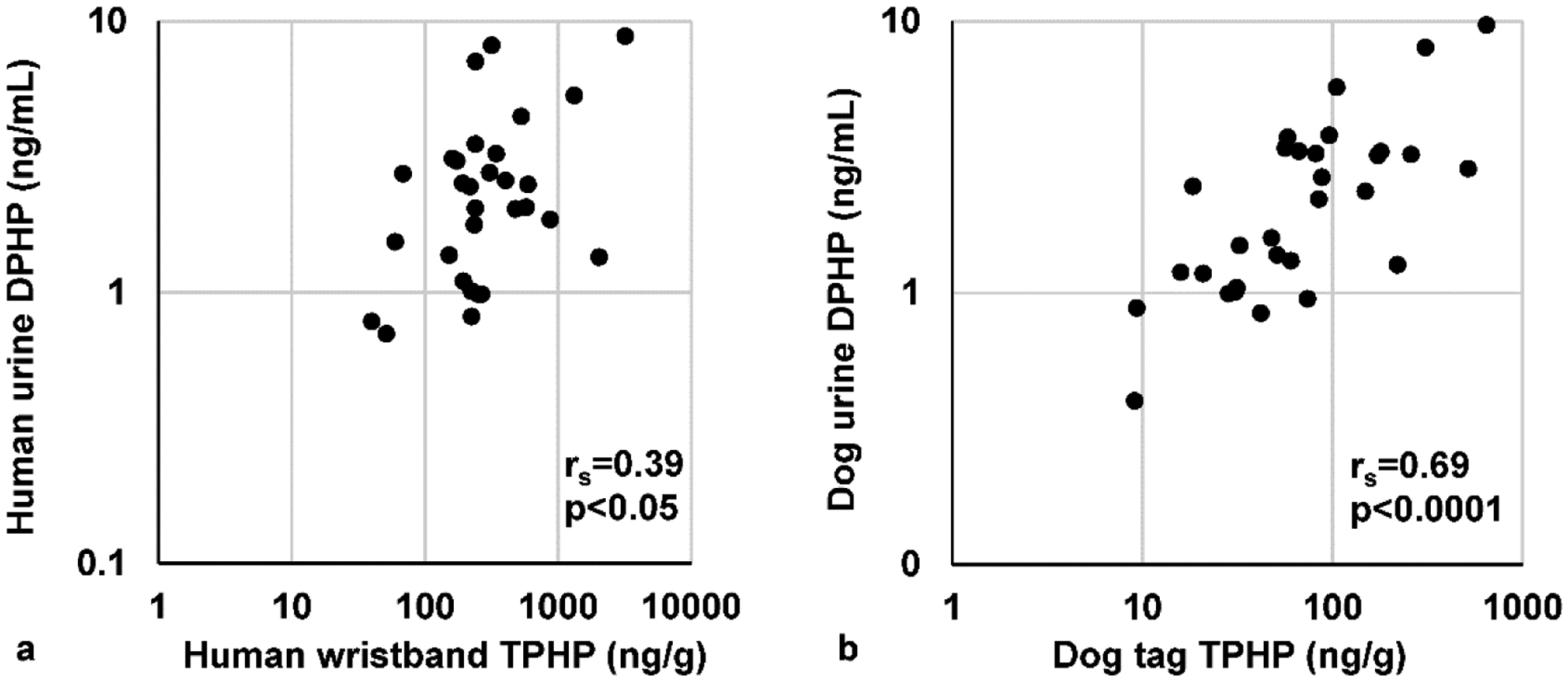
Silicone wristbands are promising passive samplers to support epidemiological studies in characterizing exposure to organic contaminants; however, investigating associated health risks remains challenging because of the latency period for many chronic diseases that take years to manifest. Dogs provide valuable insights as sentinels for exposure-related human disease because they share similar exposures in the home, have shorter life spans, share many clinical/biological features, and have closely related genomes. Here, we evaluated exposures among pet dogs and their owners using silicone dog tags and wristbands to determine if contaminant levels were correlated with validated exposure biomarkers. Significant correlations between measures on dog tags and wristbands were observed (rs = 0.38-0.90; p < 0.05). Correlations with their respective urinary biomarkers were stronger in dog tags compared to that in human wristbands (rs = 0.50-0.71; p < 0.01) for several organophosphate esters. This supports the value of using silicone bands with dogs to investigate health impacts on humans from shared exposures.
Conflict of interest statement
Competing interests
The authors declare no competing interests.
Figures
References
-
- Rappaport SM, Implications of the exposome for exposure science. J Expo Sci Environ Epidemiol 2011, 21, (1), 5–9. - PubMed
Publication types
MeSH terms
Substances
Grants and funding
LinkOut - more resources
Full Text Sources
