


Stabilization of MORC2 by estrogen and antiestrogens through GPER1- PRKACA-CMA pathway contributes to estrogen-induced proliferation and endocrine resistance of breast cancer cells
- PMID: 32401166
- PMCID: PMC7469550
- DOI: 10.1080/15548627.2019.1659609
Stabilization of MORC2 by estrogen and antiestrogens through GPER1- PRKACA-CMA pathway contributes to estrogen-induced proliferation and endocrine resistance of breast cancer cells
Abstract
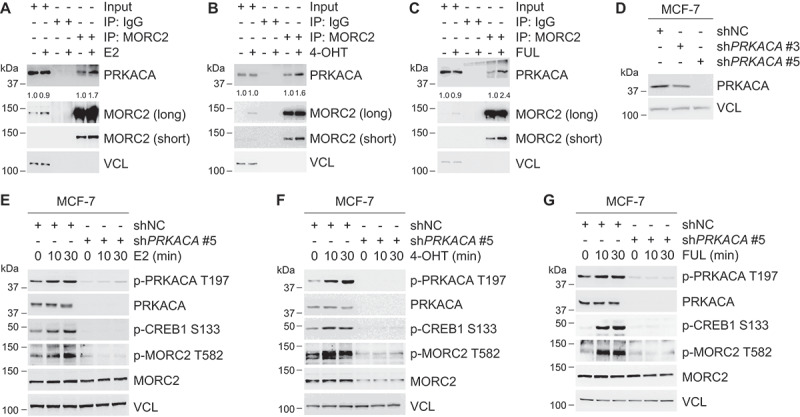
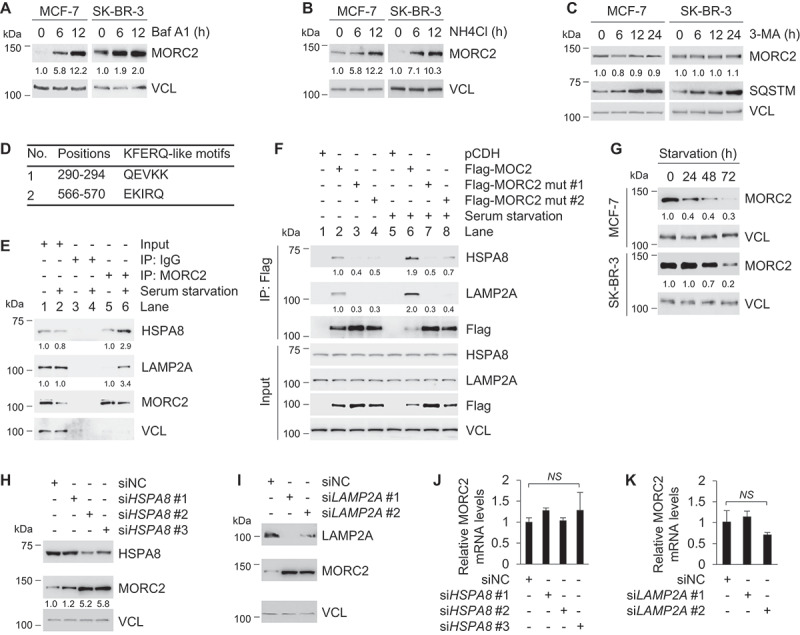
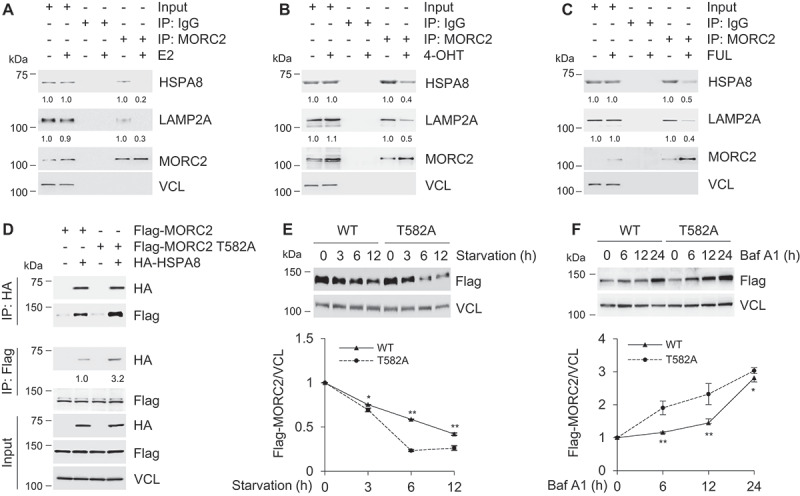
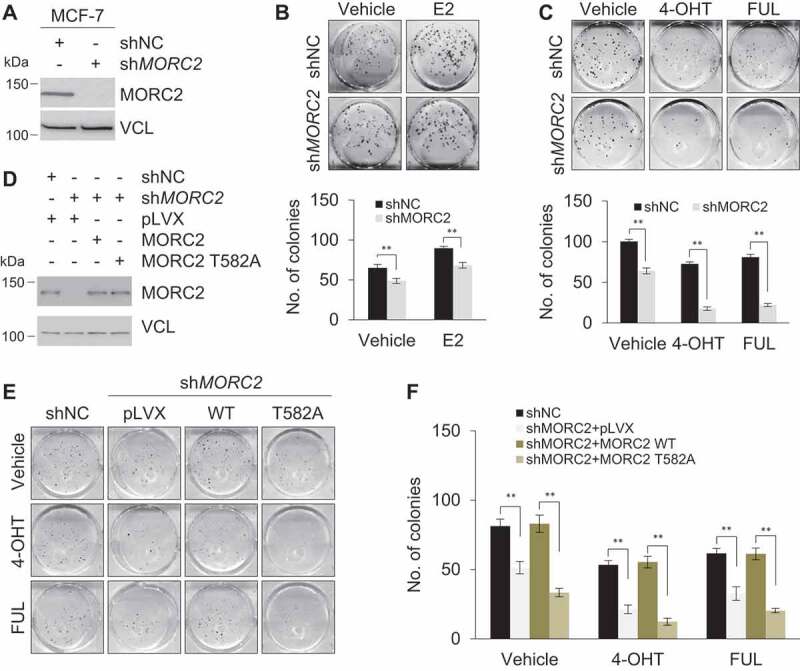
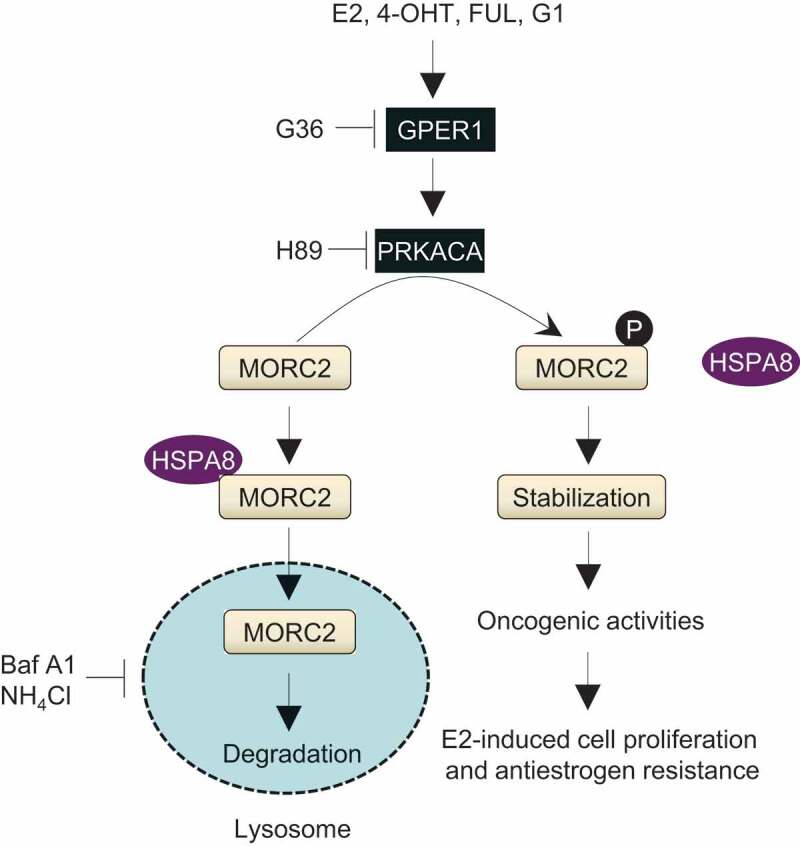
Aberrant activation of estrogen signaling through three ESR (estrogen receptor) subtypes, termed ESR1/ERα, ESR2/ERβ, and GPER1 (G protein-coupled estrogen receptor 1), is implicated in breast cancer pathogenesis and progression. Antiestrogens tamoxifen (TAM) and fulvestrant (FUL) are effective for treatment of ESR1-positive breast tumors, but development of resistance represents a major clinical challenge. However, the molecular mechanisms behind these events remain largely unknown. Here, we report that 17β-estradiol (E2), TAM, and FUL stabilize MORC2 (MORC family CW-type zinc finger 2), an emerging oncoprotein in human cancer, in a GPER1-dependent manner. Mechanistically, GPER1 activates PRKACA (protein kinase cAMP-activated catalytic subunit alpha), which in turn phosphorylates MORC2 at threonine 582 (T582). Phosphorylated MORC2 decreases its interaction with HSPA8 (heat shock protein family A [Hsp70] member 8) and LAMP2A (lysosomal associated membrane protein 2A), two core components of the chaperone-mediated autophagy (CMA) machinery, thus protecting MORC2 from lysosomal degradation by CMA. Functionally, knockdown of MORC2 attenuates E2-induced cell proliferation and enhances cellular sensitivity to TAM and FUL. Moreover, introduction of wild-type MORC2, but not its phosphorylation-lacking mutant (T582A), in MORC2-depleted cells restores resistance to antiestrogens. Clinically, the phosphorylation levels of MORC2 at T582 are elevated in breast tumors from patients undergoing recurrence after TAM treatment. Together, these findings delineate a phosphorylation-dependent mechanism for MORC2 stabilization in response to estrogen and antiestrogens via blocking CMA-mediated lysosomal degradation and uncover a dual role for MORC2 in both estrogen-induced proliferation and resistance to antiestrogen therapies of breast cancer cells.
Abbreviations: 4-OHT: 4-hydroxytamoxifen; Baf A1: bafilomycin A1; CMA: chaperone-mediated autophagy; E2: 17β-estradiol; ESR: estrogen receptor; FUL: fulvestrant; GPER1: G protein-coupled estrogen receptor 1; HSPA8: heat shock protein family A (Hsp70) member 8; LAMP2A: lysosomal associated membrane protein 2A; MORC2: MORC family CW-type zinc finger 2; PRKACA: protein kinase cAMP-activated catalytic subunit alpha; TAM: tamoxifen; VCL: vinculin.
Keywords: Breast cancer; MORC2; chaperone-mediated autophagy; endocrine resistance; estrogen; estrogen receptor; lysosomal degradation.
Conflict of interest statement
No potential conflict of interest was reported by the authors.
Figures
References
-
- Bray F, Ferlay J, Soerjomataram I, et al. Global cancer statistics 2018: GLOBOCAN estimates of incidence and mortality worldwide for 36 cancers in 185 countries. CA Cancer J Clin. 2018;68:394–424. - PubMed
-
- Yager JD, Davidson NE.. Estrogen carcinogenesis in breast cancer. N Engl J Med. 2006;354:270–282. - PubMed
-
- Thomas C, Gustafsson JA. The different roles of ER subtypes in cancer biology and therapy. Nat Rev Cancer. 2011;11:597–608. - PubMed
-
- Carroll JS, Brown M. Estrogen receptor target gene: an evolving concept. Mol Endocrinol. 2006;20:1707–1714. - PubMed
-
- Ignatiadis M, Sotiriou C. Luminal breast cancer: from biology to treatment. Nat Rev Clin Oncol. 2013;10:494–506. - PubMed
Publication types
MeSH terms
Substances
LinkOut - more resources
Full Text Sources
Other Literature Sources
Medical
Molecular Biology Databases
Miscellaneous
