


Anti-cancer effects of Bifidobacterium species in colon cancer cells and a mouse model of carcinogenesis
- PMID: 32401801
- PMCID: PMC7219778
- DOI: 10.1371/journal.pone.0232930
Anti-cancer effects of Bifidobacterium species in colon cancer cells and a mouse model of carcinogenesis
Erratum in
-
Correction: Anti-cancer effects of Bifidobacterium species in colon cancer cells and a mouse model of carcinogenesis.PLoS One. 2020 Jun 10;15(6):e0234777. doi: 10.1371/journal.pone.0234777. eCollection 2020. PLoS One. 2020. PMID: 32520980 Free PMC article.
-
Correction: Anti-cancer effects of Bifidobacterium species in colon cancer cells and a mouse model of carcinogenesis.PLoS One. 2020 Nov 19;15(11):e0242387. doi: 10.1371/journal.pone.0242387. eCollection 2020. PLoS One. 2020. PMID: 33211751 Free PMC article.
Abstract
Introduction: Probiotics are suggested to prevent colorectal cancer (CRC). This study aimed to investigate the anticancer properties of some potential probiotics in vitro and in vivo.
Materials and methods: Anticancer effects of the following potential probiotic groups were investigated in LS174T cancer cells compared to IEC-18 normal cells. 1. a single strain of Bifidobacterium. breve, 2. a single strain of Lactobacillus. reuteri, 3. a cocktail of 5 strains of Lactobacilli (LC), 4. a cocktail of 5 strains of Bifidobacteria (BC), 5. a cocktail of 10 strains from Lactobacillus and Bifidobacterium (L+B). Apoptosis rate, EGFR, HER-2 and PTGS-2 (COX-2 protein) expression levels were assessed as metrics of evaluating anticancer properties. Effect of BC, as the most effective group in vitro, was further assessed in mice models.
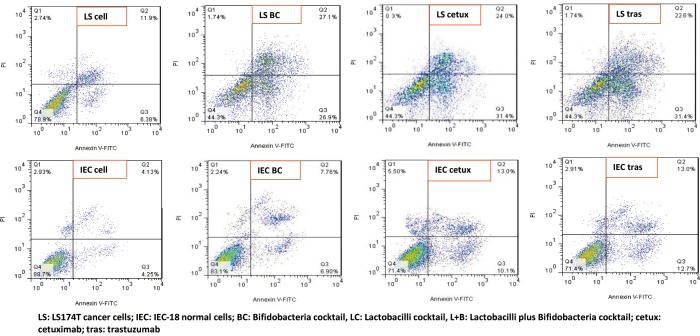
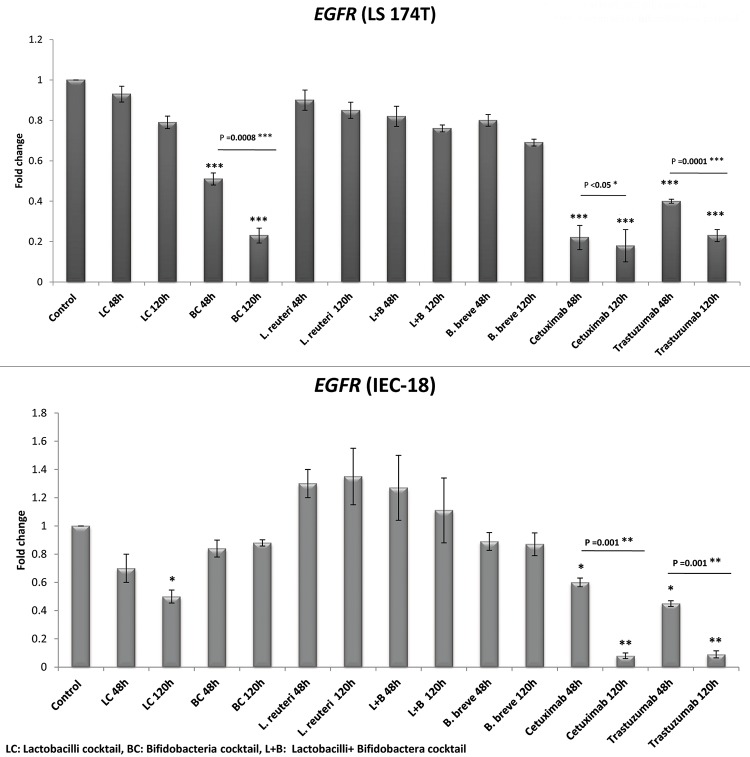
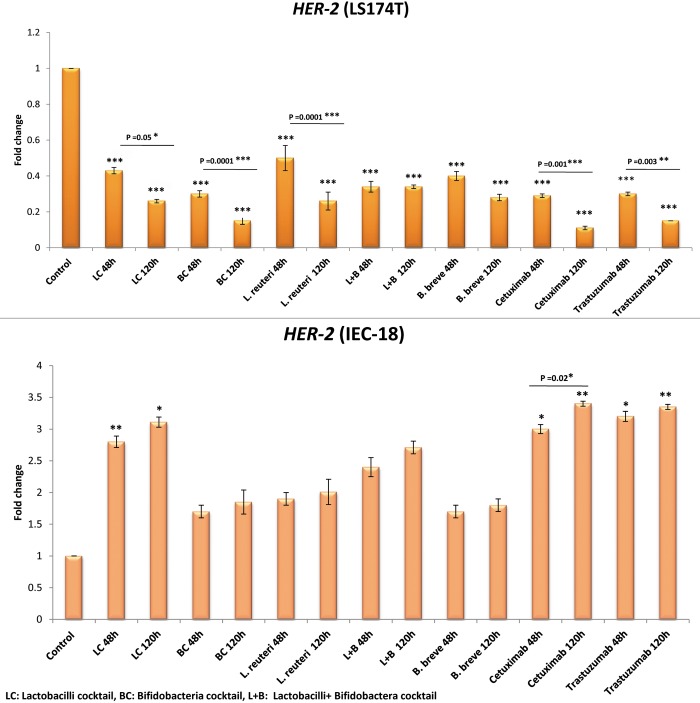
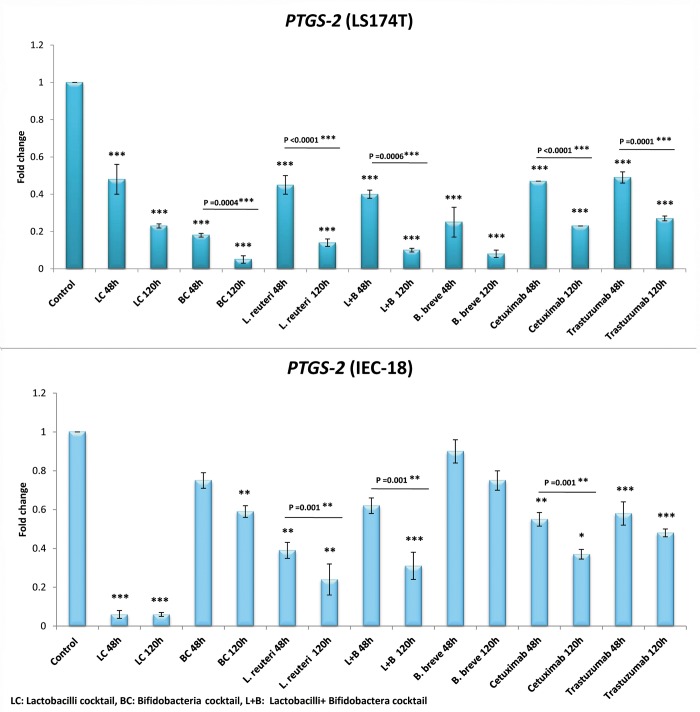
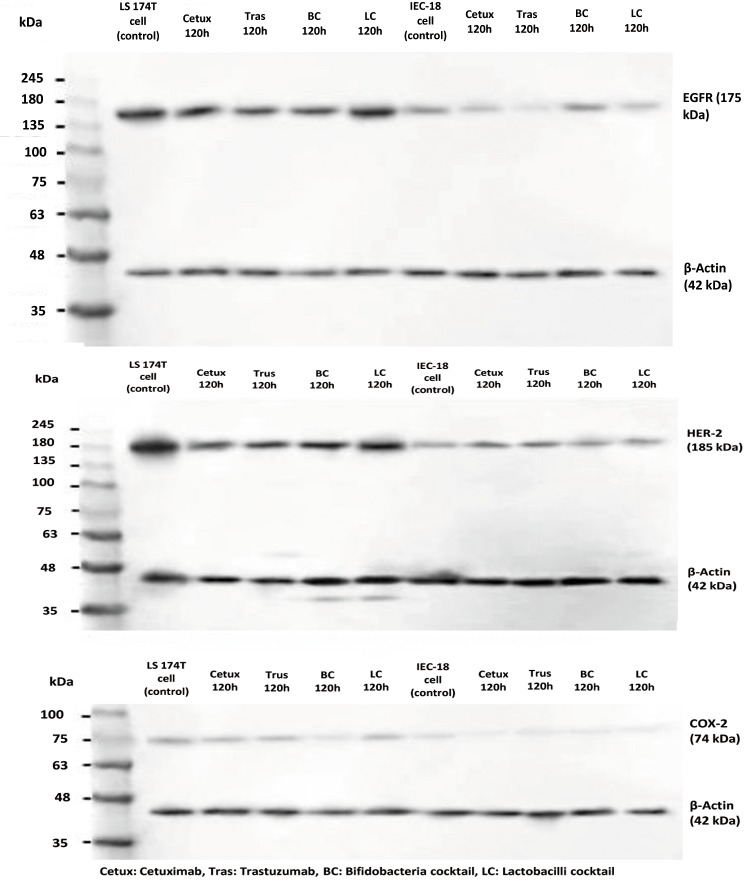
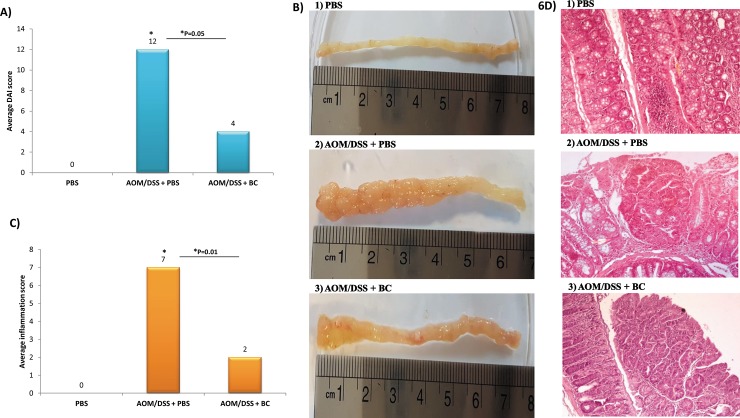
Results: BC induced ~21% and only ~3% apoptosis among LS174T and IEC-18 cells respectively. BC decreased the expression of EGFR by 4.4 folds, HER-2 by 6.7 folds, and PTGS-2 by 20 folds among the LS174T cells. In all these cases, BC did not interfere significantly with the expression of the genes in IEC-18 cells. This cocktail has caused only 1.1 folds decrease, 1.8 folds increase and 1.7 folds decrease in EGFR, HER-2 and PTGS-2 expression, respectively. Western blot analysis confirmed these results in the protein level. BC significantly ameliorated the disease activity index, restored colon length, inhibited the increase in incidence and progress of tumors to higher stages and grades.
Conclusions: BC was the most efficient treatment in this study. It had considerable "protective" anti-cancer properties and concomitantly down regulated EGFR, HER-2 and PTGS-2 (COX-2), while having significant anti-CRC effects on CRC mice models. In general, this potential probiotic could be considered as a suitable nutritional supplement to treat and prevent CRC.
Conflict of interest statement
The authors have declared that no competing interests exist.
Figures
References
-
- Tiptiri-Kourpeti A, Spyridopoulou K, Santarmaki V, Aindelis G, Tompoulidou E, Lamprianidou EE, et al. Lactobacillus casei exerts anti-proliferative effects accompanied by apoptotic cell death and up-regulation of TRAIL in colon carcinoma cells. PloS one. 2016; 11(2):e0147960 10.1371/journal.pone.0147960 - DOI - PMC - PubMed
Publication types
MeSH terms
Substances
LinkOut - more resources
Full Text Sources
Medical
Molecular Biology Databases
Research Materials
Miscellaneous
