


The Oral Bioavailability and Metabolism of Midazolam in Stable Critically Ill Children: A Pharmacokinetic Microtracing Study
- PMID: 32403162
- PMCID: PMC7818442
- DOI: 10.1002/cpt.1890
The Oral Bioavailability and Metabolism of Midazolam in Stable Critically Ill Children: A Pharmacokinetic Microtracing Study
Abstract
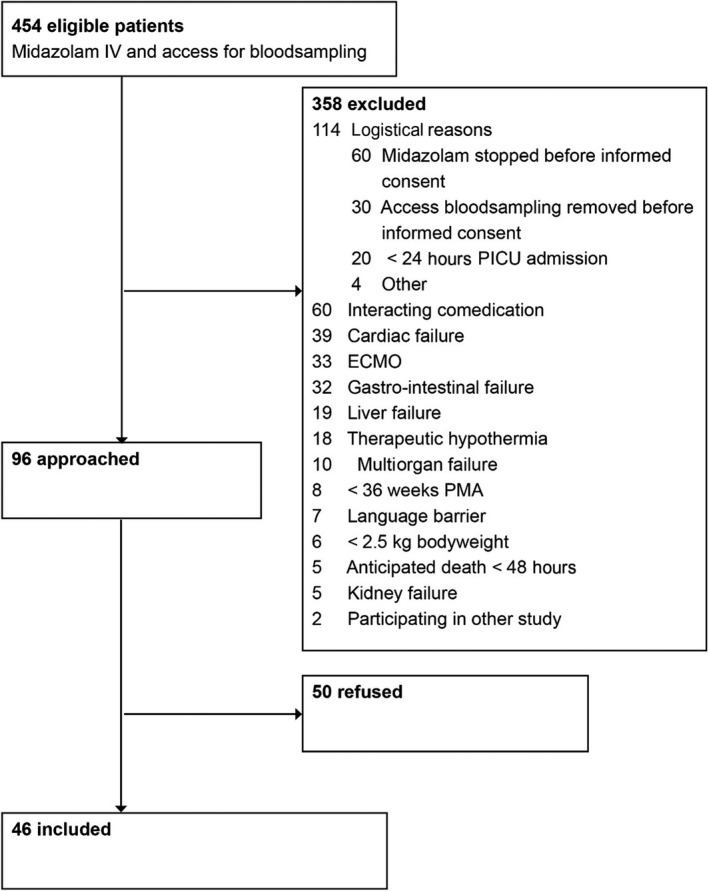
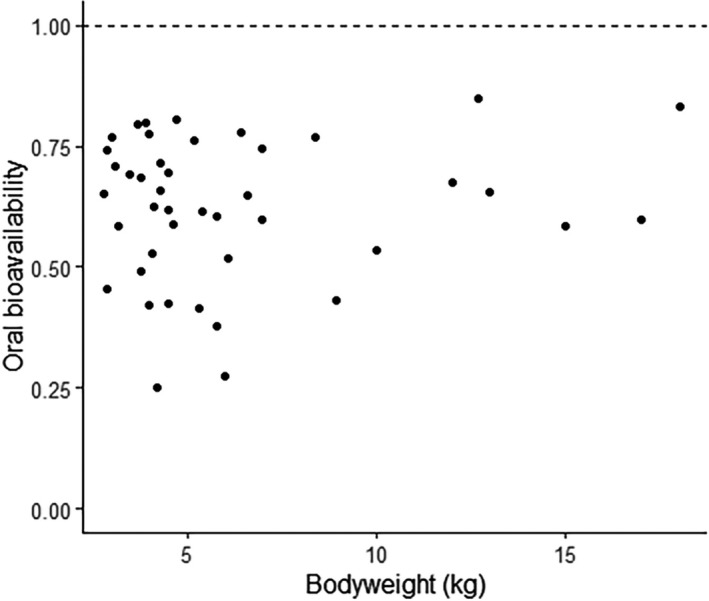
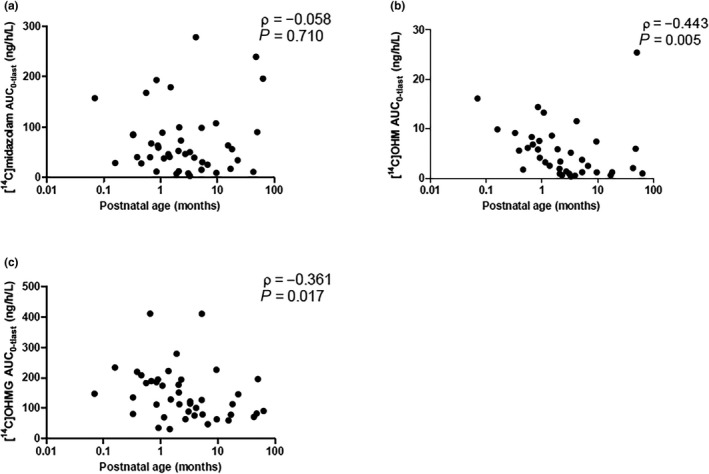
Midazolam is metabolized by the developmentally regulated intestinal and hepatic drug-metabolizing enzyme cytochrome P450 (CYP) 3A4/5. It is frequently administered orally to children, yet knowledge is lacking on the oral bioavailability in term neonates up until 1 year of age. Furthermore, the dispositions of the major metabolites 1-OH-midazolam (OHM) and 1-OH-midazolam-glucuronide (OHMG) after oral administration are largely unknown for the entire pediatric age span. We aimed to fill these knowledge gaps with a pediatric [14 C]midazolam microtracer population pharmacokinetic study. Forty-six stable, critically ill children (median age 9.8 (range 0.3-276.4) weeks) received a single oral [14 C]midazolam microtracer (58 (40-67) Bq/kg) when they received a therapeutic continuous intravenous midazolam infusion and had an arterial line in place enabling blood sampling. For midazolam, in a one-compartment model, bodyweight was a significant predictor for clearance (0.98 L/hour) and volume of distribution (8.7 L) (values for a typical individual of 5 kg). The typical oral bioavailability in the population was 66% (range 25-85%). The exposures of OHM and OHMG were highest for the youngest age groups and significantly decreased with postnatal age. The oral bioavailability of midazolam, largely reflective of intestinal and hepatic CYP3A activity, was on average lower than the reported 49-92% for preterm neonates, and higher than the reported 21% for children> 1 year of age and 30% for adults. As midazolam oral bioavailability varied widely, systemic exposure of other CYP3A-substrate drugs after oral dosing in this population may also be unpredictable, with risk of therapy failure or toxicity.
© 2020 The Authors. Clinical Pharmacology & Therapeutics published by Wiley Periodicals LLC on behalf of American Society for Clinical Pharmacology and Therapeutics.
Conflict of interest statement
All authors declared no competing interests for this work.
Figures
References
-
- Notterman, D.A. Sedation with intravenous midazolam in the pediatric intensive care unit. Clin. Pediatr. (Phila.) 36, 449–454 (1997). - PubMed
-
- Liacouras, C.A. , Mascarenhas, M. , Poon, C. & Wenner, W.J. Placebo‐controlled trial assessing the use of oral midazolam as a premedication to conscious sedation for pediatric endoscopy. Gastrointest. Endosc. 47, 455–460 (1998). - PubMed
-
- de Wildt, S.N. , Kearns, G.L. , Leeder, J.S. & van den Anker, J.N. Cytochrome P450 3A: ontogeny and drug disposition. Clin. Pharmacokinet. 37, 485–505 (1999). - PubMed
-
- Williams, J.A. et al Comparative metabolic capabilities of CYP3A4, CYP3A5, and CYP3A7. Drug Metab. Dispos. 30, 883–891 (2002). - PubMed
-
- Stevens, J.C. et al Developmental expression of the major human hepatic CYP3A enzymes. J. Pharmacol. Exp. Ther. 307, 573–582 (2003). - PubMed
Publication types
MeSH terms
Substances
LinkOut - more resources
Full Text Sources
Research Materials
