Towards patient-centred care in Ghana: health system responsiveness, self-rated health and experiential quality in a nationally representative survey
- PMID: 32404309
- PMCID: PMC7228562
- DOI: 10.1136/bmjoq-2019-000886
Towards patient-centred care in Ghana: health system responsiveness, self-rated health and experiential quality in a nationally representative survey
Abstract
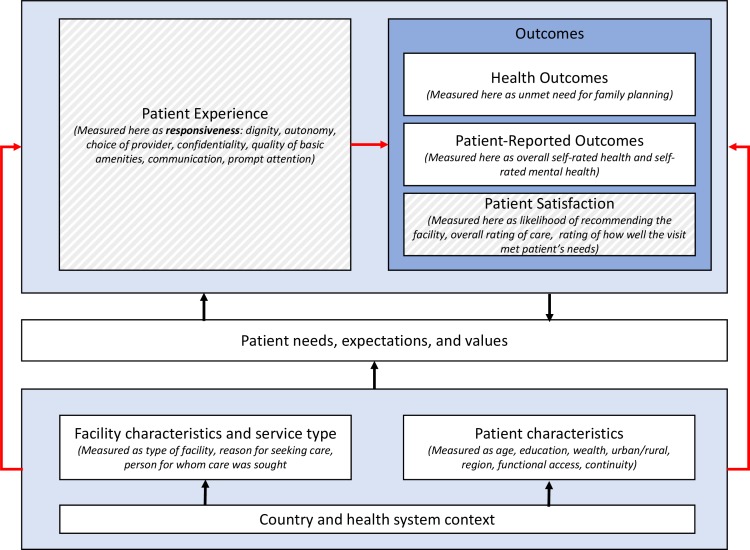
Introduction: Person-centredness, including patient experience and satisfaction, is a foundational element of quality of care. Evidence indicates that poor experience and satisfaction are drivers of underutilisation of healthcare services, which in turn is a major driver of avoidable mortality. However, there is limited information about patient experience of care at the population level, particularly in low-income and middle-income countries.
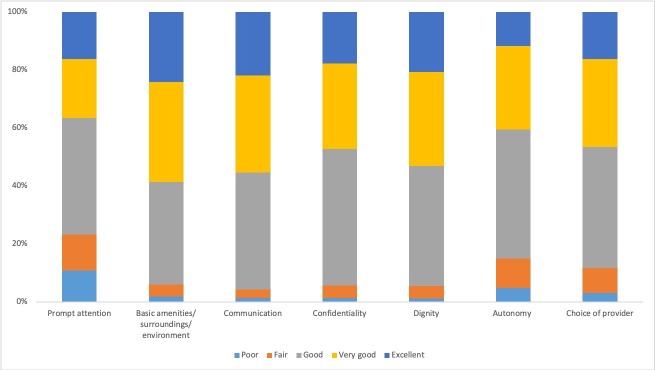
Methods: A multistage cluster sample design was used to obtain a nationally representative sample of women of reproductive age in Ghana. Women were interviewed in their homes regarding their demographic characteristics, recent care-seeking characteristics, satisfaction with care, patient-reported outcomes, and-using questions from the World Health Survey Responsiveness Module-the seven domains of responsiveness of outpatient care to assess patient experience. Using Poisson regression with log link, we assessed the relationship between responsiveness and satisfaction, as well as patient-reported outcomes.
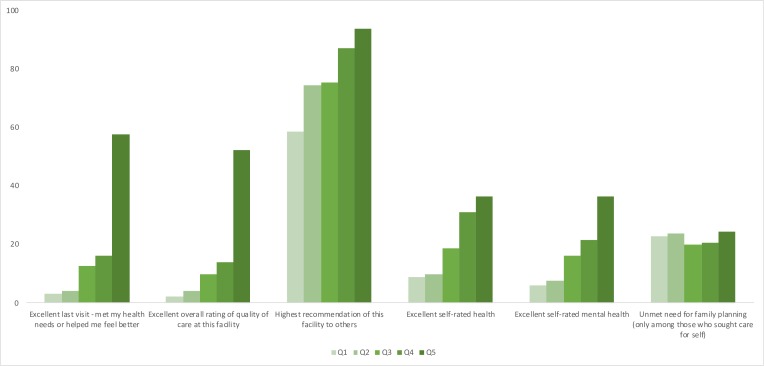
Results: Women who reported more responsive care were more likely to be more educated, have good access to care and have received care at a private facility. Controlling for respondent and visit characteristics, women who reported the highest responsiveness levels were significantly more likely to report that care was excellent at meeting their needs (prevalence ratio (PR)=13.0), excellent quality of care (PR=20.8), being very likely to recommend the facility to others (PR=1.4), excellent self-rated health (PR=4.0) and excellent self-rated mental health (PR=5.1) as women who reported the lowest responsiveness levels.
Discussion: These findings support the emerging global consensus that responsiveness and patient experience of care are not luxuries but essential components of high-performing health systems, and highlight the need for more nuanced and systematic measurement of these areas to inform priority setting and improvement efforts.
Keywords: global health; patient satisfaction; patient-centred care; quality measurement.
© Author(s) (or their employer(s)) 2020. Re-use permitted under CC BY. Published by BMJ.
Conflict of interest statement
Competing interests: None declared.
Figures
References
-
- National Academies of Sciences, Engineering, and Medicine, Health and Medicine Division, Board on Health Care Services, et al Crossing the global quality chasm: improving health care worldwide. Washington (DC): National Academies Press (US), 2018. - PubMed
-
- Darby C, Valentine N, Murray CJ, et al. World Health organization (who): strategy on measuring responsiveness 2003.
Publication types
MeSH terms
LinkOut - more resources
Full Text Sources
Research Materials