


Bacteremia and Blood Culture Utilization during COVID-19 Surge in New York City
- PMID: 32404482
- PMCID: PMC7383550
- DOI: 10.1128/JCM.00875-20
Bacteremia and Blood Culture Utilization during COVID-19 Surge in New York City
Abstract
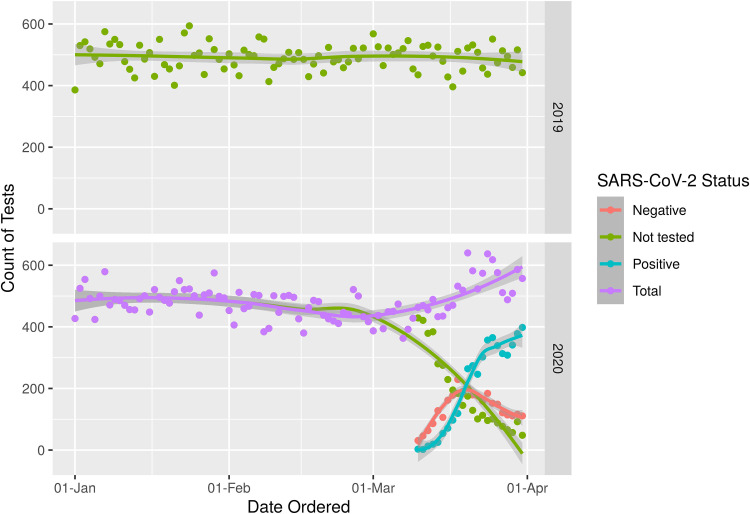
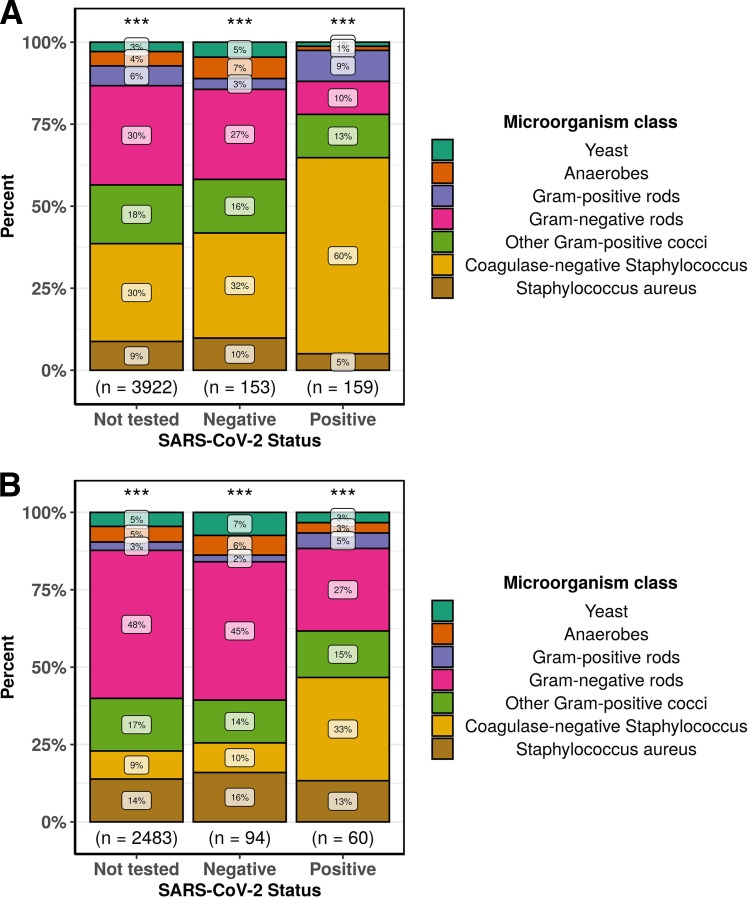
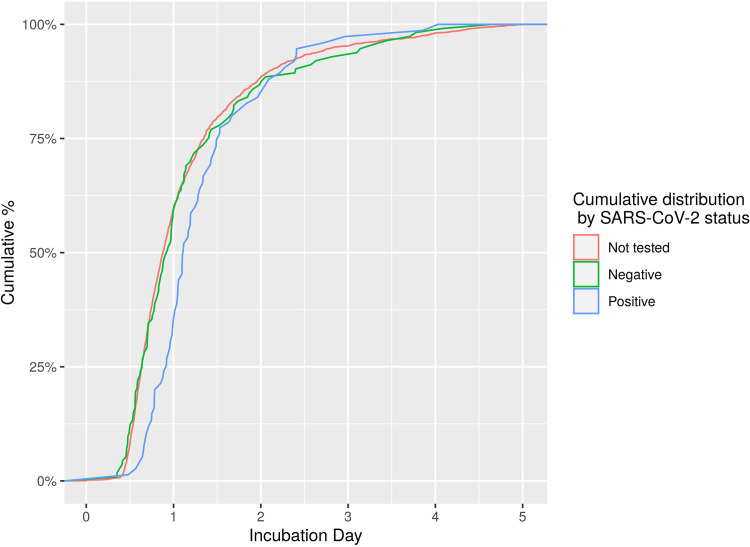
A surge of patients with coronavirus disease 2019 (COVID-19) presenting to New York City hospitals in March 2020 led to a sharp increase in blood culture utilization, which overwhelmed the capacity of automated blood culture instruments. We sought to evaluate the utilization and diagnostic yield of blood cultures during the COVID-19 pandemic to determine prevalence and common etiologies of bacteremia and to inform a diagnostic approach to relieve blood culture overutilization. We performed a retrospective cohort analysis of 88,201 blood cultures from 28,011 patients at a multicenter network of hospitals within New York City to evaluate order volume, positivity rate, time to positivity, and etiologies of positive cultures in COVID-19. Ordering volume increased by 34.8% in the second half of March 2020 compared to the level in the first half of the month. The rate of bacteremia was significantly lower among COVID-19 patients (3.8%) than among COVID-19-negative patients (8.0%) and those not tested (7.1%) (P < 0.001). COVID-19 patients had a high proportion of organisms reflective of commensal skin microbiota, which, when excluded, reduced the bacteremia rate to 1.6%. More than 98% of all positive cultures were detected within 4 days of incubation. Bloodstream infections are very rare for COVID-19 patients, which supports the judicious use of blood cultures in the absence of compelling evidence for bacterial coinfection. Clear communication with ordering providers is necessary to prevent overutilization of blood cultures during patient surges, and laboratories should consider shortening the incubation period from 5 days to 4 days, if necessary, to free additional capacity.
Keywords: COVID-19; SARS-CoV-2; bacteremia; blood culture; sepsis.
Copyright © 2020 American Society for Microbiology.
Figures
References
-
- Fomsgaard AS, Rosenstierne MW. 2020. An alternative workflow for molecular detection of SARS-CoV-2 - escape from the NA extraction kit-shortage, Copenhagen, Denmark, March 2020. Euro Surveill 25:2000398 https://www.eurosurveillance.org/content/10.2807/1560-7917.ES.2020.25.14.... - DOI - PMC - PubMed
-
- R Core Team. 2020. R: a language and environment for statistical computing. R Foundation for Statistical Computing, Vienna, Austria: https://www.R-project.org.
MeSH terms
Grants and funding
LinkOut - more resources
Full Text Sources
Miscellaneous
