


Aberrant glycosylation in schizophrenia: a review of 25 years of post-mortem brain studies
- PMID: 32404945
- PMCID: PMC8081047
- DOI: 10.1038/s41380-020-0761-1
Aberrant glycosylation in schizophrenia: a review of 25 years of post-mortem brain studies
Abstract
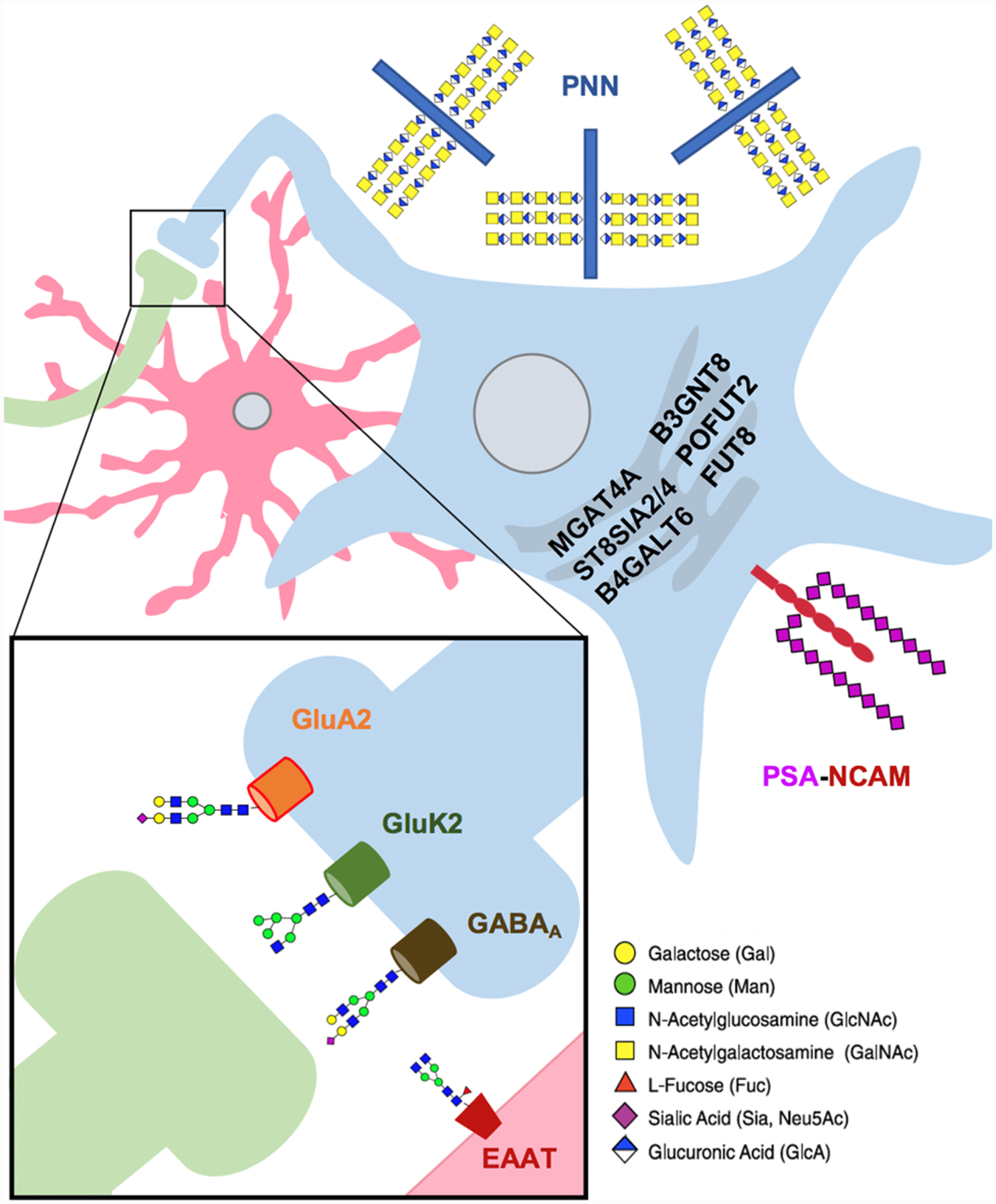
Glycosylation, the enzymatic attachment of carbohydrates to proteins and lipids, regulates nearly all cellular processes and is critical in the development and function of the nervous system. Axon pathfinding, neurite outgrowth, synaptogenesis, neurotransmission, and many other neuronal processes are regulated by glycans. Over the past 25 years, studies analyzing post-mortem brain samples have found evidence of aberrant glycosylation in individuals with schizophrenia. Proteins involved in both excitatory and inhibitory neurotransmission display altered glycans in the disease state, including AMPA and kainate receptor subunits, glutamate transporters EAAT1 and EAAT2, and the GABAA receptor. Polysialylated NCAM (PSA-NCAM) and perineuronal nets, highly glycosylated molecules critical for axonal migration and synaptic stabilization, are both downregulated in multiple brain regions of individuals with schizophrenia. In addition, enzymes spanning several pathways of glycan synthesis show differential expression in brains of individuals with schizophrenia. These changes may be due to genetic predisposition, environmental perturbations, medication use, or a combination of these factors. However, the recent association of several enzymes of glycosylation with schizophrenia by genome-wide association studies underscores the importance of glycosylation in this disease. Understanding how glycosylation is dysregulated in the brain will further our understanding of how this pathway contributes to the development and pathophysiology of schizophrenia.
Conflict of interest statement
Figures
Comment in
-
Advances in schizophrenia research: glycobiology, white matter abnormalities, and their interactions.Mol Psychiatry. 2020 Dec;25(12):3116-3118. doi: 10.1038/s41380-020-00961-7. Epub 2020 Dec 3. Mol Psychiatry. 2020. PMID: 33273719 Free PMC article. No abstract available.
References
Publication types
MeSH terms
Substances
Grants and funding
LinkOut - more resources
Full Text Sources
Medical
Research Materials
Miscellaneous
