. 2020 May-Jun;10(3):211-221.
doi: 10.1016/j.jceh.2019.09.004. Epub 2019 Sep 21.

NASH-inducing Diets in Göttingen Minipigs

Affiliations

NASH-inducing Diets in Göttingen Minipigs

Henrik D Pedersen et al. J Clin Exp Hepatol. 2020 May-Jun.

Abstract

Background: Owing to the human-like physiology, a minipig model of nonalcoholic steatohepatitis (NASH) could be valuable. Pigs, however, rarely develop substantial hepatic steatosis, even when fed diets with high fat, fructose, and cholesterol (FFC) content. The potential of choline-deficient, amino acid-defined high-fat diets (CDAHFD) was therefore evaluated in Göttingen Minipigs.

Methods: Castrated male Göttingen Minipigs were fed either chow (n = 5) or one of the three NASH diets: FFC (n = 5), CDAHFD with sucrose (CDAHFD-S; n = 4), or fructose (CDAHFD-F; n = 4) for 8 weeks. Liver and blood samples were collected after 2 weeks and at termination.

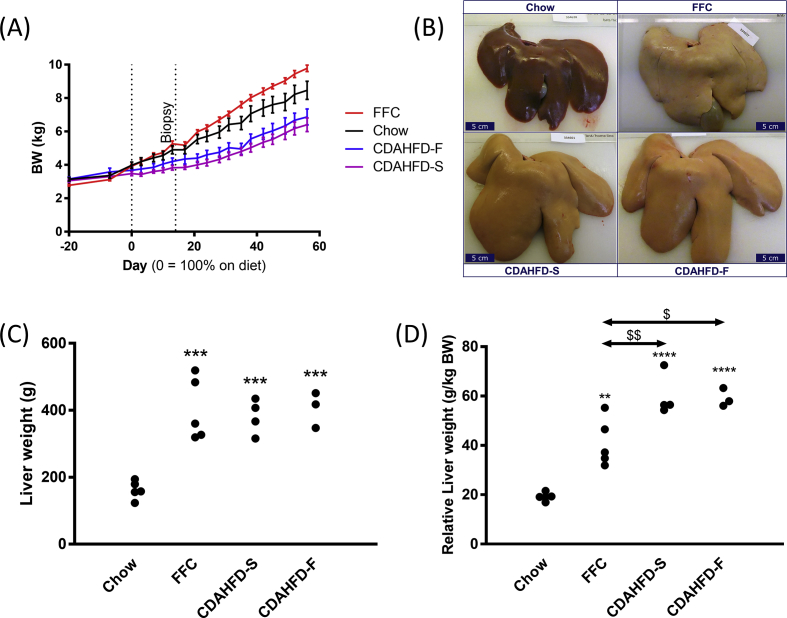
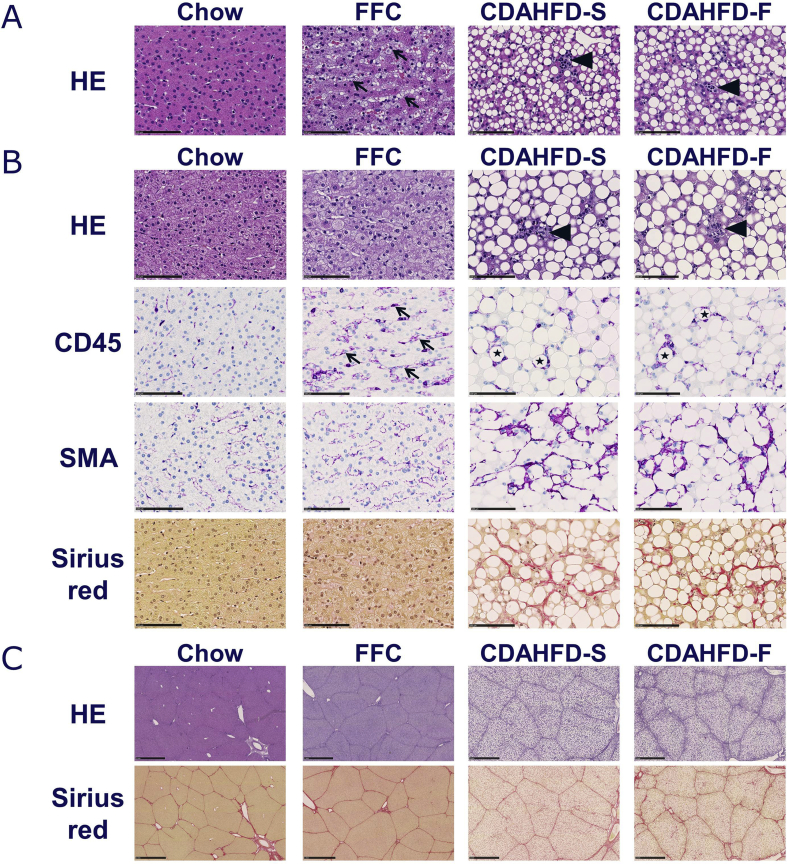
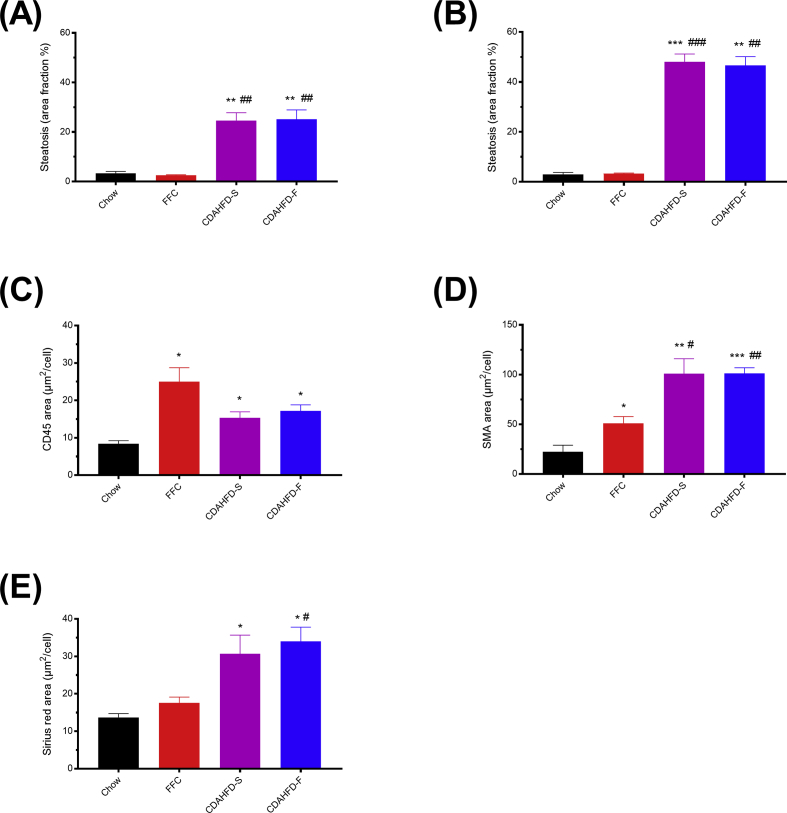
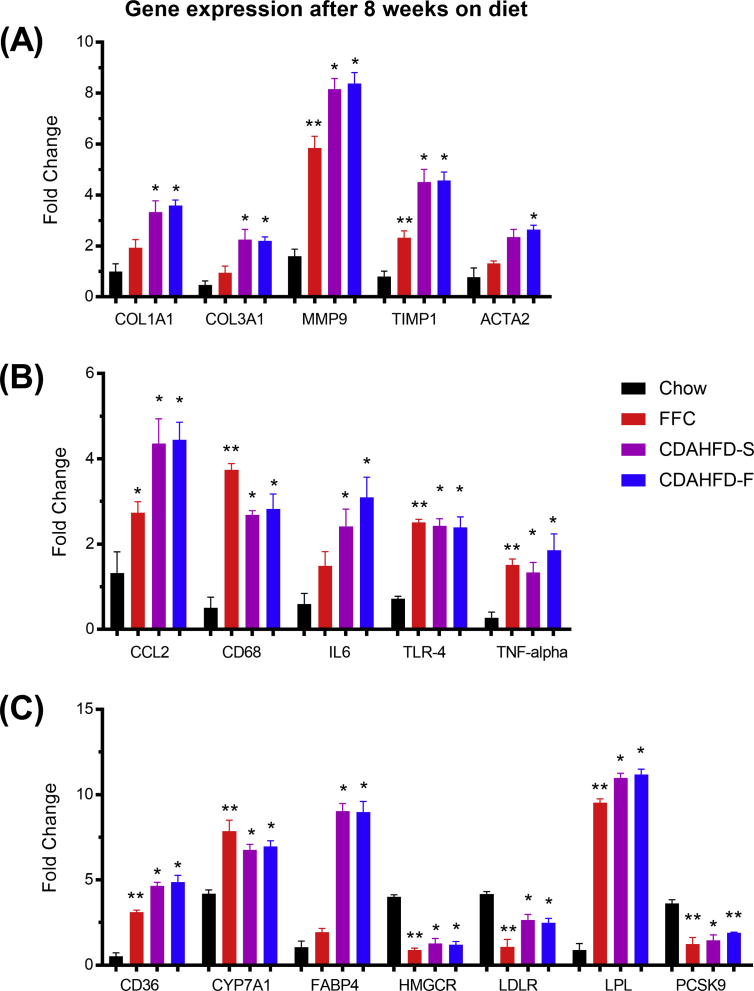
Results: Compared with chow, the body weight was higher after FFC (9.8 ± 0.4 versus 8.5 ± 1.2 kg; mean ± SD) and less after CDAHFD-S (6.4 ± 0.8 kg) and CDAHFD-F (6.9 ± 0.8 kg). Liver weight per kg body weight was significantly increased in all 3 NASH groups (FFC 2.1 times; and both CDAHFD diets 3.1 times). Histologically, pronounced macrovesicular steatosis developed only in the CDAHFD groups. Inflammation was present in all three NASH groups. In the CDAHFD groups, inflammatory cells formed crown-like structures around steatotic hepatocytes. Sirius red staining revealed mild fibrosis in the two CDAHFD groups with the fibrotic potential being further supported by immunohistochemical staining for activated stellate cells and gene expression analyses. No noticeable differences were found between CDAHFD-S and CDAHFD-F.

Conclusions: Göttingen Minipigs fed CDAHFD developed pronounced steatosis with inflammation around steatotic hepatocytes and incipient fibrosis, thereby showing potential as a model for human NASH. Further studies are needed to investigate the period needed for marked fibrosis to develop.

Keywords: -F, with fructose); ALP, alkaline phosphatase; ALT, alanine transaminase; AST, aspartate transaminase; Animal model; CD45, cluster of differentiation 45; CDAHFD, choline-deficient; Choline; EDTA, ethylenediaminetetraacetic acid; FFC, high-fat, fructose, cholesterol; Fatty liver; Fibrosis; GGT, gamma-glutamyltransferase; GLDH, glutamate dehydrogenase; HE, hematoxylin and eosin; NAFLD, non-alcoholic fatty liver disease; NASH, non-alcoholic steatohepatitis; Porcine; SMA, smooth muscle actin; amino acid defined high-fat diet (-S, with sucrose.


Figures

Figure 1
Figure 1
Body weight (A), liver gross morphology (B), liver weight (C), and relative liver weight (D) of the four different groups after 8 weeks of diet feeding: chow (n = 5), FFC (high fat, fructose and cholesterol, n = 5), CDAHFD-S (n = 4), and CDAHFD-F (n = 3); the latter two groups being choline-deficient, amino acid–defined high-fat diets with sucrose and fructose, respectively. Data in A are shown as mean ± SEM. Scale bars in B = 5 cm. In C and D, statistically significant differences from chow (**P < 0.01, ***P < 0.001, and ****P < 0.0001) and between other groups ($ P < 0.05, $$ P < 0.01) are indicated. CDAHFD-S, choline-deficient, amino acid–defined high-fat diet with sucrose; CDAHFD-F, choline-deficient, amino acid–defined high-fat diet with fructose.
Figure 2
Figure 2
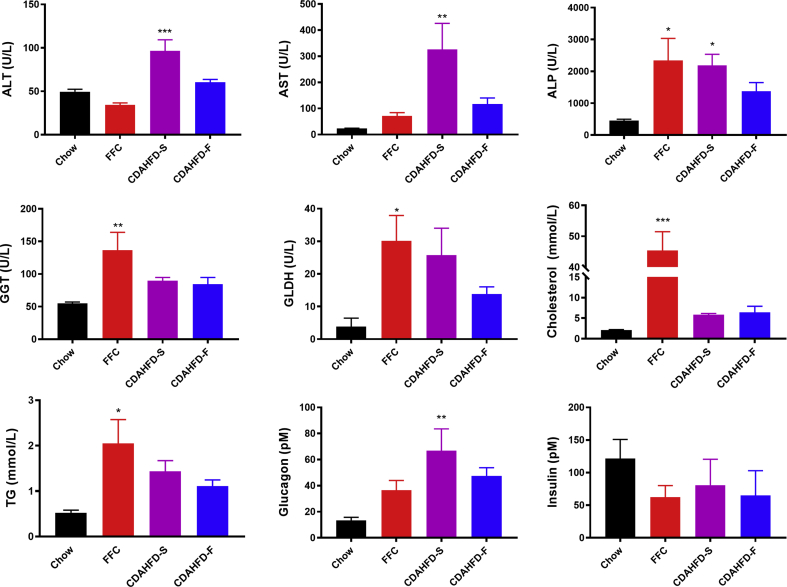
Selected blood biochemistry data (mean + SEM) from the four different groups after 8 weeks of diet feeding: chow (n = 5), FFC (n = 5), CDAHFD-S (n = 4), and CDAHFD-F (n = 3). Asterisks indicate statistically significant difference to chow with *P < 0.05, **P < 0.01, and ***P < 0.001. ALT, alanine transaminase; AST, aspartate transaminase; ALP, alkaline phosphatase; GGT, gamma-glutamyltransferase; GLDH, glutamate dehydrogenase; TG, triglycerides; CDAHFD-S, choline-deficient, amino acid–defined high-fat diet with sucrose; CDAHFD-F, choline-deficient, amino acid–defined high-fat diet with fructose; FFC, high fat, fructose, and cholesterol.
Figure 3
Figure 3
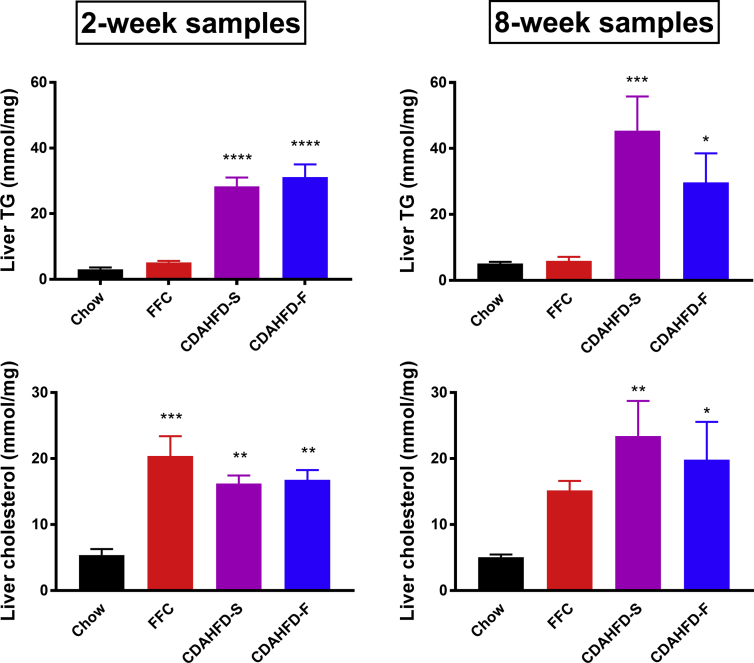
Content of triglycerides (TG; upper panels) and total cholesterol (lower panels) in liver samples taken after two and eight weeks of diet feeding with chow (n = 5), FFC (n = 5), CDAHFD-S (n = 4), and CDAHFD-F (n = 3). Data are shown as mean + SEM. Asterisks indicate statistically significantly different from chow with *P < 0.05, **P < 0.01, ***P < 0.001, and ****P < 0.0001. CDAHFD-S, choline-deficient, amino acid–defined high-fat diet with sucrose; CDAHFD-F, choline-deficient, amino acid–defined high-fat diet with fructose; FFC, high fat, fructose, and cholesterol.
Figure 4
Figure 4
Histological analyses of liver samples from Göttingen Minipigs after 2 (A) and 8 (B, C) weeks of feeding with the indicated diets: chow, FFC, CDAHFD-S, and CDAHFD-F. Representative pictures show HE staining (upper panels in A, B, C), immunohistochemistry for CD45 and SMA (middle panels in B) and sirius red staining (lower panels in B, C). Arrows, arrow heads, and asterisks indicate sinusoidal foamy macrophages, inflammatory foci, and crown-like structures, respectively. Scale bars = 100 μm (A, B) and 1 mm (C). CDAHFD-S, choline-deficient, amino acid–defined high-fat diet with sucrose; CDAHFD-F, choline-deficient, amino acid–defined high-fat diet with fructose; FFC, high fat, fructose, and cholesterol; CD45, cluster of differentiation 45; SMA, smooth muscle actin.
Figure 5
Figure 5
Morphometric assessment of steatosis (A, B), CD45 (C), smooth muscle actin (SMA) (D), and sirius red (E) staining in livers from Göttingen Minipigs after 2 (A) and 8 (B–E) weeks of feeding with different diets: chow (n = 5), FFC (n = 5), CDAHFD-S (n = 4), and CDAHFD-F (n = 3). Data are shown as mean + SEM. * and #P < 0.05 vs chow and FFC, respectively, ** and ##P < 0.01 vs chow and FFC, respectively, *** and ###P < 0.001 vs chow and FFC, respectively. CD45, cluster of differentiation 45; CDAHFD-S, choline-deficient, amino acid–defined high-fat diet with sucrose; CDAHFD-F, choline-deficient, amino acid–defined high-fat diet with fructose; FFC, high fat, fructose, and cholesterol.
Figure 6
Figure 6
Hepatic mRNA levels for genes associated with fibrosis (A), inflammation (B), and lipid metabolism (C) after 8 weeks of feeding Göttingen Minipigs with different diets: chow (n = 5), FFC (n = 5), CDAHFD-S (n = 4), and CDAHFD-F (n = 3). The data were normalized to a panel of four stable reference genes and are represented as means + SEM of the fold changes for each diet group. *P < 0.05 vs chow, **P < 0.01 vs chow. ACTA2, smooth muscle α-2 actin; CCL2, chemokine (C–C motif) ligand 2; CD36, cluster of differentiation (CD) 36; CD68, cluster of differentiation 68; COL1A1, alpha-1 type I collagen; COL3A1, alpha-1 type III collagen; CYP7A1, cytochrome P450 family 7 subfamily A member 1; FABP4, fatty acid–binding protein 4; HMGCR, 3-hydroxy-3-methylglutaryl-CoA reductase; IL6, interleukin-6; LDLR, low-density lipoprotein receptor; LPL, lipoprotein lipase; MMP9, matrix metalloproteinase-9; PCSK9, proprotein convertase subtilisin/kexin type 9; TIMP1, metalloproteinase inhibitor 1; TLR4, toll-like receptor 4; TNFA, tumor necrosis factor alpha; CDAHFD-S, choline-deficient, amino acid–defined high-fat diet with sucrose; CDAHFD-F, choline-deficient, amino acid–defined high-fat diet with fructose; FFC, high fat, fructose, and cholesterol.

References

    1. Younossi Z.M., Koenig A.B., Abdelatif D., Fazel Y., Henry L., Wymer M. Global epidemiology of nonalcoholic fatty liver disease-Meta-analytic assessment of prevalence, incidence, and outcomes. Hepatology. 2016;64:73–84. - PubMed
    1. Ekstedt M., Hagstrom H., Nasr P. Fibrosis stage is the strongest predictor for disease-specific mortality in NAFLD after up to 33 years of follow-up. Hepatology. 2015;61:1547–1554. - PubMed
    1. Musso G., Cassader M., Gambino R. Non-alcoholic steatohepatitis: emerging molecular targets and therapeutic strategies. Nat Rev Drug Discov. 2016;15:249–274. - PubMed
    1. Tsuchida T., Friedman S. Mechanism of hepatic stellate cell activation. Nat Rev Gastroenterol Hepatol. 2017;14:397–411. - PubMed
    1. Dawson H.D., Smith A.D., Chen C., Urban J.F., Jr. An in-depth comparison of the porcine, murine and human inflammasomes; lessons from the porcine genome and transcriptome. Vet Microbiol. 2017;202:2–15. - PubMed