


Effect of chemical, microwave irradiation, steam autoclave, ultraviolet light radiation, ozone and electrolyzed oxidizing water disinfection on properties of impression materials: A systematic review and meta-analysis study
- PMID: 32405219
- PMCID: PMC7211894
- DOI: 10.1016/j.sdentj.2019.12.003
Effect of chemical, microwave irradiation, steam autoclave, ultraviolet light radiation, ozone and electrolyzed oxidizing water disinfection on properties of impression materials: A systematic review and meta-analysis study
Abstract
Objectives: The objective of this systematic review and meta-analysis study was to identify the different disinfection methods and materials and the existing evidence on their effect on properties of the different impression materials.
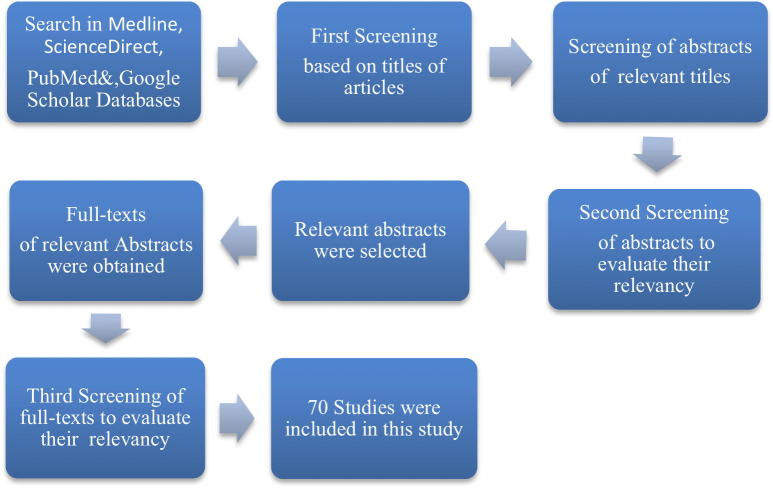
Material and methods: An electronic search of MEDLINE (PubMed), Science Direct, and Google Scholar databases was performed to retrieve related English-language articles published between January 2000 and July 2019. Available studies with search terms such as: Impression disinfection, disinfection method, impression dimensional stability and impression wettability were used. The selected articles were reviewed by screening their titles and abstracts and full text. Finally, a total of 70 articles were considered relevant and were included in this study.
Results: Extensive studies were conducted to determine the effect of the different disinfection methods and materials on the properties of the different impression materials such as dimensional stability, wettability and surface roughness. While some studies reported significant changes in the properties of the impression materials, others reported either no changes or minor insignificant effects.
Conclusions: Some studies reported significant changes in the properties of the impression materials as a result of using different disinfection methods, whereas others reported either minor insignificant or no changes. Although the findings of the studies were controversial, care should be taken to avoid distortion of impressions and loss of their surface details that can adversely affect the fitting accuracy of the restorations. Therefore, better designed and standardized studies are needed to evaluate the effect of different commonly used disinfectants on properties of impression materials. Moreover, manufacturers should be encouraged to recommend specific disinfection methods and materials for disinfecting the impression materials to ensure their optimal accuracy.
Keywords: Chemical disinfection; Electrolyzed oxidizing water disinfection; Microwave irradiation; Ozone disinfection; Steam autoclave; Ultraviolet light radiation.
© 2019 The Author.
Conflict of interest statement
The authors declared that there is no conflict of interest.
Figures
References
-
- Ahila S.C., Subramaniam E. Comparative evaluation of dimensional stability and surface quality of gypsum casts retrieved from disinfected addition silicone impressions at various time intervals: an in vitro study. J. Dent. Oral. Hyg. 2012;4:34–43.
-
- Ahila S.C., Thulasingam C. Effect of disinfection on gypsum casts retrieved from addition and condensation silicone impression disinfected by immersion and spray methods. SRM. J. Res. Dent. Sci. 2014;5:163–169.
-
- Al-Jabrah O., Al-Shumailan Y., Al-Rashdan M. Antimicrobial effect of 4 disinfectants on alginate, polyether and polyvinyl siloxane impression materials. Int. J. Prosthodont. 2007;20:299–307. - PubMed
Further reading
-
- Kang Y.S., Rueggeberg F., Ramos V., Jr. Effects of chlorine-based and quaternary ammonium-based disinfectants on the wettability of a polyvinyl siloxane impression material. J. Prosthet. Dent. 2017;117:266–270. - PubMed
-
- Nagamatsu Y., Chen K.K., Nagamatsu H., Kozono Y., Shimizu H. Application of neutral electrolyzed water to disinfection of alginate impression. Dent. Mater. J. 2016;35:270–277. - PubMed
-
- Taylor R.L., Wright P.S., Maryan C. Disinfection procedures: their effect on the dimensional accuracy and surface quality of irreversible hydrocolloid impression materials and gypsum casts. Dent. Mater. 2002;18:103–110. - PubMed
Publication types
LinkOut - more resources
Full Text Sources
