


A preliminary systematic review and meta-analysis of randomized-controlled trials of cognitive remediation therapy for anorexia nervosa
- PMID: 32408265
- PMCID: PMC10044473
- DOI: 10.1016/j.eatbeh.2020.101391
A preliminary systematic review and meta-analysis of randomized-controlled trials of cognitive remediation therapy for anorexia nervosa
Abstract
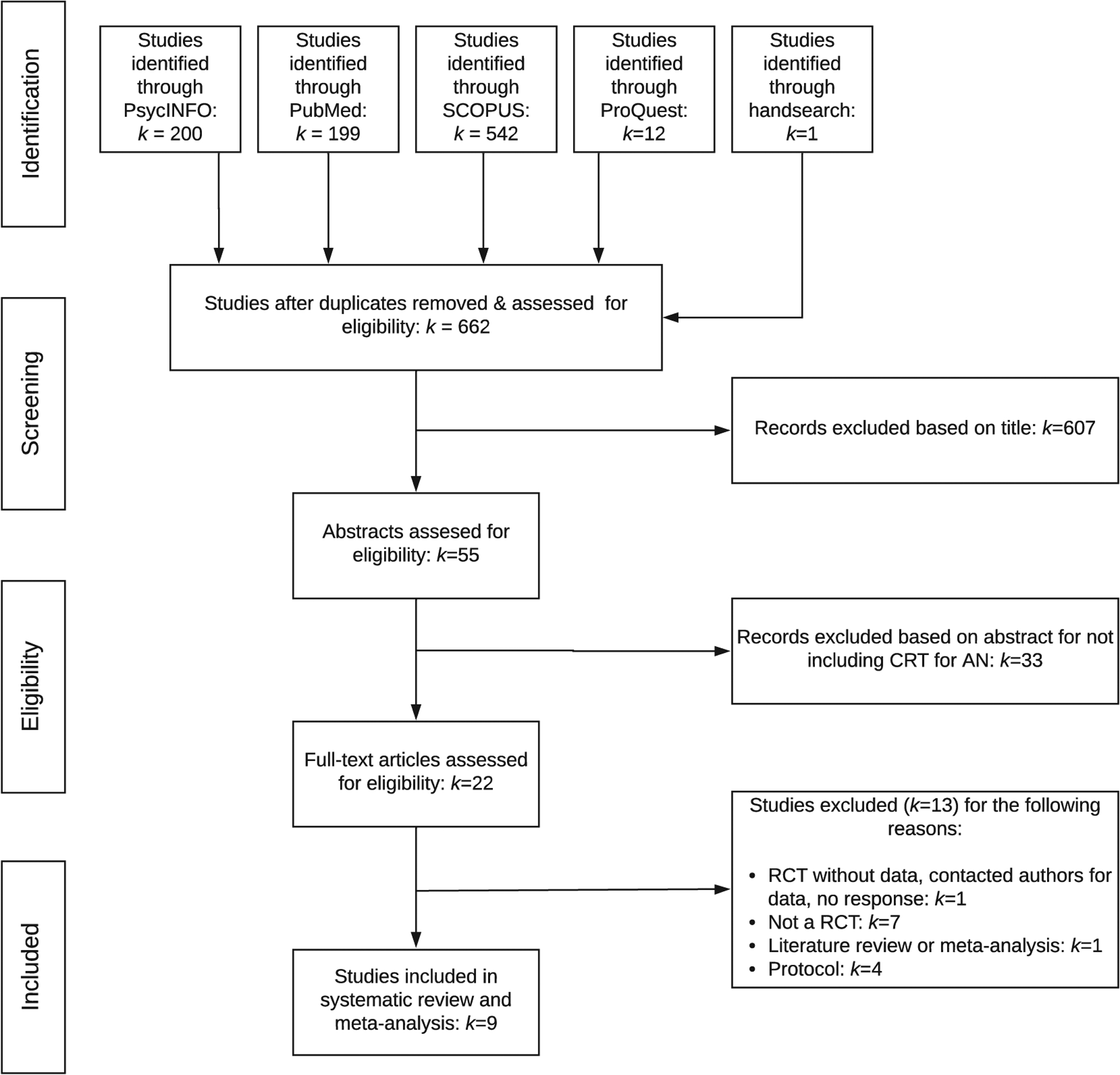
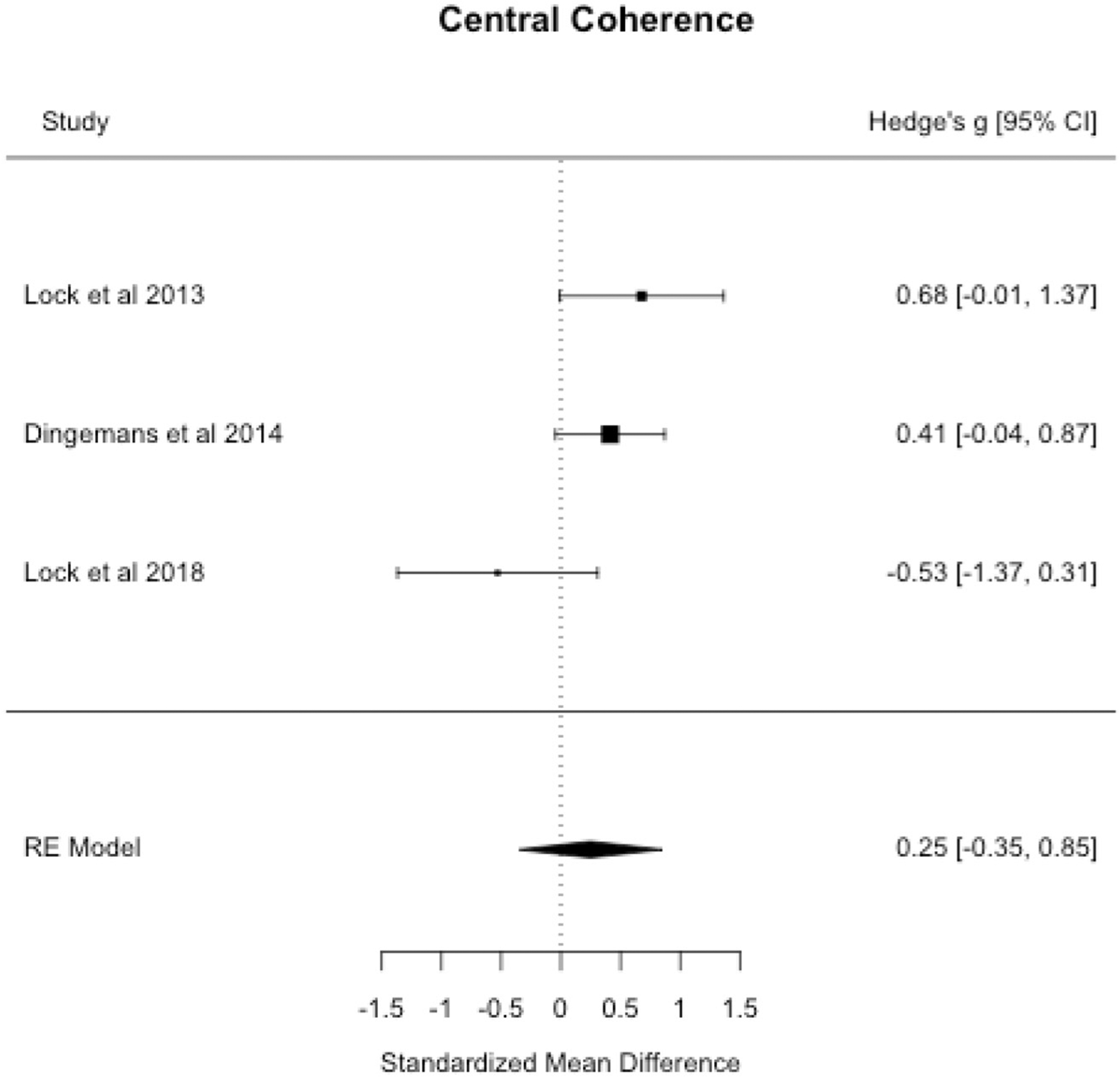
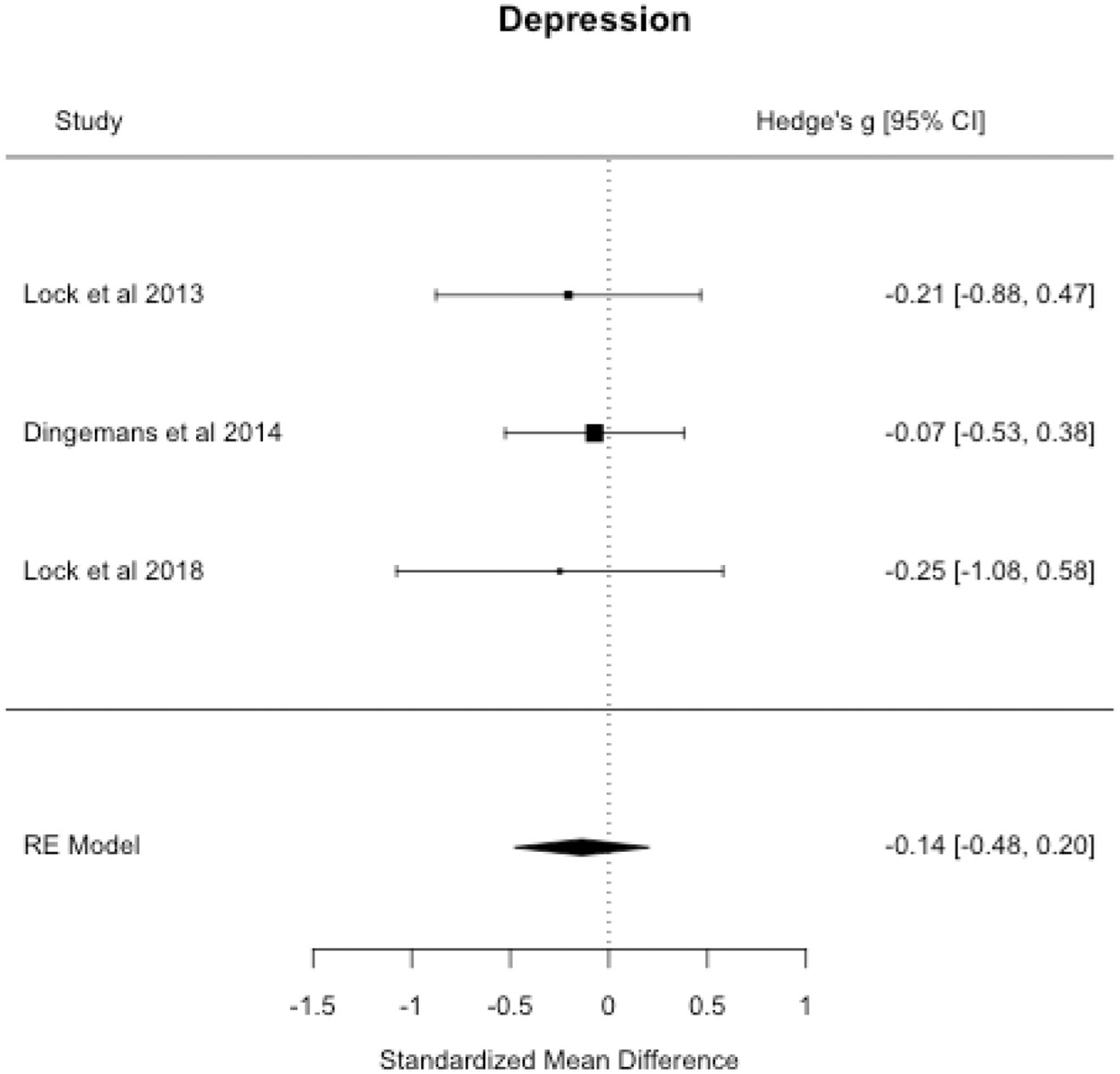
Cognitive remediation therapy (CRT) for anorexia nervosa (AN) was developed as an adjuvant treatment to target set-shifting and central coherence inefficiencies important in AN and to ultimately improve clinical outcomes of those with AN. The primary aim of this preliminary systematic review and meta-analysis was to determine the effect of CRT for AN relative to control treatments in randomized-controlled trials (RCTs) on neuropsychological inefficiencies at end-of-treatment. Secondary aims were to assess the effect of CRT for AN on dropout, eating-disorder-related, and other psychological outcomes at end-of-treatment. Systematic review and meta-analytic procedures were conducted in accordance with PRISMA Guidelines. RCTs evaluating CRT for AN compared to a control treatment were identified via ProQuest, PsycINFO, PubMed, and SCOPUS. Seven RCTs and one quasi-RCT of CRT for AN were included. RCT quality ratings ranged from fair (n = 3) to good (n = 4). Random-effects meta-analysis was conducted using Hedge's g. Study heterogeneity was assessed using I2 and publication bias was assessed with Begg's adjusted-rank correlation and the trim-and-fill method. CRT was not associated with improvement in central coherence compared to control treatments at end-of-treatment (g = 0.25, 95% CI = -0.35, 0.85, k = 3). Set-shifting outcomes were mixed due to heterogeneity of set-shifting measures across studies. CRT may prevent dropout; yet, more studies are needed to draw conclusions. CRT did not confer advantage over control treatments for eating-disorder-related and other psychological outcomes at end-of-treatment. Future RCTs of CRT for AN should use precise measures to assess constructs (particularly for set shifting), increase sample size, and implement longitudinal follow-up. (Word Count: 247 words).
Keywords: Anorexia nervosa; Cognitive remediation therapy; Meta-analysis; Randomized-controlled trials; Systematic review.
Copyright © 2020 Elsevier Ltd. All rights reserved.
Conflict of interest statement
Declaration of competing interest The authors declare that they have no conflicts of interest.
Figures
References
-
- American Psychiatric Association (2013). Diagnostic and statistical manual of mental disorders (DSM-5®). American Psychiatric Pub.
-
- Begg CB, & Mazumdar M (1994). Operating characteristics of a rank correlation test for publication bias. Biometrics, 1088–1101. - PubMed
-
- Borenstein M, Hedges LV, Higgins JPT, & Rothstein HR (2009). Introduction to meta-analysis. Wiley.
-
- Brockmeyer T, Ingenerf K, Walther S, Wild B, Hartmann M, Herzog W, … Friederich HC (2014). Training cognitive flexibility in patients with anorexia nervosa: A pilot randomized controlled trial of cognitive remediation therapy. The International Journal of Eating Disorders, 47(1), 24–31. 10.1002/eat.22206. - DOI - PubMed
Publication types
MeSH terms
Grants and funding
LinkOut - more resources
Full Text Sources
Research Materials
