


Tamponade in surgery for retinal detachment associated with proliferative vitreoretinopathy
- PMID: 32408387
- PMCID: PMC7388158
- DOI: 10.1002/14651858.CD006126.pub4
Tamponade in surgery for retinal detachment associated with proliferative vitreoretinopathy
Abstract
Background: Retinal detachment (RD) with proliferative vitreoretinopathy (PVR) often requires surgery to restore normal anatomy and to stabilize or improve vision. PVR usually occurs in association with recurrent RD (that is, after initial retinal re-attachment surgery), but occasionally may be associated with primary RD. Either way, for both circumstances a tamponade agent (gas or silicone oil) is needed during surgery to reduce the rate of postoperative recurrent RD.
Objectives: The objective of this review was to assess the relative safety and effectiveness of various tamponade agents used with surgery for RD complicated by PVR.
Search methods: We searched CENTRAL (which contains the Cochrane Eyes and Vision Trials Register) (the Cochrane Library 2019, Issue 1), Ovid MEDLINE, Ovid MEDLINE In-Process and Other Non-Indexed Citations, Ovid MEDLINE Daily, Ovid OLDMEDLINE (January 1946 to January 2019), Embase (January 1980 to January 2019), Latin American and Caribbean Literature on Health Sciences (LILACS) (January 1982 to January 2019), the metaRegister of Controlled Trials (mRCT) (www.controlled-trials.com), ClinicalTrials.gov (www.clinicaltrials.gov) and the WHO International Clinical Trials Registry Platform (ICTRP) (www.who.int/ictrp/search/en). We did not use any date or language restrictions in the electronic searches for trials. We last searched the electronic databases on 2 January 2019.
Selection criteria: We included randomized controlled trials (RCTs) on participants undergoing surgery for RD associated with PVR that compared various tamponade agents.
Data collection and analysis: Two review authors screened the search results independently. We used the standard methodological procedures expected by Cochrane.
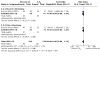
Main results: We identified four RCTs (601 participants) that provided data for the primary and secondary outcomes. Three RCTs provided data on visual acuity, two reported on macular attachment, one on retinal reattachment and another two on adverse events such as RD, worsening visual acuity and intraocular pressure. Study Characteristics Participants' characteristics varied across studies and across intervention groups, with an age range between 21 to 89 years, and were predominantly men. The Silicone Study was conducted in the USA and consisted of two RCTs: (silicone oil versus sulfur hexafluoride (SF6) gas tamponades; 151 participants) and (silicone oil versus perfluropropane (C3F8) gas tamponades; 271 participants). The third RCT compared heavy silicone oil (a mixture of perfluorohexyloctane (F6H8) and silicone oil) with standard silicone oil (either 1000 centistokes or 5000 centistokes; 94 participants). The fourth RCT compared 1000 centistokes with 5000 centistokes silicone oil in 85 participants. We assessed most RCTs at low or unclear risk of bias for most 'Risk of bias' domains. Findings Although SF6 gas was reported to be associated with worse anatomic and visual outcomes than was silicone oil at one year (quantitative data not reported), at two years, silicone oil compared to SF6 gas showed no evidence of a difference in visual acuity (33% versus 51%; risk ratio (RR) 1.57; 95% confidence interval (CI) 0.93 to 2.66; 1 RCT, 87 participants; low-certainty evidence). At one year, another RCT comparing silicone oil and C3F8 gas found no evidence of a difference in visual acuity between the two groups (41% versus 39%; RR 0.97; 95% CI 0.73 to 1.31; 1 RCT, 264 participants; low-certainty evidence). In a third RCT, participants treated with standard silicone oil compared to those receiving heavy silicone oil also showed no evidence of a difference in the change in visual acuity at one year, measured on logMAR scale ( mean difference -0.03 logMAR; 95% CI -0.35 to 0.29; 1 RCT; 93 participants; low-certainty evidence). The fourth RCT with 5000-centistoke and 1000-centistoke comparisons did not report data on visual acuity. For macular attachment, participants treated with silicone oil may probably experience more favorable outcomes than did participants who received SF6 at both one year (quantitative data not reported) and two years (58% versus 79%; RR 1.37; 95% CI 1.01 to 1.86; 1 RCT; 87 participants; low-certainty evidence). In another RCT, silicone oil compared to C3F8 at one year found no evidence of difference in macular attachment (RR 1.00; 95% CI 0.86 to 1.15; 1 RCT, 264 participants; low-certainty evidence). One RCT that compared 5000 centistokes to 1000 centistoke reported that retinal reattachment was successful in 67 participants (78.8%) with first surgery and 79 participants (92.9%) with the second surgery, and no evidence of between-group difference (1 RCT; 85 participants; low-certainty evidence). The fourth RCT that compared standard silicone oil with heavy silicone oil did not report on macular attachment. Adverse events In one RCT (86 participants), those receiving standard 1000 centistoke silicone oil compared with those of the 5000 centistoke silicone oil showed no evidence of a difference in intraocular pressure elevation at 18 months (24% versus 22%; RR 0.90; 95% CI 0.41 to 1.94; low-certainty evidence), visually significant cataract (49% versus 64%; RR 1.30; 95% CI 0.89 to 1.89; low-certainty evidence), and incidence of retina detachment after the removal of silicone oil (RR 0.36 95% CI 0.08 to 1.67; low-certainty evidence). Another RCT that compared standard silicone oil with heavy silicone oil suggests no difference in retinal detachment at one year (25% versus 22%; RR 0.89; 95% CI 0.54 to 1.48; 1 RCT; 186 participants; low-certainty evidence). Retinal detachment was not reported in the RCTs that compared silicone oil versus SF6 and silicone oil versus to C3F8.
Authors' conclusions: There do not appear to be any major differences in outcomes between C3F8 and silicone oil. Silicone oil may be better than SF6 for macular attachment and other short-term outcomes. The choice of a tamponade agent should be individualized for each patient. The use of either C3F8 or standard silicone oil appears reasonable for most patients with RD associated with PVR. Heavy silicone oil, which is not available for routine clinical use in the USA, may not demonstrate evidence of superiority over standard silicone oil.
Trial registration: ClinicalTrials.gov NCT00000140 NCT00120445 NCT00485199 NCT02675543 NCT03433547 NCT00403702 NCT01255293 NCT01959568 NCT02988583.
Copyright © 2020 The Cochrane Collaboration. Published by John Wiley & Sons, Ltd.
Conflict of interest statement
Stephen G Schwartz, MD, MBA has served on advisory boards for Welch Allyn. Harry W Flynn, Jr, MD is a co‐author on several of the studies that were eligible for inclusion in this review. Dr Flynn has no disclosures. Xue Wang, MBBS, MPH, has no known declarations of interest. Ajay E. Kuriyan, MD, MS receives grant funding from Second Sight, Inc. and Genentech and serves/served on the advisory board for the following entities: Alimera Sciences, Allergan, Bausch Health, Genentech, and Regeneron. Samuel A. Abariga, MD, MPH, MS, has no known declarations of interest. Wen‐Hsiang Lee, MD, has no known declarations of interest.
Figures




Update of
-
Tamponade in surgery for retinal detachment associated with proliferative vitreoretinopathy.Cochrane Database Syst Rev. 2014 Feb 14;2(2):CD006126. doi: 10.1002/14651858.CD006126.pub3. Cochrane Database Syst Rev. 2014. Update in: Cochrane Database Syst Rev. 2020 May 13;5:CD006126. doi: 10.1002/14651858.CD006126.pub4. PMID: 24532038 Free PMC article. Updated.
References
References to studies included in this review
HSO Study {published data only}47399029
-
- Joussen AM, Kirchhof B, Schrage N, Ocklenburg C, Hilgers RD. Heavy silicone oil versus standard silicone oil as vitreous tamponade in inferior PVR (HSO Study): design issues and implications. Acta Ophthalmologica Scandinavica 2007;85(6):623-30. - PubMed
-
- Joussen AM, Rizzo S, Kirchhof B, Schrage N, Li X, Lente C, HSO-Study Group. Heavy silicone oil versus standard silicone oil in as vitreous tamponade in inferior PVR (HSO Study): interim analysis. Acta Ophthalmologica 2011;89(6):e483-9. - PubMed
Silicone Study 1992a {published data only}
-
- Abrams GW, Azen SP, Barr CC, Lai MY, Hutton WL, Trese MT, et al. The incidence of corneal abnormalities in the Silicone Study. Silicone Study Report 7. Archives of Ophthalmology 1995;113(6):764-9. - PubMed
-
- Abrams GW, Azen SP, McCuen BW 2nd, Flynn HW Jr, Lai MY, Ryan SJ. Vitrectomy with silicone oil or long-acting gas in eyes with severe proliferative vitreoretinopathy: results of additional and long-term follow-up. Silicone Study Report 11. Archives of Ophthalmology 1997;115(3):335-43. - PubMed
-
- Anonymous. Vitrectomy with silicone oil or sulfur hexafluoride gas in eyes with severe proliferative vitreoretinopathy: results of a randomized clinical trial. Silicone Study Report 1. Archives of Ophthalmology 1992;110(6):770-9. - PubMed
-
- Azen SP, Boone DC, Barlow W, McCuen BW, Walonker AF, Anderson MM, et al. Methods, statistical features, and baseline results of a standardized, multicentered ophthalmologic surgical trial: the Silicone Study. Controlled Clinical Trials 1991;12(3):438-55. - PubMed
-
- Barr CC, Lai MY, Lean JS, Linton KL, Trese M, Abrams G, et al. Postoperative intraocular pressure abnormalities in the Silicone Study. Silicone Study Report 4. Ophthalmology 1993;100(11):1629-35. - PubMed
Silicone Study 1992b {published data only}
-
- Anonymous. Vitrectomy with silicone oil or perfluoropropane gas in eyes with severe proliferative vitreoretinopathy: results of a randomized clinical trial. Silicone Study Report 2. Archives of Ophthalmology 1992;110(6):780-92. - PubMed
Zafar 2016 {published data only}
-
- Zafar S, Shakir M, Mahmood SA, Amin S, Iqbal Z. Comparison of 1000-Centistoke versus 5000-Centistoke silicone oil in complex retinal Detachment Surgery. Journal of the College of Physicians and Surgeons-Pakistan: JCPSP 2016;26(1):36‐40. - PubMed
References to studies excluded from this review
Abellan 1986 {published data only}
-
- Abellan P, Raspiller A, Hachet E, Berrod JP. Silicone oil in the surgery of retinal detachment. Bulletin des Sociétés d'Ophtalmologie de France 1986;86(5):693-6. - PubMed
Avci 2001 {published data only}
-
- Avci R. Cataract surgery and transpupillary silicone oil removal through a single scleral tunnel incision under topical anesthesia; sutureless surgery. International Ophthalmology 2001;24(6):337-41. - PubMed
Brazitikos 2005 {published data only}
-
- Brazitikos PD, Androudi S, Christen WG, Stangos NT. Primary pars plana vitrectomy versus scleral buckle surgery for the treatment of pseudophakic retinal detachment: a randomized clinical trial. Retina 2005;25(8):957-64. - PubMed
Chang 1988 {published data only}
-
- Chang S, Ozmert E, Zimmerman NJ. Intraoperative perfluorocarbon liquids in the management of proliferative vitreoretinopathy. American Journal of Ophthalmology 1988;106(6):668-74. - PubMed
Gao 1993 {published data only}
-
- Gao R, Lu L, Zhang S, Tang S, Liu Q, Hu Z. Study on application of the silicone oil in the reattachment of complicated retinal detachment. Eye Science 1993;9(3):146-8. - PubMed
Hammer 1997 {published data only}
-
- Hammer M, Margo CE, Grizzard WS. Complex retinal detachment treated with silicone oil or sulfur hexafluoride gas: a randomized clinical trial. Ophthalmic Surgery and Lasers 1997;28(11):926-31. - PubMed
Hutchins 2003 {published data only}
-
- Hutchins RK, Kaufman AH, Augsburger JJ. Perfluoro-octane internal tamponade when using a temporary keratoprosthesis during retinal detachment repair. Retina 2003;23(1):106-10. - PubMed
ISRCTN53986599 2017 {published data only}
-
- ISRCTN53986599. 5000-centistoke silicone oil is a better choice of intraocular tamponade in complicated vitreoretinal cases [Analysis of the rate of emulsification in intraocular silicone oil tamponade of differing viscosity]. isrctn.com/ISRCTN53986599 (last received 12 September 2017) .
ISRCTN95808249 2017 {published data only}
-
- ISRCTN95808249. Releasable scleral buckling is recommend for phakic primary rhegmatogenous retinal detachment patients [Comparison of releasable scleral buckling and vitrectomy in phakic primary rhegmatogenous retinal detachment patients]. isrctn.com/ISRCTN95808249 (last received 12 September 2017) 2017.
Jurišić 2018 {published data only}
Kralinger 2010 {published data only}
-
- Kralinger MT, Stolba U, Velikay M, Egger S, Binder S, Wedrich A, et al. Safety and feasibility of a novel intravitreal tamponade using a silicone oil/acetyl-salicylic acid suspension for proliferative vitreoretinopathy: first results of the Austrian Clinical Multicenter Study. Graefe's Archive for Clinical and Experimental Ophthalmology 2010;248(8):1193-8. - PubMed
Krasnik 1998 {published data only}
-
- Krásnik V, Strmen P, Furdová A, Hasa J. Ultrasonic diagnosis of retinal detachment after internal tamponade with silicone oil [Ultrazvukova diagnostika amocie sietnice po vnutornej tamponade silikonovym olejom]. Ceska a Slovenska Oftalmologie 1998;54(5):305-9. - PubMed
Latecka‐Krajewska 1998 {published data only}
-
- Latecka-Krajewska B, Nawrocki J, Bogorodzki B. Usefulness of different silicone oils for intraocular tamponade [Ocena przydatnosci roznych rodzajow oleju sylikonowego do tamponady wewnatrzgalkowej]. Klinka Oczna 1998;100(5):295-300. - PubMed
Laval 2015 {published data only}
-
- NCT02030262. Study of impact of air vs SF6 20% on visual acuity improvement after epiretinal membrane stripping. clinicaltrials.gov/ct2/show/NCT02030262 (last received 8 January 2014).
Lean 1989 {published data only}
-
- Lean JS, Stern WH, Irvine AR, Azen SP, Boone D, Quillen-Thomas B, et al. Classification of proliferative vitrereotinopathy used in the Silicone Study. Ophthalmology 1989;96(6):765-71. - PubMed
Li 1995 {published data only}
-
- Li X, Jiang Y, Zkang X. A comparison of attachment rates between SF6 and silicone oil tamponades following vitrectomy for treatment of complicated retinal detachment. Chinese Journal of Ophthalmology 1995;31(4):250-4. - PubMed
Lomeo 1997 {published data only}
-
- Lomeo MD, Diaz-Rohena R, Lambert HM. Use of perfluorocarbon liquid in the repair of retinoschisis retinal detachments. Journal of Ophthalmic Nursing & Technology 1997;16(1):18-21. - PubMed
Lu 2002 {published data only}
-
- Lu L, Li Y, Cai S, Yang J. Vitreous surgery in highly myopic retinal detachment resulting from a macular hole. Clinical and Experimental Ophthalmology 2002;30(4):261–5. - PubMed
Malbran 1987 {published data only}
-
- Malbran ES, Alessandro C, Charles D, Negri AI, Caride F, Etcheverry I, et al. [Tratamiento de los desprendimientos de retina con hexafluoruno de azufre (SF6) intraocular]. Archivos de Oftalmologia de Buenos Aires 1987;62(3):114-9.
Mathis 1984 {published data only}
-
- Mathis A, Camuzet F, Chevalier JP, Boutonnet M, Bec P. Combined use of vitrectomy and injection of sulfur hexafluoride in complicated retinal detachment. Bulletin des Sociétés d'Ophtalmologie de France 1984;84(5):649-53. - PubMed
NCT00120445 {published data only}
-
- NCT00120445. Comparison of air and expansile gas in pneumatic retinopexy. clinicaltrials.gov/ct2/show/NCT00120445 (last received 18 July 2005).
NCT00485199 {published data only}
-
- NCT00485199. Pneumatic retinopexy versus vitrectomy with gas for retinal detachment due to myopic macular hole (RDMH). clinicaltrials.gov/ct2/show/NCT00485199 (last received 12 June 2007).
NCT02675543 {published data only}
-
- NCT02675543. Vitreous inflammation in standard and heavy silicone oil. clinicaltrials.gov/ct2/show/NCT02675543 (last received 5 February 2016).
NCT03433547 {published data only}
-
- NCT03433547. Effects of macular buckle versus vitrectomy on macular hole and macular detachment in highly myopic eyes. clinicaltrials.gov/show/NCT03433547 ;(last received 14 February 2018).
Neetens 1985 {published data only}
-
- Neetens A, Smets RM. Evaluation of liquid silicone oil in retinal detachments. Bulletin de la Société Belge d'Ophtalmologie 1985;214:131-8. - PubMed
Oncel 2005 {published data only}
-
- Oncel M. Heavy silicone oil as long-term internal tamponade for complicated retinal detachment. In: American Academy of Ophthalmology. 2005:abstract 255.
Pastor 1998 {published data only}
-
- Pastor JC, Zarco JM, Del Nozal MJ, Pampliega A, Marinero P. Clinical consequences of the use of highly purified silicone oil: comparative study of highly and less purified silicone oil. European Journal of Ophthalmology 1998;8(3):179-83. - PubMed
Pertile 1999 {published data only}
-
- Pertile G, Claes C. Silicone oil vs. gas for the treatment of full-thickness macular hole. Bulletin de la Société Belge d'Ophtalmologie 1999;274:31-6. - PubMed
Peyman 1987 {published data only}
-
- Peyman GA, Kao GW, Corral LR. Randomized clinical trial of intraocular silicone vs. gas in the management of complicated retinal detachment and vitreous hemorrhage. International Ophthalmology 1987;10(4):221-34. - PubMed
RushEye 2020 {published data only}
-
- NCT03660384. Silicone oil versus long-acting gas tamponade inproliferative diabetic retinopathy patients with high-grade vitreoretinal adhesion undergoing vitrectomy. clinicaltrials.gov/ct2/show/NCT03660384 2020.
Soheilian 2006 {published data only}
Stefer 1991 {published data only}
-
- Stefer U, Wiedemann P, Weber J, Heimann K. Functional results after vitrectomy with silicone oil injection. European Journal of Ophthalmology 1991;1(2):89-95. - PubMed
Tufail 1997 {published data only}
-
- Tufail A, Schwartz SD, Gregor ZJ. Prophylactic argon laser retinopexy prior to removal of silicone oil: a pilot study. Eye 1997;11(Pt 3):328-30. - PubMed
van Effenterre 1987 {published data only}
-
- Effenterre G, Haut J, Larricart P, Abi-Rached J, Vachet JM. Gas tamponade as a single technique in the treatment of retinal detachment: is vitrectomy needed? A comparative study of 120 cases. Graefe's Archive for Clinical and Experimental Ophthalmology 1987;225(4):254-8. - PubMed
Vidne 2018 {published data only}
-
- Vidne O, Blum Meirovitch S, Rabina G, Abd Eelkader A, Prat D, Barequet D, et al. Perfluorocarbon liquid vs. subretinal fluid drainage during vitrectomy for the primary repair of rhegmatogenous retinal detachment: a comparative study. Current Eye Research 2018;43(11):1389-94. [DOI: ] - PubMed
Xu 2016 {published data only}
-
- Xu K, Chin EK, Mahajan VB, Almeida DR. Intravitreal foscarnet with concurrent silicone oil tamponade for rhegmatogenous retinal detachment secondary to viral retinitis. Retina 2016;36(11):2236-8. - PubMed
Zheng 2018 {published data only}
-
- Zheng Y, Kang M, Wang H, Liu H, Sun T, Sun X, et al. Inverted internal limiting membrane insertion combined with air tamponade in the treatment of macular hole retinal detachment in high myopia: study protocol for a randomized controlled clinical trial. Trials 2018;19(1):469. [DOI: 10.1186/s13063-018-2833-y] - DOI - PMC - PubMed
References to studies awaiting assessment
Oncel 2006 {published data only}
-
- Oncel M, Acikalin B. Heavy silicone oil vs. standard silicone oil for the management of complicated retinal detachment: a prospective randomized study. In: American Academy of Ophthalmology. 2006:abstract 301.
Trepsat 1987 {published data only}
-
- Trepsat C. Retinal detachment caused by stage D proliferative vitreoretinopathy. Temporary tamponade with silicone oil. Ophtalmologie: Organe de la Société Française d'Ophtalmologie 1987;1(2):213-6. - PubMed
References to ongoing studies
NCT00403702 {published data only}
-
- NCT00403702. Comparison high-density silicone oils in retinal detachment. clinicaltrials.gov/ct2/show/NCT00403702 (last received 27 November 2006).
NCT01255293 {published data only}
-
- NCT01255293. Comparative study of 1000 centistoke versus 5000 centistoke silicone oil for repair of complex retinal detachments. clinicaltrials.gov/show/NCT01255293 (last received 7 December 2010).
NCT01959568 {published data only}
-
- NCT01959568. Double endotamponade with perfluorodecalin and silicone oil in retinal detachment surgery. clinicaltrials.gov/show/NCT01959568 (last received 10 October 2013).
NCT02988583 {published data only}
-
- NCT02988583. Emulsification of different viscosity silicone oil after complicated retinal detachment surgery. clinicaltrials.gov/ct2/show/NCT02988583 (last received 9 December 2016).
NTR185 2005 {published data only}
-
- NTR185. European multicentre randomised controlled clinical trial: Heavy Silicone Oil versus standard silicone oil as long term vitreous tamponade (HSO-Study). www.trialregister.nl/show/NTR185 (last received 20 December 2005).
Additional references
Brown 2002
-
- Brown GC, Brown MM, Sharma S, Busbee B, Landy J. A cost-utility analysis of interventions for severe proliferative vitreoretinopathy. American Journal of Ophthalmology 2002;133(3):365-72. - PubMed
Charteris 2002
-
- Charteris DG, Sethi CS, Lewis GP, Fisher SK. Proliferative vitreoretinopathy - developments in adjunctive treatment and retinal pathology. Eye 2002;16(4):369-74. - PubMed
Cowley 1989
-
- Cowley M, Conway BP, Campochiaro PA, Kaiser D, Gaskin H. Clinical risk factors for proliferative vitreoretinopathy. Archives of Ophthalmology 1989;107(8):1147-51. - PubMed
Deeks 2011
-
- Deeks JJ, Higgins JP, Altman DG (editors). Chapter 9: Analysing data and undertaking meta-analyses.In: Higgins JP, Green S (editors). Cochrane Handbook for Systematic Reviews of Interventions Version 5.1.0 (updated March 2011). The Cochrane Collaboration, 2011. Available from www.cochrane-handbook.org.
Eckardt 1990
-
- Eckardt C, Schmidt D, Czank M. Intraocular tolerance to silicone oils of different specific gravities: an experimental study. Ophthalmologica 1990;201(3):133-9. - PubMed
Garweq 2013
-
- Garweq JG, Tappeiner C, Halberstadt M. Pathophysiology of proliferative vitreoretinopathy in retinal detachment. Survey of Ophthalmology 2013;58(4):321-9. - PubMed
Glanville 2006
Heimann 2007
-
- Heimann H, Bartz-Schmidt KU, Bornfeld N, Weiss C, Hilgers RD, Foerster MH Scleral Buckling versus Primary Vitrectomy in Rhegmatogenous Retinal Detachment Study Group. Scleral buckling versus primary vitrectomy in rhegmatogenous retinal detachment: a prospective randomized multicenter clinical study. Ophthalmology 2007;114(12):2142-54. - PubMed
Heimann 2008
-
- Heimann H, Stappler T, Wong D. Heavy tamponade 1: a review of indications, use, and complications. Eye 2008;22(10):1342-59. - PubMed
Higgins 2011
-
- Higgins JP, Altman DG (editors). Chapter 8: Assessing risk of bias in included studies. In: Higgins JP, Green S (editors). Cochrane Handbook for Systematic Reviews of Interventions Version 5.1.0 (updated March 2011). The Cochrane Collaboration, 2011. Available from www.cochrane-handbook.org.
Hoerauf 2005
-
- Hoerauf H, Roider J, Kobuch K, Laqua H. Perfluorohexylethan (O62) as ocular endotamponade in complex vitreoretinal surgery. Retina 2005;25(4):479-88. - PubMed
Joussen 2007
-
- Joussen AM, Kirchhof B, Schrage N, Ocklenburg C, Hilgers RD. Heavy silicone oil versus standard silicone oil as vitreous tamponade in inferior PVR (HSO Study): design issues and implications. Acta Ophthalmologica Scandinavica 2007;85(6):623-30. - PubMed
Kruger 2002
-
- Kruger EF, Nguyen QD, Ramos-Lopez M, Lashkari K. Proliferative vitreoretinopathy after trauma. International Ophthalmology Clinics 2002;42(3):129-43. - PubMed
Krzystolik 2000
-
- Krzystolik MG, D'Amico DJ. Complications of intraocular tamponade: silicone oil versus intraocular gas. International Ophthalmology Clinics 2000;40(1):187-200. - PubMed
Matteucci 2007
-
- Matteucci A, Formisano G, Paradisi S, Carnovale-Scalzo G, Scorcia G, Caiazza S, et al. Biocompatibility assessment of liquid artificial vitreous replacements: relevance of in vitro studies. Survey of Ophthalmology 2007;52(3):289-99. - PubMed
Patel 2004
-
- Patel NN, Bunce C, Asaria RH, Charteris DG. Resources involved in managing retinal detachment complicated by proliferative vitreoretinopathy. Retina 2004;24(6):883-7. - PubMed
RevMan 2014 [Computer program]
-
- Version 5.3. Copenhagen: The Nordic Cochrane Centre, The Cochrane Collaboration Review Manager (RevMan) [Computer program]. Version 5.3. Copenhagen: The Nordic Cochrane Centre, The Cochrane Collaboration, 2014.
Rofail 2005
-
- Rofail M, Lee LR. Perfluoro-n-octane as a postoperative vitreoretinal tamponade in the management of giant retinal tears. Retina 2005;25(7):897-901. - PubMed
Schwartz 2004
-
- Schwartz SG, Mieler WF. Management of primary rhegmatogenous retinal detachment. Comprehensive Ophthalmology Update 2004;5:285-94.
Schünemann 2011a
-
- Schünemann HJ, Oxman AD, Higgins JP, Vist GE, Glasziou P, Guyatt GH. Chapter 11: Presenting results and ‘Summary of findings' tables. In: Higgins JP, Green S (editors), Cochrane Handbook for Systematic Reviews of Interventions Version 5.1.0 (updated March 2011). The Cochrane Collaboration, 2011. Available from www.cochrane-handbook.org.
Schünemann 2011b
-
- Schünemann HJ, Oxman AD, Vist GE, Higgins JPT, Deeks JJ, Glasziou P, et al. Chapter 12: Interpreting results and drawing conclusions. In: Higgins JPT, Green S (editors), Cochrane Handbook for Systematic Reviews of Interventions Version 5.1.0 (updated March 2011). The Cochrane Collaboration, 2011. Available from www.cochrane-handbook.org.
Scott 2002
-
- Scott IU, Murray TG, Flynn HW Jr, Feuer WJ, Schiffman JC Perfluoron Study Group. Outcomes and complications associated with giant retinal tear management using perfluoro-n-octane. Ophthalmology 2002;109(10):1828-33. - PubMed
Scott 2005
-
- Scott IU, Flynn HW Jr, Murray TG, Smiddy WE, Davis JL, Feuer WJ. Outcomes of complex retinal detachment repair using 1000- vs 5000-centistoke silicone oil. Archives of Ophthalmology 2005;123(4):473-8. - PubMed
Singh 1986
-
- Singh AK, Glaser BM, Lemor M, Michels RG. Gravity-dependent distribution of retinal pigment epithelial cells dispersed into the vitreous cavity. Retina 1986;6(2):77-80. - PubMed
Singh 2001
-
- Singh J, Ramaesh K, Wharton SB, Cormack G, Chawla HB. Perfluorodecalin-induced intravitreal inflammation. Retina 2001;21(3):247-51. - PubMed
Stappler 2008
-
- Stappler T, Heimann H, Wong D, Gibran SK, Groenewald C, Pearce IA. Heavy tamponade 2 Densiron 68 in routine clinical practice: anatomical and functional outcomes of a consecutive case series. Eye 2008;22(10):1360-5. - PubMed
Sterne 2011
-
- Sterne JA, Egger M, Moher D (editors). Chapter 10: Addressing reporting biases. In: Higgins JP, Green S (editors). Cochrane Handbook for Systematic Reviews of Interventions Version 5.1.0 (updated March 2011). The Cochrane Collaboration, 2011. Available from www.cochrane-handbook.org.
Tognetto 2005
-
- Tognetto D, Minutola D, Sanguinetti G, Ravalico G. Anatomical and functional outcomes after heavy silicone oil tamponade in vitreoretinal surgery for complicated retinal detachment. A pilot study. Ophthalmology 2005;112(9):1574-8. - PubMed
Tognetto 2008
-
- Tognetto D, Lepori L, Lapasin R, Minutola D, Sanguinetti G, Michelone L, et al. A new heavy internal tamponade in vitreoretinal surgery: an in vitro study. Eye 2008;22(8):1082-8. - PubMed
TRSTC 1983
-
- The Retina Society Terminology Committee. The classification of retinal detachment with proliferative vitreoretinopathy. Ophthalmology 1983;90(2):121-5. - PubMed
Young 2005
-
- Young TA, D'Amico DJ. Controversies in proliferative vitreoretinopathy tamponade and pharmacologic agents. International Ophthalmology Clinics 2005;45(5):163-71. - PubMed
References to other published versions of this review
Schwartz 2006
Schwartz 2009
Publication types
MeSH terms
Substances
Associated data
Grants and funding
LinkOut - more resources
Full Text Sources
Other Literature Sources
Medical
Research Materials
Miscellaneous
