


The Impact of Alcohol Hangover on Simulated Driving Performance During a 'Commute to Work'-Zero and Residual Alcohol Effects Compared
- PMID: 32408588
- PMCID: PMC7291334
- DOI: 10.3390/jcm9051435
The Impact of Alcohol Hangover on Simulated Driving Performance During a 'Commute to Work'-Zero and Residual Alcohol Effects Compared
Abstract
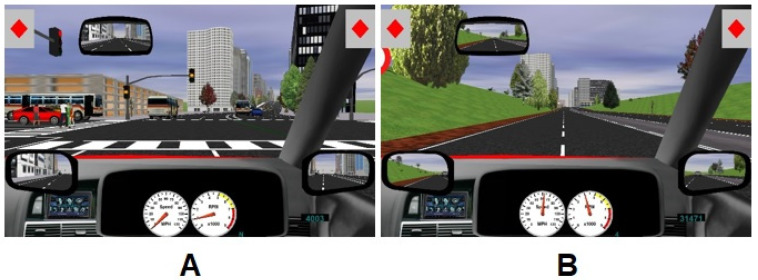
Driving is increasing across the world and road traffic accidents are a major cause of serious injuries and fatalities. The link between alcohol consumption and impaired driving has long been established and has led to legislation in many countries, with enforcement of legal limits based on blood alcohol concentration levels. Alcohol hangover research is an emerging field with a range of laboratory and naturalistic studies now clearly demonstrating the significant impairments that can result from hangover, even when alcohol levels are measured at or close to zero the day following a social drinking occasion. Driving is a commonplace activity but requires competency with a range of complex and potentially demanding tasks. Driving impaired can have serious consequences, including death and serious injury. There have been only limited alcohol hangover driving studies. The studies presented examined the consequences of alcohol hangover with a driving simulator contrasting a group with zero residual alcohol (N = 26) next day and another with residual alcohol (N = 26) assessed with breathalyzer in the morning before undertaking a 20 min commute to work. All participants completed a morning drive after a night without alcohol consumption and another after a night of social drinking. The driving scenarios were relatively demanding including traffic and pedestrians, traffic lights and other potential hazards in a mixed rural and urban journey. Subjective hangover and workload were assessed in addition to a range of driving performance variables, including divided attention, steering control and driving violations. Analyses contrasted driving in the no alcohol condition with the residual alcohol condition. The combined groups data (N = 52) was contrasted with the zero and residual alcohol groups. Significant contrasts were found for a range of driving measures, including divided attention, vehicle control, and driving violations as well as perceived workload. The pattern of impairment was broadly similar across both groups, indicating that whether or not residual alcohol was present, consistent driving impairment was seen. The relatively high number of significant variables may reflect the increased cognitive demand of the 20 min commute drive including busy and complex urban environments. This was also reflected in the significant increase in perceived workload recorded across the 6 dimensions of the National Aeronautics and Space Administration Task Load Index (NASA-TLX). Associations between subjective measures and driving performance with hangover suggested a potential lack of awareness of impairment, though were limited in number. The overall findings indicate that the levels of impairment seen reflect those seen with alcohol impaired driving, even when breath alcohol is zero.
Keywords: alcohol; awareness of impairment; driving; hangover; residual alcohol.
Conflict of interest statement
C.A. has undertaken sponsored research, or provided consultancy, for a number of companies and organizations including Airbus Group Industries, Astra, British Aerospace/BAeSystems, UK Civil Aviation Authority, Duphar, Farm Italia, Carlo Erba, Ford Motor Company, ICI, Innovate UK, Janssen, LERS Synthélabo, Lilly, Lorex/Searle, UK Ministry of Defence, More Labs, Quest International, Red Bull GmbH, Rhone-Poulenc Rorer, Sanofi Aventis, Vital Beverages. S.J. has undertaken sponsored research for Pfizer, AstraZeneca, Merck, Gilead, Novartis, Roche, Red Bull GmbH, the Department for Transport, and Road Safety Trust. Over the past three years, J.C.V. has received grants/research support from the Dutch Ministry of Infrastructure and the Environment, Janssen Research and Development, and Sequential, and has acted as a consultant/advisor for Clinilabs, More Labs, Red Bull GmbH, Sen-Jam Pharmaceutical, Toast!, and ZBiotics. The other authors have no potential conflicts of interest to disclose.
Figures
References
-
- World Health Organization . Global Status Report on Road Safety. World Health Organization; Geneva, Switzerland: 2018.
LinkOut - more resources
Full Text Sources
