


Trajectories of maternal depressive symptoms from the antenatal period to 24-months postnatal follow-up: findings from the 2015 Pelotas birth cohort
- PMID: 32408866
- PMCID: PMC7222527
- DOI: 10.1186/s12888-020-02533-z
Trajectories of maternal depressive symptoms from the antenatal period to 24-months postnatal follow-up: findings from the 2015 Pelotas birth cohort
Abstract
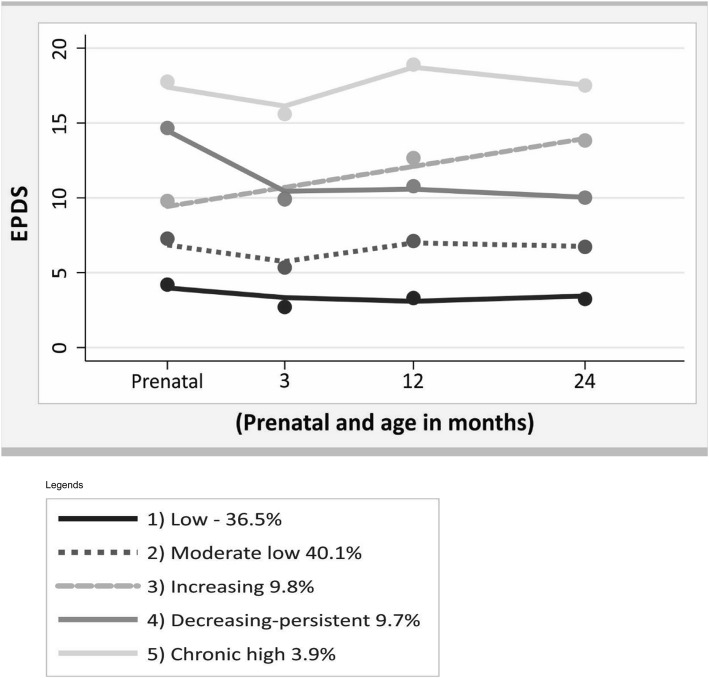
Background: Maternal depression may be chronic and recurrent, with negative effects both on the health of mothers and children. Many studies have shown trajectories of postnatal depressive symptoms but few studies in low- and middle-income countries have evaluated the trajectories of depressive symptoms starting during pregnancy. This study aims to identify the different trajectories of depressive symptoms among mothers in the Pelotas 2015 birth cohort, from pregnancy to the second year of the child's life.
Methods: This study used data from the 2015 Pelotas Birth Cohort, a longitudinal study of all live births occurred in 2015 in Pelotas, Brazil. Maternal depressive symptoms were assessed using the Edinburgh Postnatal Depression Scale (EPDS). Mothers who completed the EPDS on at least three follow-up visits beginning to the antenatal follow-up visit were included in the analyses. The trajectory of maternal depressive symptoms was estimated through group-based trajectory modeling.
Results: A total of 3040 women were included in the present analysis. We identified five groups of maternal depressive symptoms trajectories, with 23.4% of the mothers presenting persistent depressive symptoms and 3.9% showing chronic high depressive symptoms throughout the study period. The probability of having persistent depressive symptoms increased among mothers with greater socioeconomic vulnerability.
Conclusions: This study shown the persistence of maternal depressive symptoms since pregnancy until 2 years postnatal. Additionally, alongside the known risk factors, pre-gestational depression and antenatal depressive symptoms are important risk factors for the persistence and severity of depressive symptoms. These findings support the need to provide mental health evaluation and care for women from pregnancy to the late postnatal period.
Conflict of interest statement
The authors declare that they have no competing interests.
Figures
References
-
- Smith KF, Huber LR, Issel LM, Warren-Findlow J. The association between maternal depression during pregnancy and adverse birth outcomes: a retrospective cohort study of PRAMS participants. J Community Health. 2015;40(5):984–992. - PubMed
-
- Marcus SM. Depression during pregnancy: rates, risks and consequences--Motherisk update 2008. Can J Clin Pharmacol. 2009;16(1):e15–e22. - PubMed
-
- Toohey J. Depression during pregnancy and postpartum. Clin Obstet Gynecol. 2012;55(3):788–797. - PubMed
-
- Howard LM, Molyneaux E, Dennis CL, Rochat T, Stein A, Milgrom J. Non-psychotic mental disorders in the perinatal period. Lancet. 2014;384(9956):1775–1788. - PubMed
-
- Wesseloo R, Kamperman AM, Bergink V, Pop VJM. Thyroid peroxidase antibodies during early gestation and the subsequent risk of first-onset postpartum depression: a prospective cohort study. J Affect Disord. 2018;225:399–403. - PubMed
