


The meta-memory ratio: a new cohort-independent way to measure cognitive awareness in asymptomatic individuals at risk for Alzheimer's disease
- PMID: 32408882
- PMCID: PMC7222501
- DOI: 10.1186/s13195-020-00626-1
The meta-memory ratio: a new cohort-independent way to measure cognitive awareness in asymptomatic individuals at risk for Alzheimer's disease
Abstract
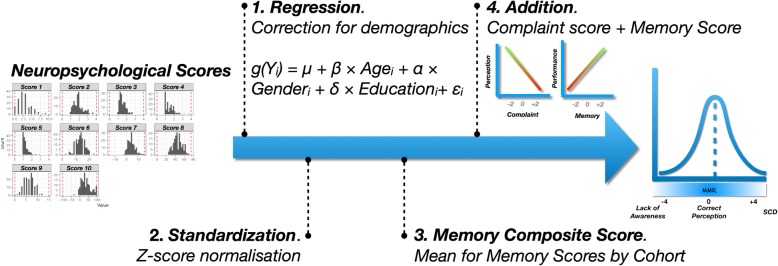
Background: Lack of awareness of cognitive decline (ACD) has been described at the preclinical and prodromal stages of Alzheimer's disease (AD). In this study, we introduced a meta-memory ratio (MMR) and explored how it is associated with neuroimaging AD biomarkers in asymptomatic individuals at risk for AD.
Method: Four hundred forty-eight cognitively healthy participants from two cohorts of subjective memory complainers (INSIGHT-PreAD and ADNI) were included. Regression models were used to assess the impact of AD biomarkers on the MMR.
Result: In both cohorts, there was a significant quadratic effect of cerebral amyloidosis on the MMR value. In particular, participants had a high ACD up to the amyloid positivity threshold, above which a decrease of ACD was eventually observed as the amyloid load increased.
Conclusion: This nonlinear evolution of ACD in very early AD must be taken into account in clinical care and for trial enrollment as well.
Keywords: Alzheimer’s disease; Awareness; Preclinical.
Conflict of interest statement
MO Habert has received honoraria as expert for Blue Earth company.
S Epelbaum received honoraria as consultant and/or speaker on behalf of Eli-Lilly, Roche, Biogen, Astelas Pharma, and GE Healthcare.
B Dubois reports personal fees from Boehringer-Ingelheim, personal fees from Eli-Lilly, grants from Roche, and grants from Merck, outside the submitted work.
The authors have no conflict of interest to report.
Figures


References
Publication types
MeSH terms
Substances
LinkOut - more resources
Full Text Sources
Medical
