An Unusual Case of Actinomucor elegans: A Challenging Diagnosis
- PMID: 32409629
- PMCID: PMC7252847
- DOI: 10.12659/AJCR.921562
An Unusual Case of Actinomucor elegans: A Challenging Diagnosis
Abstract
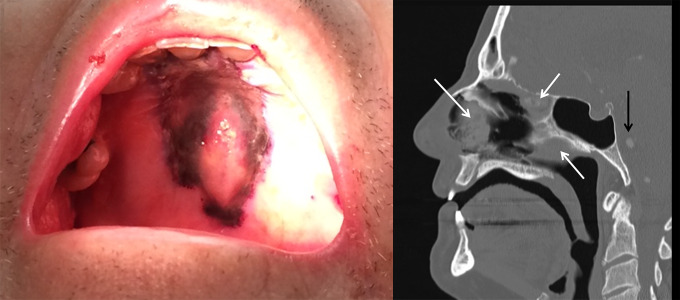
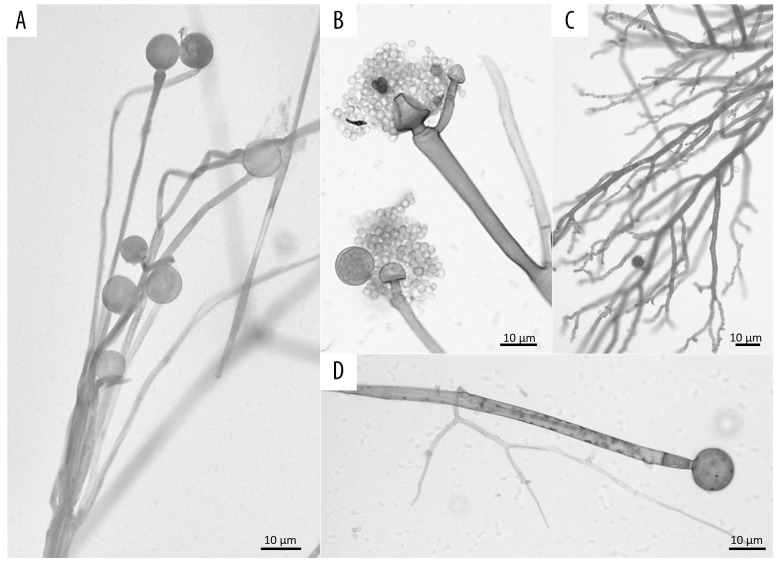
BACKGROUND Actinomucor elegans is an unusual cause of mucormycosis and can be difficult to identify by conventional methods. Mucormycosis has a very high mortality rate, especially among immunocompromised individuals. Due to the morbid and progressive nature of opportunistic fungal infections, early diagnosis is paramount for effective disease management. Matrix-assisted laser desorption/ionization time of flight mass spectrometry (MALDI) and Sanger sequencing are useful methods for rapid diagnosis of unusual fungal pathogens. CASE REPORT We report a fatal case of mucormycosis caused by A. elegans in an immunocompromised man. The pathogen was isolated from a large nasal septal black eschar that developed rapidly during tooth extraction in a patient with myelodysplastic syndrome and diabetes mellitus. After unsuccessful identification by conventional methods, A. elegans was identified using MALDI and Sanger sequencing. CONCLUSIONS Diagnosing fungal organisms poses many difficulties, but amidst the technological evolution in pathogen identification, there are useful methods for rapid identification, including MALDI and sequencing. With these powerful tools, earlier diagnosis will give health professionals an advantage against potentially fatal fungal infections.
Conflict of interest statement
None.
Figures
References
-
- Khan ZU, Ahmad S, Mokaddas E, et al. Actinomucor elegans var. kuwaitiensis isolated from the wound of a diabetic patient. Antonie Van Leeuwenhoek. 2008;94(3):343–52. - PubMed
Publication types
MeSH terms
Supplementary concepts
LinkOut - more resources
Full Text Sources