


Clinical utility and cost-effectiveness of bacterial 16S rRNA and targeted PCR based diagnostic testing in a UK microbiology laboratory network
- PMID: 32409679
- PMCID: PMC7224368
- DOI: 10.1038/s41598-020-64739-1
Clinical utility and cost-effectiveness of bacterial 16S rRNA and targeted PCR based diagnostic testing in a UK microbiology laboratory network
Abstract
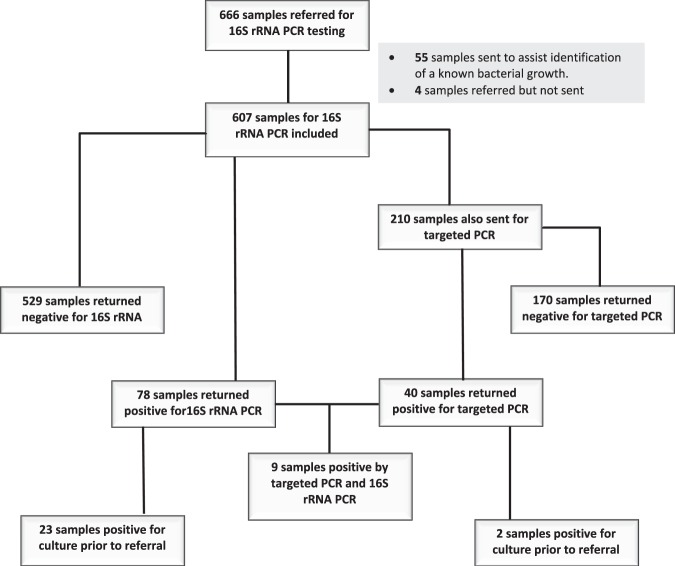
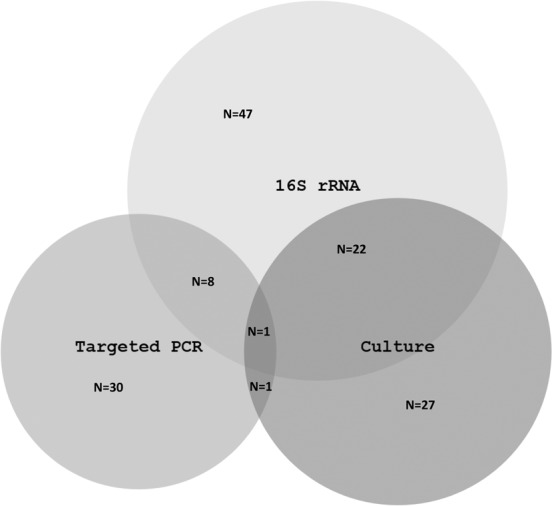
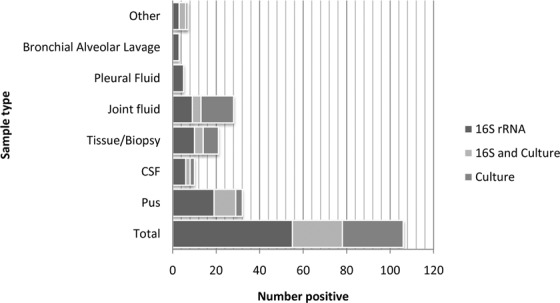
16S ribosomal-ribonucleic acid polymerase chain reaction (PCR) and targeted PCR aid microbiological diagnosis in culture-negative clinical samples. Despite routine clinical use, there remains a paucity of data on their effectiveness across a variety of clinical sample types, and cost-effectiveness. In this 4 year multicentre retrospective observational study, all clinical samples referred for 16S PCR and/or targeted PCR from a laboratory network serving seven London hospitals were identified. Laboratory, clinical, prescribing, and economic variables were analysed. 78/607 samples were 16S PCR positive; pus samples were most frequently positive (29/84; p < 0.0001), and CSF least (8/149; p = 0.003). 210/607 samples had targeted PCR (361 targets requested across 23 organisms) with 43/361 positive; respiratory samples (13/37; p = 0.01) had the highest detection rate. Molecular diagnostics provided a supportive microbiological diagnosis for 21 patients and a new diagnosis for 58. 14/91 patients with prescribing information available and a positive PCR result had antimicrobial de-escalation. For culture-negative samples, mean cost-per-positive 16S PCR result was £568.37 and £292.84 for targeted PCR, equating to £4041.76 and £1506.03 respectively for one prescription change. 16S PCR is more expensive than targeted PCR, with both assisting in microbiological diagnosis but uncommonly enabling antimicrobial change. Rigorous referral pathways for molecular tests may result in significant fiscal savings.
Conflict of interest statement
LSPM has consulted for bioMerieux (2013-2020), DNAelectronics (2015), Dairy Crest (2017–2018), received speaker fees from Profile Pharma (2018-2019) and Pfizer (2018-2020), received research grants from the National Institute for Health Research (2013-2019), CW+ Charity, and Leo Pharma (2016), and received educational support from Eumedica (2016–2018). NM has consulted for Beyer (2016), received speaker fees from Pfizer (2019) and received educational support from Eumedica (2016) and Baxter (2017). DA, TK, MN and BA, have no conflicts of interest to declare.
Figures
References
-
- UK Standards for Microbiology Investigations: Introduction to the preliminary identification of medically important bacteria and fungi from culture (SMI ID1i2: updated April 2017, Public Health England). Available at: https://www.gov.uk/government/publications/smi-id-1-preliminary-identifi.... Accessed 03 October 2019.
MeSH terms
Substances
LinkOut - more resources
Full Text Sources
