


Feasibility of behavioral activation group therapy in reducing depressive symptoms and improving quality of life in patients with depression: the BRAVE pilot trial
- PMID: 32411381
- PMCID: PMC7206724
- DOI: 10.1186/s40814-020-00596-z
Feasibility of behavioral activation group therapy in reducing depressive symptoms and improving quality of life in patients with depression: the BRAVE pilot trial
Abstract
Background: Depression impacts the lives of millions of people worldwide. Behavioral activation (BA), derived from cognitive behavioral therapy, has the potential for improving depressive symptoms in patients with depression. Studies evaluating the effectiveness of BA specifically in the context of group therapy programs in a hospital setting for patients with depression are limited. In this study, we report findings from a pilot trial evaluating group BA for major depressive disorder.
Objective: The objectives of this pilot trial are to assess the potential of a full trial of BA group therapy in a large-scale tertiary care setting and to provide preliminary information about possible results regarding mood symptoms and quality of life in adults with depression.
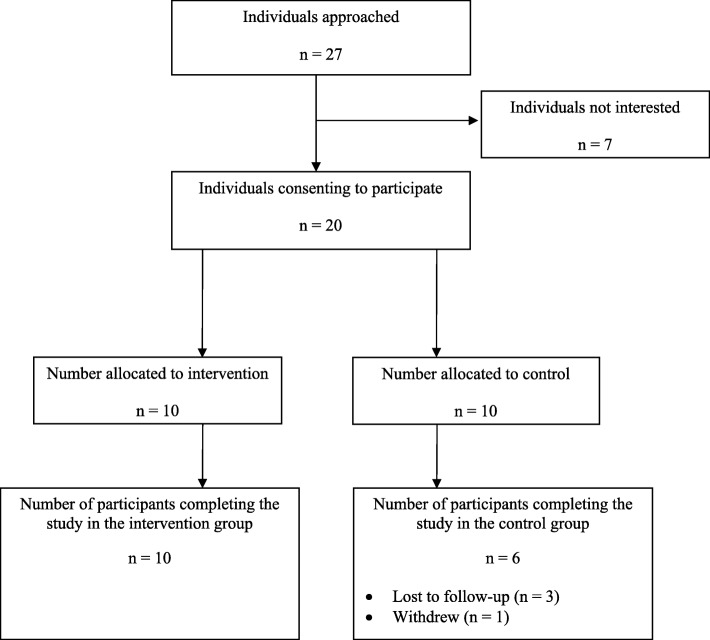
Methods: Using a parallel single-cohort pragmatic pilot randomized controlled trial design, we evaluated the potential of conducting a large trial of BA effectiveness among adults with depression. Participants were randomized to the intervention (BA in addition to usual care) or control (support group in addition to usual care) groups and were assessed weekly for 18 consecutive weeks. Participants randomized to intervention underwent 28 2-h group BA therapy visits administered by trained therapists and completed assessments to examine treatment outcomes. Feasibility was measured in terms of enrollment rates (min. 20%), completion rates of study (min. 80%), and completion rates of weekly measurement scales (min. 80%). The reporting of this pilot trial is in accordance with the CONSORT extension for randomized pilot and feasibility trials.
Results: We randomized 20 individuals of mean age of 48.8 years (standard deviation = 9.7) with a DSM-5 diagnosis of major depressive disorder to intervention (n = 10) or control (n = 10) groups. Based on our feasibility criteria, our recruitment rate was excellent (20/27; 74%), study completion was found to be a moderate (80% of the total participants in both arms completed the study; BA = 100%, control = 60%), and completeness of measurements on a weekly basis was adequate overall (82%; BA = 86%, control = 79%).
Conclusions: The study has demonstrated the potential feasibility to perform a larger scale trial upon modifications to the control group to avoid the low rate of study completion (60%) in this group.
Trial registration: ClinicalTrials NCT02045771, Registered January 22, 2014.
Keywords: Behavioral activation; Behavioral group therapy; Depression; Pilot randomized trial; Quality of life.
© The Author(s) 2020.
Conflict of interest statement
Competing interestsThe authors declare that they have no competing interests.
Figures
References
-
- World Health Organization. Depression: fact sheet no. 369. 2018. Available: http://www.who.int/mediacentre/factsheets/fs369/en/. Accessed 22 Aug 2019.
-
- P. Cuijpers and F. Smit, “Excess mortality in depression: a meta-analysis of community studies,” J Affect Disord. 2002, doi: 10.1016/S0165-0327(01)00413-X. - PubMed
Associated data
LinkOut - more resources
Full Text Sources
Medical
