


Implications of Language Barriers for Healthcare: A Systematic Review
- PMID: 32411417
- PMCID: PMC7201401
- DOI: 10.5001/omj.2020.40
Implications of Language Barriers for Healthcare: A Systematic Review
Abstract
Objectives: Language barriers pose challenges in terms of achieving high levels of satisfaction among medical professionals and patients, providing high- quality healthcare and maintaining patient safety. To address these challenges, many larger healthcare institutions offer interpreter services to improve healthcare access, patient satisfaction, and communication. However, these services increase the cost and duration of treatment. The purpose of this review is to investigate the impact of language barriers on healthcare and to suggest solutions to address the challenges.
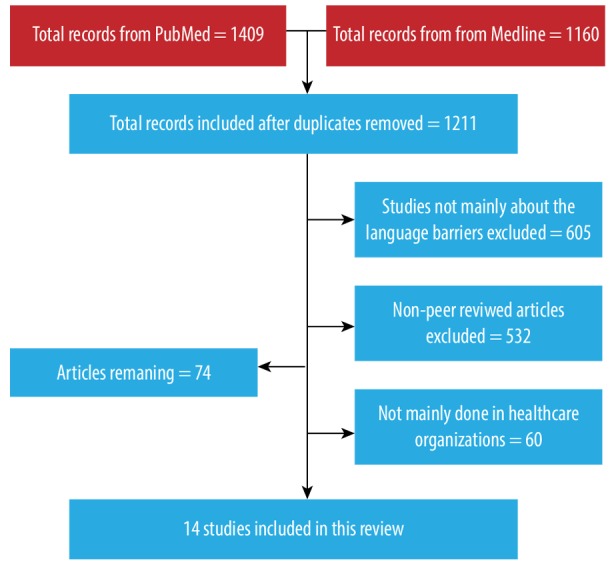
Methods: We identified published studies on the implications of language barriers in healthcare using two databases: PubMed and Medline. We included 14 studies that met the selection criteria. These studies were conducted in various countries, both developed and developing, though most came from the US. The 14 studies included 300 918 total participants, with participation in each study ranging from 21 to 22 353 people.
Results: We found that language barriers in healthcare lead to miscommunication between the medical professional and patient, reducing both parties' satisfaction and decreasing the quality of healthcare delivery and patient safety. In addition, the review found that interpreter services contribute indirectly to increased cost and the length of treatment visits. One study reported the implementation of online translation tools such as Google Translate and MediBabble in hospitals, which increased the satisfaction of both medical providers and patients (to 92%) and improved the quality of healthcare delivery and patient safety. Language barriers are responsible for reducing the satisfaction of medical providers and patients, as well as the quality of healthcare delivery and patient safety. Many healthcare institutions use interpreter services that increase the cost and length of treatment visits.
Conclusions: The results of our review suggest that implementing online translation tools such as Google Translate and MediBabble may improve the quality of healthcare and the level of satisfaction among both medical providers and patients.
Keywords: Communication Barriers; Limited English Proficiency; Patient Satisfaction; Quality of Health Care.
The OMJ is Published Bimonthly and Copyrighted 2020 by the OMSB.
Figures
References
-
- Slade S, Sergent SR. Language barrier. In: StatPearls [Internet]: StatPearls Publishing; 2018. - PubMed
Publication types
LinkOut - more resources
Full Text Sources
Miscellaneous