


Mental Health Interventions during the COVID-19 Pandemic: A Conceptual Framework by Early Career Psychiatrists
- PMID: 32413616
- PMCID: PMC7195073
- DOI: 10.1016/j.ajp.2020.102085
Mental Health Interventions during the COVID-19 Pandemic: A Conceptual Framework by Early Career Psychiatrists
Abstract
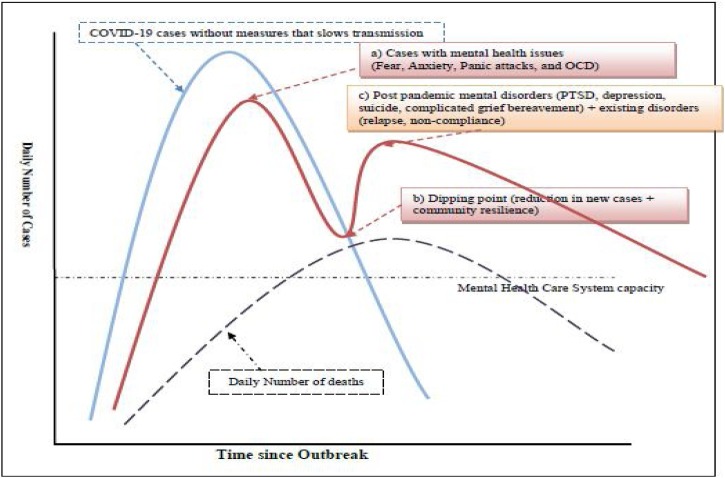
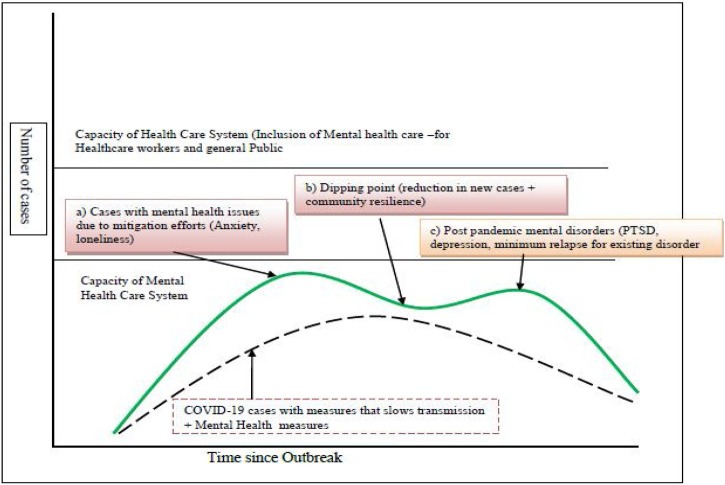
The emergence of mental health (MH) problems during a pandemic is extremely common, though difficult to address due to the complexities of pandemics and the scarcity of evidence about the epidemiology of pandemic-related MH problems and the potential interventions to tackle them. Little attention has been devoted so far to this topic from policymakers, stakeholders and researchers, resulting in a lack of replicable, scalable and applicable frameworks to help plan, develop and deliver MH care during pandemics. As a response, we have attempted to develop a conceptual framework (CF) that could guide the development, implementation, and evaluation of MH interventions during the ongoing COVID-19 pandemic. This CF was developed by early career psychiatrists from 16 countries that cover all the WHO regions. Their opinions were elicited via a semi-structured questionnaire. They were asked to provide their views about the current MH situation in their countries and to elaborate on existing 'myths' and misinformation. They were also asked to name the resources available and to propose solutions and approaches to provide accessible and affordable care. The CF was prepared based on the extant literature and the views discussed in this group; it illustrates the epidemiology of MH problems, preparedness plans, stage-specific plans or innovative solutions, opportunities to integrate those plans and possible outcomes at policy level. This CF can serve as a technical guide for future research regarding pandemics. It can be used to monitor trends and to optimize efforts, and to develop evidence based MH interventions. Still, further research focusing on the individual components of this framework is needed.
Keywords: COVID-19; Framework; Interventions; Mental health; Pandemic.
Copyright © 2020 Elsevier B.V. All rights reserved.
Conflict of interest statement
Declaration of Competing Interest The authors declare that they have no conflict of interest.
Figures


References
-
- Benight C., McFarlane A. Challenges for disaster research: recommendations for planning and implementing disaster mental health studies. J. Loss Trauma. 2007;12:419–434.
-
- Droogers M., Ciotti M., Kreidl P., Melidou A., Penttinen P., Sellwood C., Tsolova S., Snacken R. European pandemic influenza preparedness planning: a review of national plans, July 2016. Disaster Med. Publ. Health Prep. 2019;13:582–592. - PubMed
MeSH terms
LinkOut - more resources
Full Text Sources
Medical
Research Materials
