


Empagliflozin prevents doxorubicin-induced myocardial dysfunction
- PMID: 32414364
- PMCID: PMC7229599
- DOI: 10.1186/s12933-020-01040-5
Empagliflozin prevents doxorubicin-induced myocardial dysfunction
Abstract
Background: Empagliflozin showed efficacy in controlling glycaemia, leading to reductions in HbA1c levels, weight loss and blood pressure, compared to standard treatment. Moreover, the EMPA-REG OUTCOME trial demonstrated a 14% reduction of major adverse cardiovascular events (MACE), a 38% reduction in cardiovascular (CV) death and a 35% reduction in the hospitalization rate for heart failure (HF). These beneficial effect on HF were apparently independent from glucose control. However, no mechanistic in vivo studies are available to explain these results, yet. We aimed to determine the effect of empagliflozin on left ventricular (LV) function in a mouse model of doxorubicin-induced cardiomyopathy (DOX-HF).
Methods: Male C57Bl/6 mice were randomly assigned to the following groups: controls (CTRL, n = 7), doxorubicin (DOX, n = 14), DOX plus empagliflozin (DOX + EMPA, n = 14), or DOX plus furosemide (DOX + FURO group, n = 7). DOX was injected intraperitoneally. LV function was evaluated at baseline and after 6 weeks of treatment using high-resolution echocardiography with 2D speckle tracking (Vevo 2100). Histological assessment was obtained using Haematoxylin and Eosin and Masson's Goldner staining.
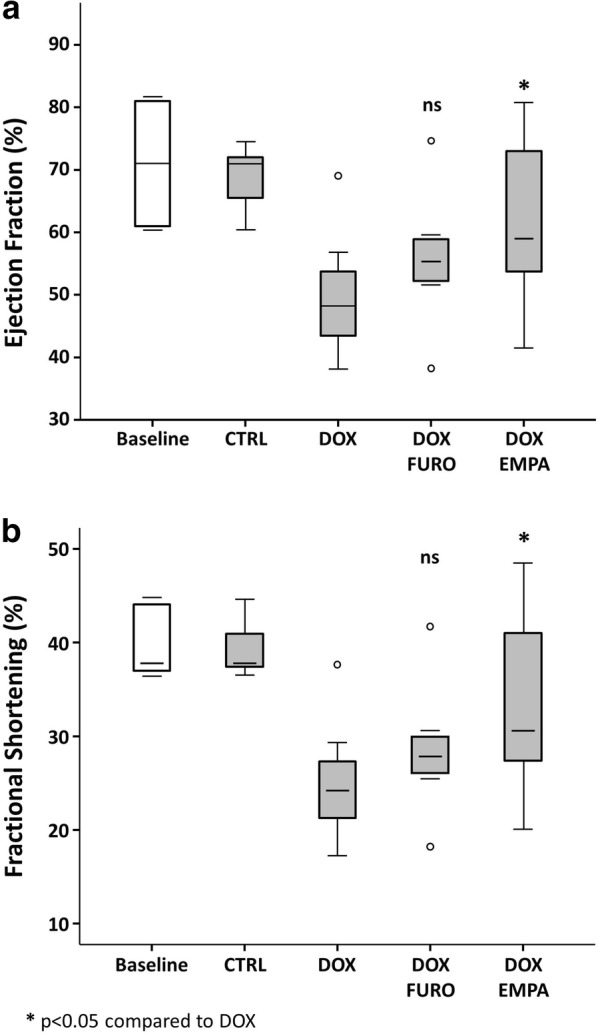
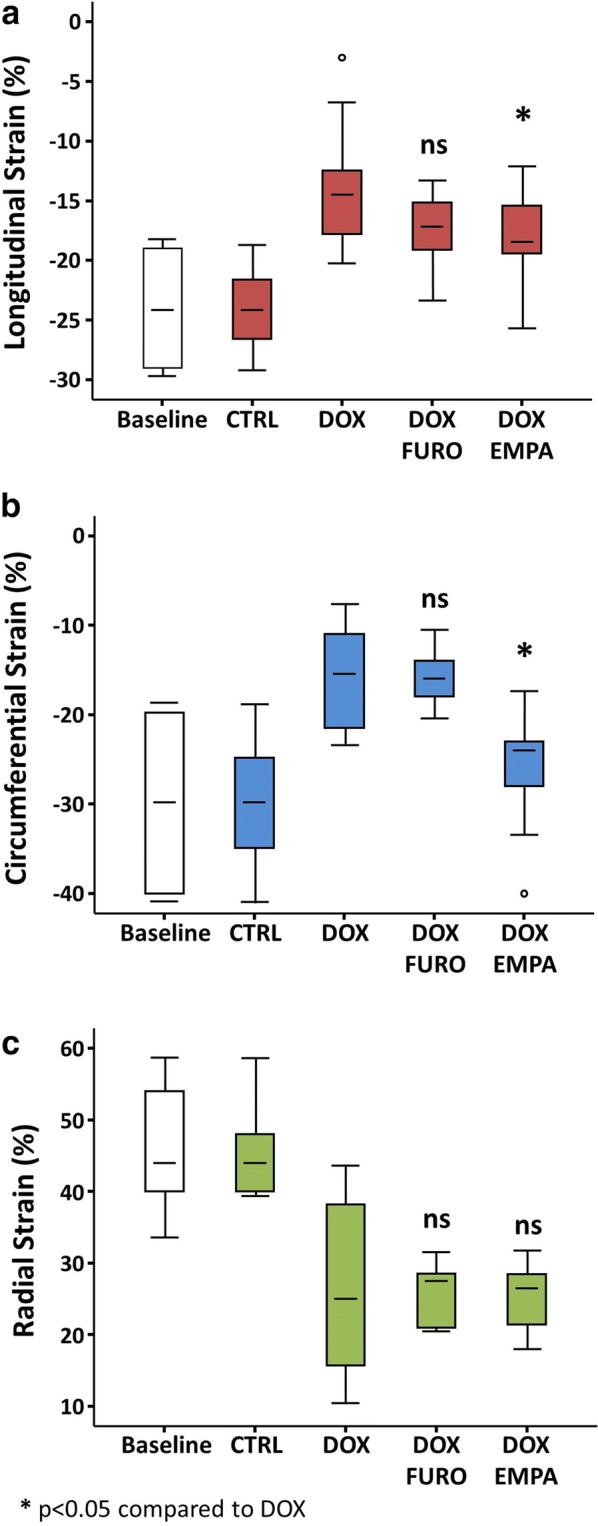
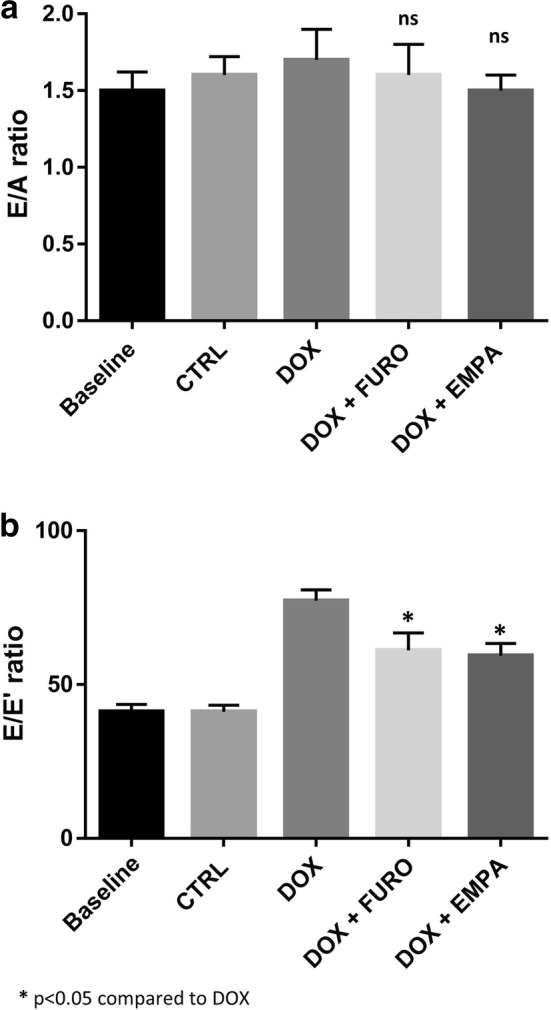
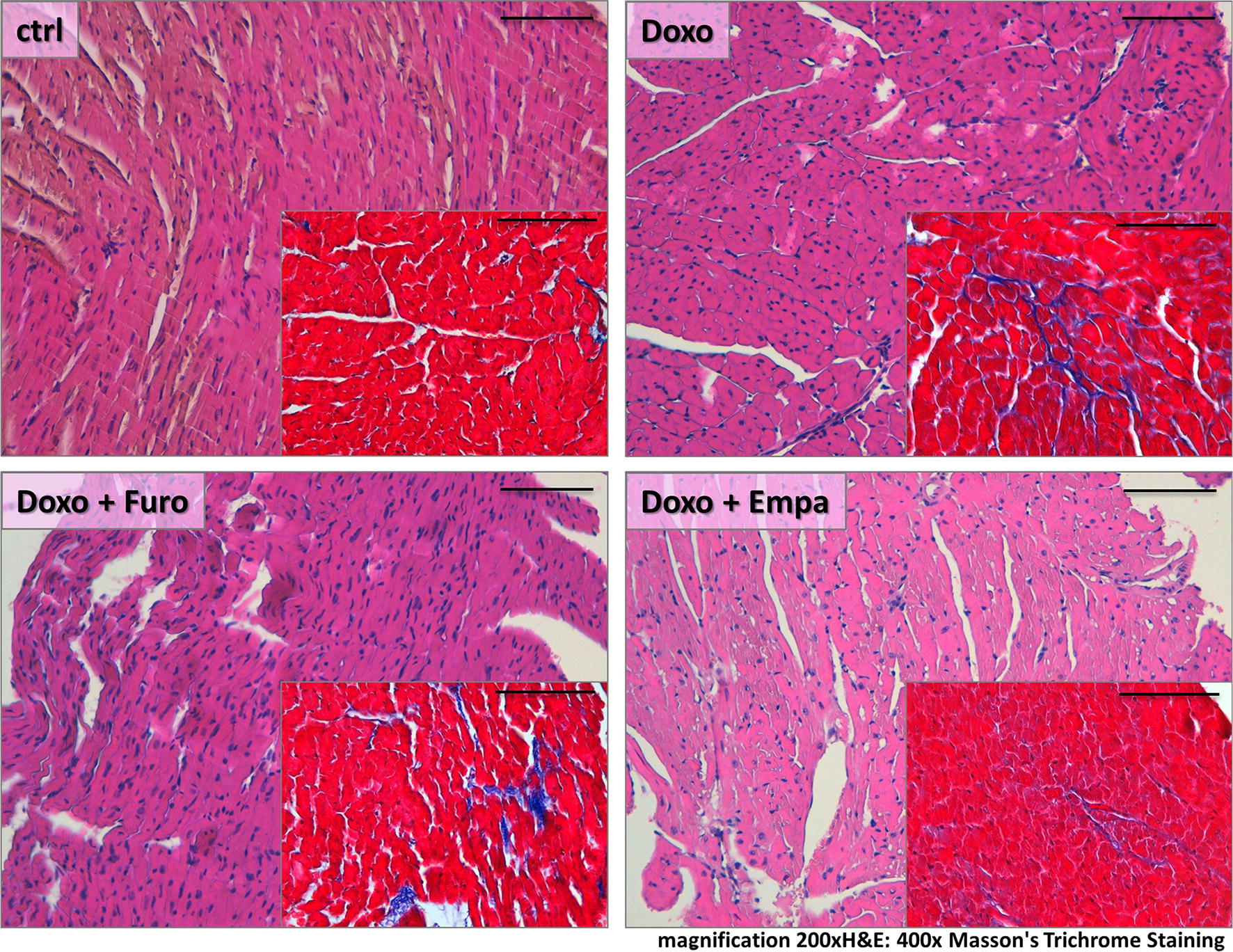
Results: A significant decrease in both systolic and diastolic LV function was observed after 6 weeks of treatment with doxorubicin. EF dropped by 32% (p = 0.002), while the LS was reduced by 42% (p < 0.001) and the CS by 50% (p < 0.001). However, LV function was significantly better in the DOX + EMPA group, both in terms of EF (61.30 ± 11% vs. 49.24 ± 8%, p = 0.007), LS (- 17.52 ± 3% vs. - 13.93 ± 5%, p = 0.04) and CS (- 25.75 ± 6% vs. - 15.91 ± 6%, p < 0.001). Those results were not duplicated in the DOX + FURO group. Hearts from the DOX + EMPA group showed a 50% lower degree of myocardial fibrosis, compared to DOX mice (p = 0.03). No significant differences were found between the DOX + FURO and the DOX group (p = 0.103).
Conclusion: Empagliflozin attenuates the cardiotoxic effects exerted by doxorubicin on LV function and remodelling in nondiabetic mice, independently of glycaemic control. These findings support the design of clinical studies to assess their relevance in a clinical setting.
Keywords: Cardiotoxicity; Heart failure; Left ventricular function.
Conflict of interest statement
The authors declare that they have no competing interests.
Figures
References
-
- Emerging Risk Factors Collaboration. Seshasai SR, Kaptoge S, Thompson A, Di Angelantonio E, Gao P, Sarwar N, Whincup PH, Mukamal KJ, Gillum RF, Holme I, Njølstad I, Fletcher A, Nilsson P, Lewington S, Collins R, Gudnason V, Thompson SG, Sattar N, Selvin E, Hu FB, Danesh J. Diabetes mellitus, fasting glucose, and risk of cause-specific death. N Engl J Med. 2011;364(9):829–841. doi: 10.1056/nejmoa1008862. - DOI - PMC - PubMed
-
- Zinman B, Wanner C, Lachin JM, Fitchett D, Bluhmki E, Hantel S, Mattheus M, Devins T, Johansen OE, Woerle HJ, Broedl UC, Inzucchi SE, EMPA-REG OUTCOME Investigators Empagliflozin, cardiovascular outcomes, and mortality in type 2 diabetes. N Engl J Med. 2015;373(22):2117–2128. doi: 10.1056/nejmoa1504720. - DOI - PubMed
-
- Fitchett D, Zinman B, Wanner C, Lachin JM, Hantel S, Salsali A, Johansen OE, Woerle HJ, Broedl UC, Inzucchi SE, EMPA-REG OUTCOME trial investigators Heart failure outcomes with empagliflozin in patients with type 2 diabetes at high cardiovascular risk: results of the EMPA-REG OUTCOME trial. Eur Heart J. 2016;37(19):1526–1534. doi: 10.1093/eurheartj/ehv728. - DOI - PMC - PubMed
MeSH terms
Substances
LinkOut - more resources
Full Text Sources
Medical
Research Materials
Miscellaneous
