


Lipid Rafts from Olfactory Ensheathing Cells: Molecular Composition and Possible Roles
- PMID: 32415577
- PMCID: PMC11448638
- DOI: 10.1007/s10571-020-00869-4
Lipid Rafts from Olfactory Ensheathing Cells: Molecular Composition and Possible Roles
Abstract
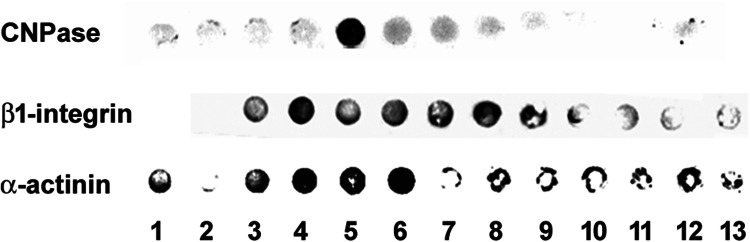
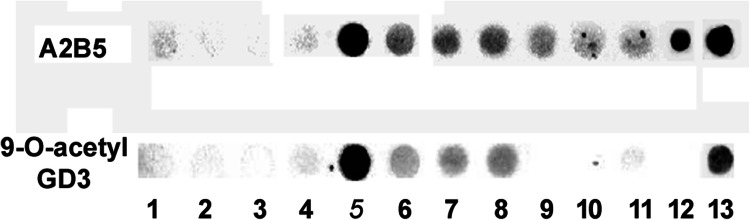
Olfactory ensheathing cells (OECs) are specialized glial cells of the olfactory system, believed to play a role in the continuous production of olfactory neurons and ensheathment of their axons. Although OECs are used in therapeutic applications, little is known about the cellular mechanisms underlying their migratory behavior. Recently, we showed that OEC migration is sensitive to ganglioside blockage through A2B5 and Jones antibody in OEC culture. Gangliosides are common components of lipid rafts, where they participate in several cellular mechanisms, including cell migration. Here, we characterized OEC lipid rafts, analyzing the presence of specific proteins and gangliosides that are commonly expressed in motile neural cells, such as young neurons, oligodendrocyte progenitors, and glioma cells. Our results showed that lipid rafts isolated from OECs were enriched in cholesterol, sphingolipids, phosphatidylcholine, caveolin-1, flotillin-1, gangliosides GM1 and 9-O-acetyl GD3, A2B5-recognized gangliosides, CNPase, α-actinin, and β1-integrin. Analysis of the actin cytoskeleton of OECs revealed stress fibers, membrane spikes, ruffled membranes and lamellipodia during cell migration, as well as the distribution of α-actinin in membrane projections. This is the first description of α-actinin and flotillin-1 in lipid rafts isolated from OECs and suggests that, together with β1-integrin and gangliosides, membrane lipid rafts play a role during OEC migration. This study provides new information on the molecular composition of OEC membrane microdomains that can impact on our understanding of the role of OEC lipid rafts under physiological and pathological conditions of the nervous system, including inflammation, hypoxia, aging, neurodegenerative diseases, head trauma, brain tumor, and infection.
Keywords: Cell motility; Gangliosides; Glial cells; Membrane microdomains.
Conflict of interest statement
Authors declare that they have no conflict of interest.
Figures


References
-
- Bligh EG, Dyer WJ (1959) A rapid method of total lipid extraction and purification. Can J Biochem Physiol 37:911–913 - PubMed
-
- Brown DA (2002) Isolation and use of rafts. Curr Protoc Immunol 51:11 - PubMed
-
- Corrêa JR, Atella GC, Vargas C, Soares MJ (2007) Transferrin uptake may occur through detergent-resistant membrane domains at the cytopharynx of Trypanosoma cruzi epimastigote forms. Mem Inst Oswaldo Cruz 102:871–876 - PubMed
-
- Del Pozo MA (2004) Integrin signaling and lipid rafts. Cell Cycle 3:725–728 - PubMed
MeSH terms
Substances
LinkOut - more resources
Full Text Sources
