


Proper cold stimulation starting at an earlier age can enhance immunity and improve adaptability to cold stress in broilers
- PMID: 32416794
- PMCID: PMC7587771
- DOI: 10.3382/ps/pez570
Proper cold stimulation starting at an earlier age can enhance immunity and improve adaptability to cold stress in broilers
Abstract
The effects of long-term cold stimulation on the immune function of ileum and adaptability to cold stress in broilers were examined. A total of 360 Arbor Acres broilers was divided into 3 groups and four replicates per group. C (control) was reared in normal thermal environment. C-3 and C-12 (treatments) were kept in cold condition of 3 or 12°C lower than the temperature of C from days 8 to 42. At day 42, all the groups were exposed to an acute cold stress challenge, designated as S, S-3, and S-12. The mRNA levels of immune molecules and heat shock proteins as well as oxidative stress-related indicators in ileum tissues, and immunoglobulins contents in serum were examined at 14, 42, and 43 d of age. The C-3 regimen had no adverse effect on production performance, whereas the C-12 regimen reduced the production performance relative to C (P < 0.05). At day 42, C-3 had higher levels of immune indexes (P < 0.05), whereas C-12 had lower levels than C (P < 0.05). No differences in levels of oxidative stress-related indicators were found between C and C-3 at day 42 (P > 0.05). S-3 had higher levels of immune indexes and lower levels of oxidative stress-related indicators (P < 0.05), as compared to S and S-12. The results suggest that 34 d of cold stimulation at 3°C lower than the normal temperature had no adverse impacts on production performance but enhanced the immunity of ileum and adaptability to acute cold challenge in broilers.
Keywords: adaptability; broiler ileum; cold stimulation; immunity; performance.
Copyright © 2019 The Author(s). Published by Elsevier Inc. All rights reserved.
Figures
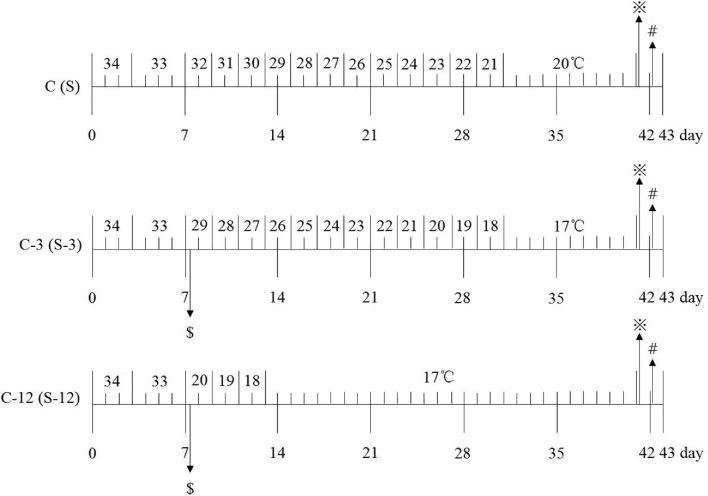
 ” represents that acute cold stress starting from 07:00 h on day 42. “#” represents that acute cold stress finishing on 07:00 h on day 43.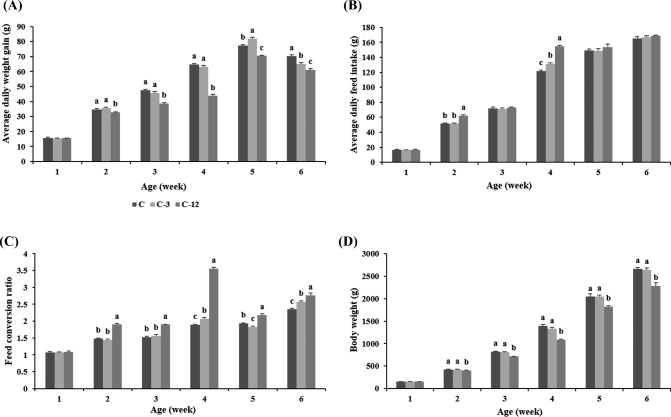
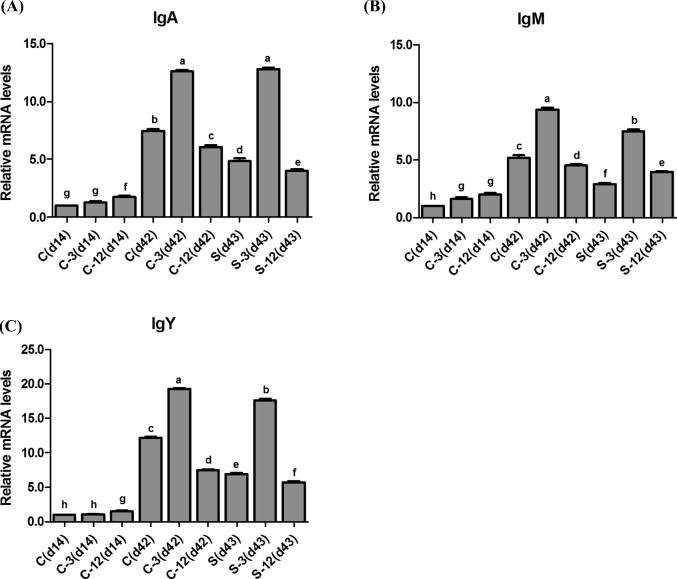
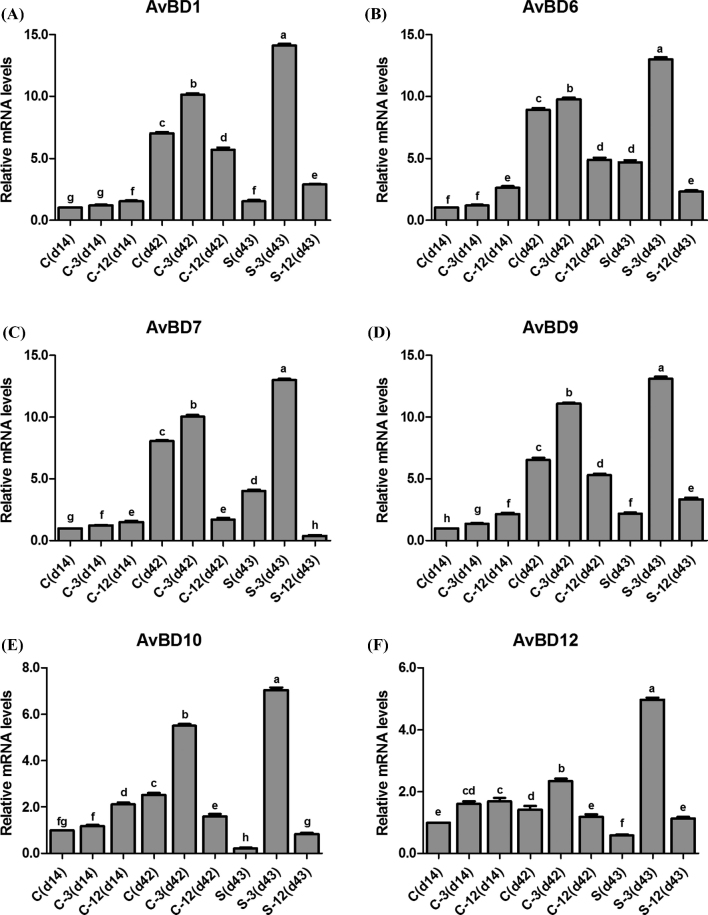
References
-
- Abdelqader A.M., Abuajamieh M., Hammad H.M., Al-Fataftah A.R. Effects of dietary butyrate supplementation on intestinal integrity of heat-stressed cockerels. J. Anim. Physiol. An. N. 2017;101:1115–1121. - PubMed
-
- Barocelli E., Ballabeni V., Ghizzardi P., Cattaruzza F., Bertoni S., Lagrasta C.A., Impicciatore M. The selective inhibition of inducible nitric oxide synthase prevents intestinal ischemia–reperfusion injury in mice. Nitric Oxide. 2006;14:212–218. - PubMed
-
- Bernabucci U., Lacetera N., Baumgard L.H., Rhoads R.P., Ronchi B., Nardone A. Metabolic and hormonal acclimation to heat stress in domesticated ruminants. Animal. 2010;4:1167–1183. - PubMed
-
- Brogden K.A., Ackermann M., Jr M.C., Tack B.F. Antimicrobial peptides in animals and their role in host defences. Int. J. of Antimicrob. Ag. 2003;22:465–478. - PubMed
-
- Cândido M.G., Tinôco I.D.F., Pinto F.D.A.D.C., Santos N.T., Roberti R.P. Determination of thermal comfort zone for early-stage broilers. Eng. Agr-jaboticabal. 2016;36:760–767.
MeSH terms
LinkOut - more resources
Full Text Sources
Miscellaneous
