


Explainable artificial intelligence models using real-world electronic health record data: a systematic scoping review
- PMID: 32417928
- PMCID: PMC7647281
- DOI: 10.1093/jamia/ocaa053
Explainable artificial intelligence models using real-world electronic health record data: a systematic scoping review
Abstract
Objective: To conduct a systematic scoping review of explainable artificial intelligence (XAI) models that use real-world electronic health record data, categorize these techniques according to different biomedical applications, identify gaps of current studies, and suggest future research directions.
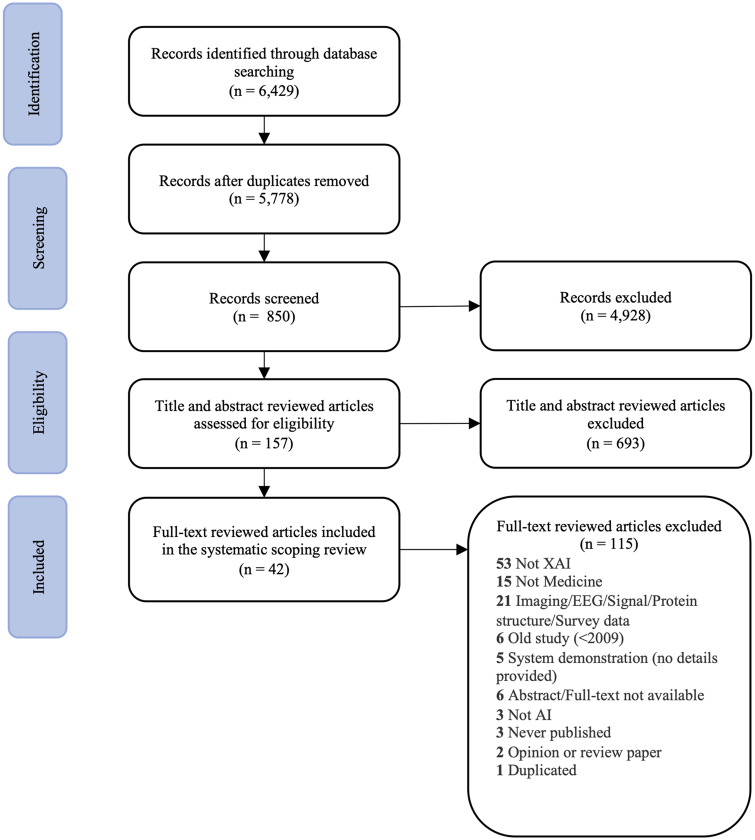
Materials and methods: We searched MEDLINE, IEEE Xplore, and the Association for Computing Machinery (ACM) Digital Library to identify relevant papers published between January 1, 2009 and May 1, 2019. We summarized these studies based on the year of publication, prediction tasks, machine learning algorithm, dataset(s) used to build the models, the scope, category, and evaluation of the XAI methods. We further assessed the reproducibility of the studies in terms of the availability of data and code and discussed open issues and challenges.
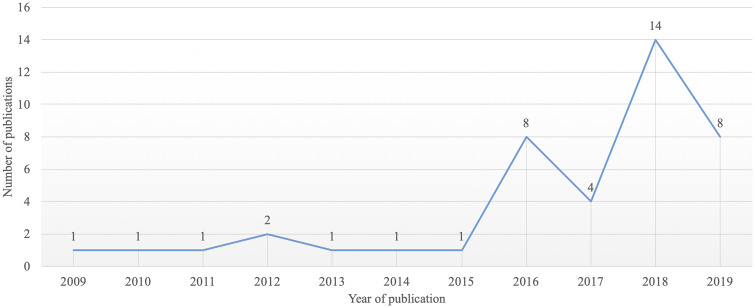
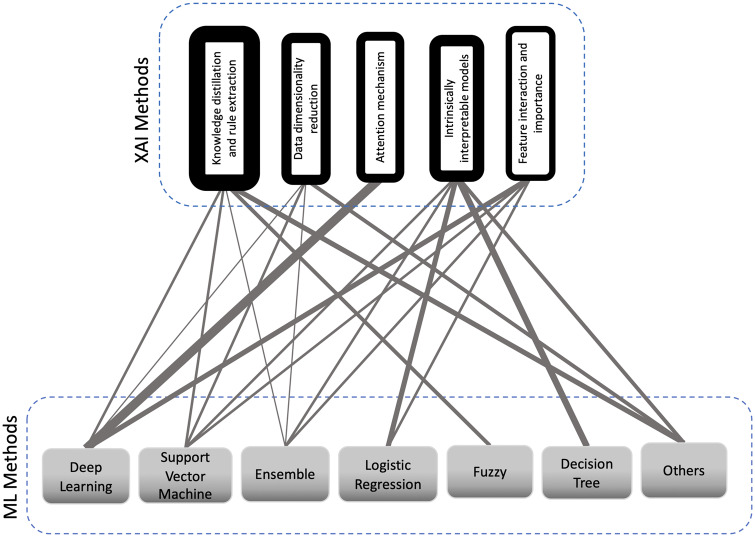
Results: Forty-two articles were included in this review. We reported the research trend and most-studied diseases. We grouped XAI methods into 5 categories: knowledge distillation and rule extraction (N = 13), intrinsically interpretable models (N = 9), data dimensionality reduction (N = 8), attention mechanism (N = 7), and feature interaction and importance (N = 5).
Discussion: XAI evaluation is an open issue that requires a deeper focus in the case of medical applications. We also discuss the importance of reproducibility of research work in this field, as well as the challenges and opportunities of XAI from 2 medical professionals' point of view.
Conclusion: Based on our review, we found that XAI evaluation in medicine has not been adequately and formally practiced. Reproducibility remains a critical concern. Ample opportunities exist to advance XAI research in medicine.
Keywords: Explainable artificial intelligence (XAI); deep learning; electronic health records; interpretable machine learning; real-world data.
© The Author(s) 2020. Published by Oxford University Press on behalf of the American Medical Informatics Association. All rights reserved. For permissions, please email: journals.permissions@oup.com.
Figures
References
-
- Johnson KW, Torres Soto J, Glicksberg BS, et al. Artificial intelligence in cardiology. J Am Coll Cardiol 2018; 71 (23): 2668–79. - PubMed
-
- Krittanawong C, Zhang H, Wang Z, Aydar M, Kitai T.. Artificial intelligence in precision cardiovascular medicine. J Am Coll Cardiol 2017; 69 (21): 2657–64. - PubMed
-
- Stuart R, Peter N. . Artificial Intelligence:A Modern Approach. 3rd ed.Berkeley: Pearson; 2009.
-
- Szolovits P. Artificial Intelligence in Medicine. Abingdon, UK: Routledge; 2019.
