Review
. 2020 Dec;35(1):1145-1162.
doi: 10.1080/14756366.2020.1760262.

Natural compounds as inhibitors of transthyretin amyloidosis and neuroprotective agents: analysis of structural data for future drug design

Affiliations
Review

Natural compounds as inhibitors of transthyretin amyloidosis and neuroprotective agents: analysis of structural data for future drug design

Lidia Ciccone et al. J Enzyme Inhib Med Chem. 2020 Dec.

Abstract

Natural compounds, such as plant and fruit extracts have shown neuroprotective effect against neurodegenerative diseases. It has been reported that several natural compounds binding to transthyretin (TTR) can be useful in amyloidosis prevention. TTR is a transporter protein that under physiological condition carries thyroxine (T4) and retinol in plasma and in cerebrospinal fluid (CSF); it also has a neuroprotective role against Alzheimer's disease (AD). However, TTR also is an amyloidogenic protein responsible for familial amyloid polyneuropathy (FAP) and familial amyloid cardiomyopathy (FAC). The TTR amyloidogenic potential is speeded up by several point mutations. One therapeutic strategy against TTR amyloidosis is the stabilisation of the native tetramer by natural compounds and small molecules. In this review, we examine the natural products that, starting from 2012 to present, have been studied as a stabiliser of TTR tetramer. In particular, we discussed the chemical and structural features which will be helpful for future drug design of new TTR stabilisers.

Keywords: Natural compounds; X-ray structure analysis; drug discovery; neuroprotection; transthyretin amyloid diseases.


Conflict of interest statement

No potential conflict of interest was reported by the author(s).

Figures
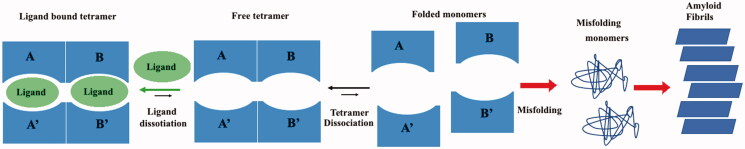
Figure 1.
Figure 1.
Graphic representation of TTR aggregation pathway.
Figure 2.
Figure 2.
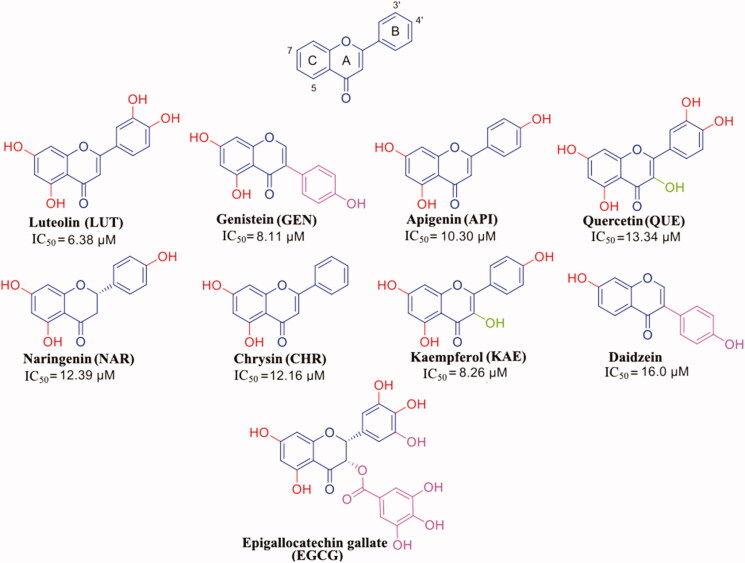
Flavonoids: general formula of the flavonoids selected in this review.
Figure 3.
Figure 3.
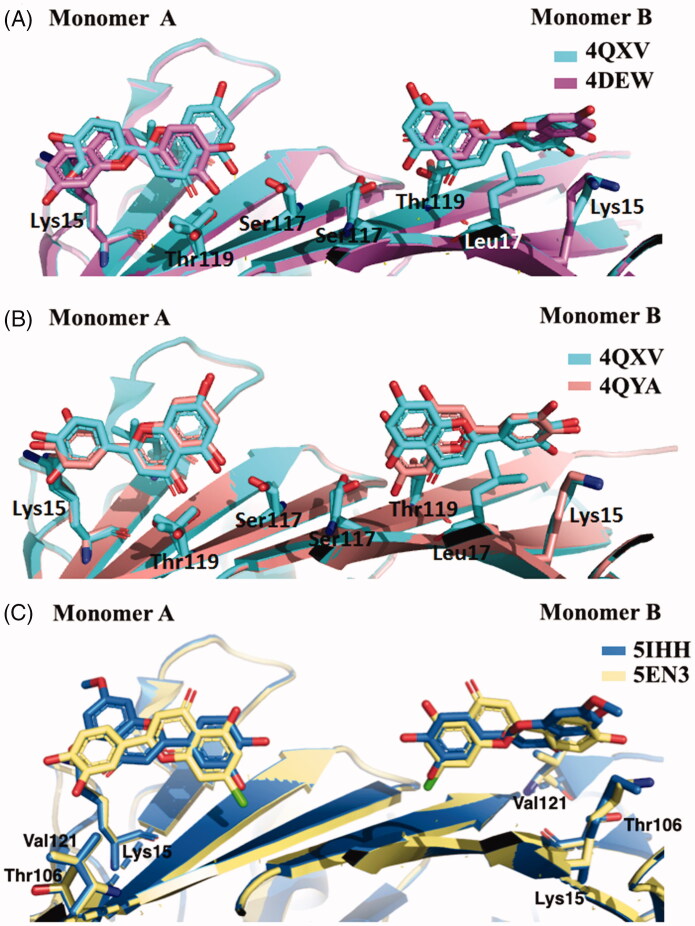
Comparison of the five LUT-TTR crystal structures. (A) Superimposition of 4QXV and 4DEV, the two crystal structures of wt-TTR in complex with LUT. (B) Comparison between wt-TTR-LUT (4QXY) versus V30M-TTR-LUT (4QYA). (C) Superposition of two LUT derivatives in complex with TTR.
Figure 4.
Figure 4.
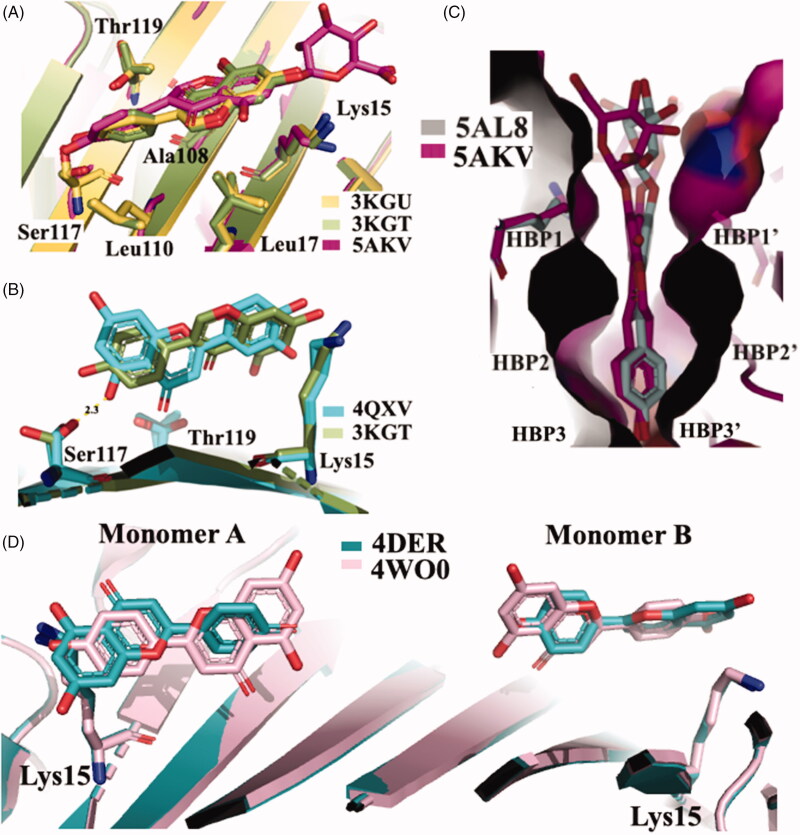
Comparison of isoflavones derivatives and their metabolites. (A) Superimposition of GEN in complex with wt-TTR (3KGU), GEN in complex with TTR mutant V30M (3KGT), and genistein 7-O glucuronide complexed with wt-TTR (5AKV). (B) Structural analysis of TTR-LUT crystal structure (4QXV) and the TTR mutant V30M in complex with GEN (3KGT). (C) Comparison between the crystal structures of the two glucuronide metabolites of daidzein (5AL8) and genistein (5AKL) in complex with wt-TTR. (D) Superposition of the two TTR-API crystal complexes present in the PDB data bank.
Figure 5.
Figure 5.
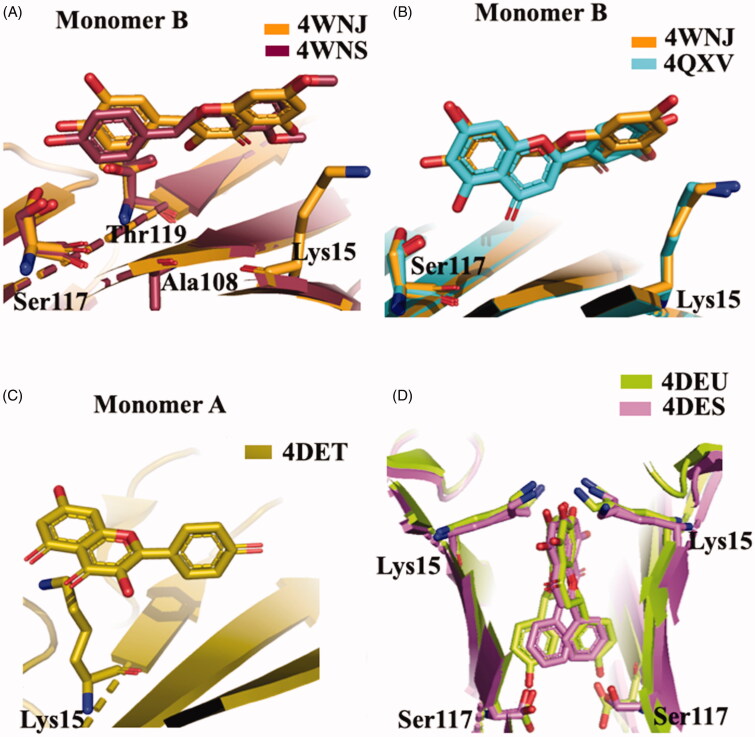
Structural analysis of quercetin (4WNJ), pterostilbene (4WNS), kaempferol (4DET), naringenin (ADEU), and Chrysin (4DES) in complex with TTR. (A) Comparison between QUE pterostilbene crystal structures. (B) Superposition between QUE and LUT crystal structures. C Graphic representation of TTR-KAE crystal complex. (D) Superposition between NAR and CHR crystal structures.
Figure 6.
Figure 6.
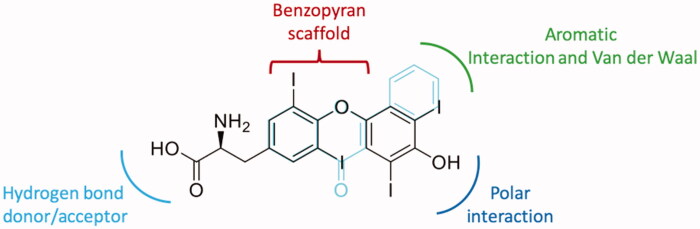
Comparison between flavonoids structure and endogenous T4 ligand.
Figure 7.
Figure 7.
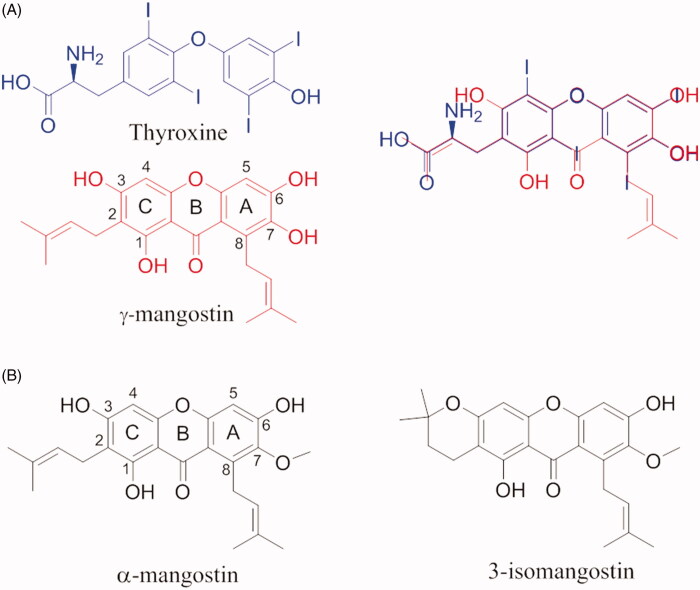
Chemical structure of thyroxine, α, γ and 3-isomangostin and their graphical superposition.
Figure 8.
Figure 8.
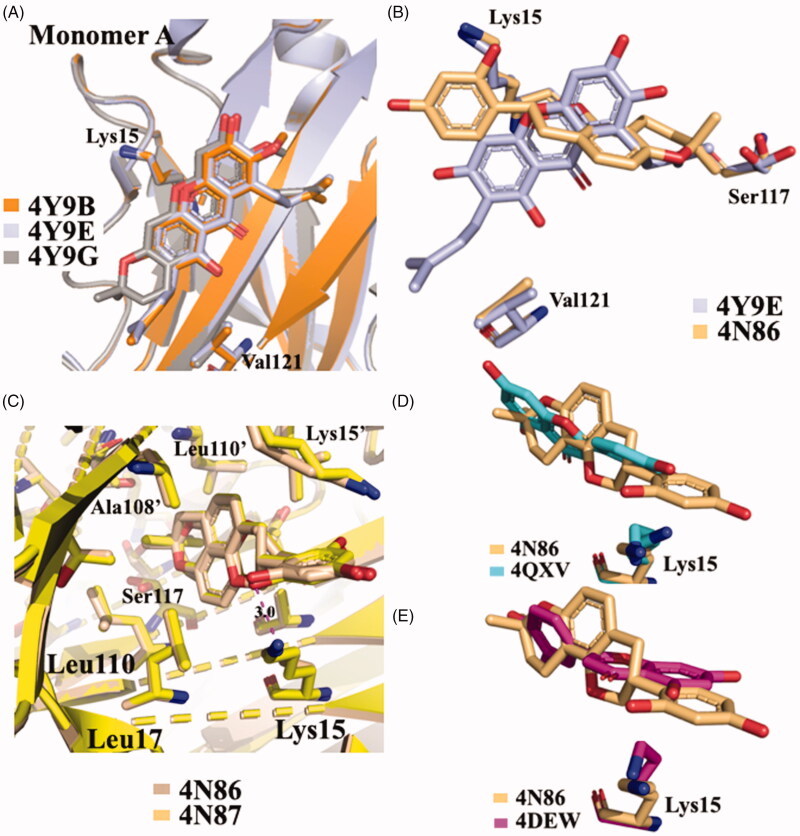
Structural analysis of xanthonoid and isoflavanes derivatives. (A) Superposition of V30MTTR-α-M (4Y9B), V30MTTR-γ-M (4Y9E), and V30MTTR-3-isomangostin (4Y9G). (B) Diagonal binding mode of γ-M compare to glabridin (4Y9E versus 4N86). (C) Comparison between TTR-glabridin crystal complex wild type and V30M mutant, 4N86, and 4N87, respectively. (D and E) Superposition of ligands in wt-TTR-glabridin and the two deposited structures of TTR-LUT deposited in the PDB data bank.
Figure 9.
Figure 9.
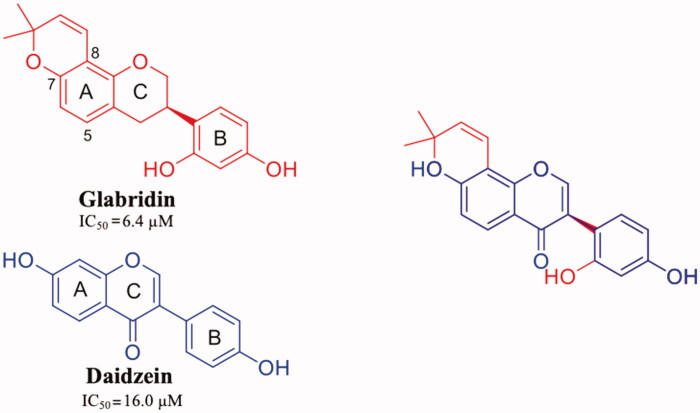
Chemical structure of glabridrin and daidzein, and their graphical superposition.
Figure 10.
Figure 10.
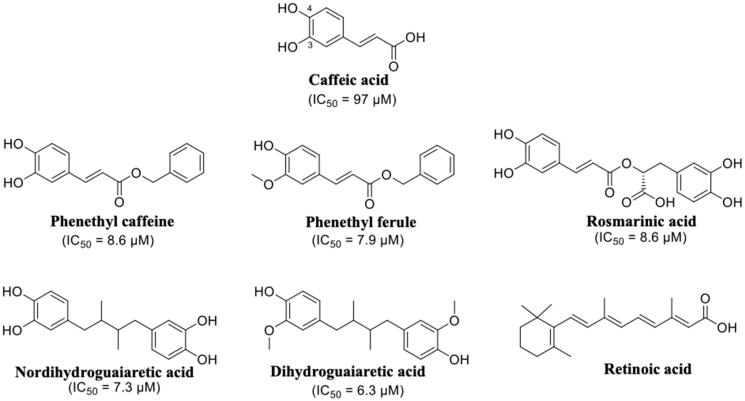
Chemical structures of caffeic acid, its ester derivatives, NDGA, and dihydroguaiaretic acid.
Figure 11.
Figure 11.
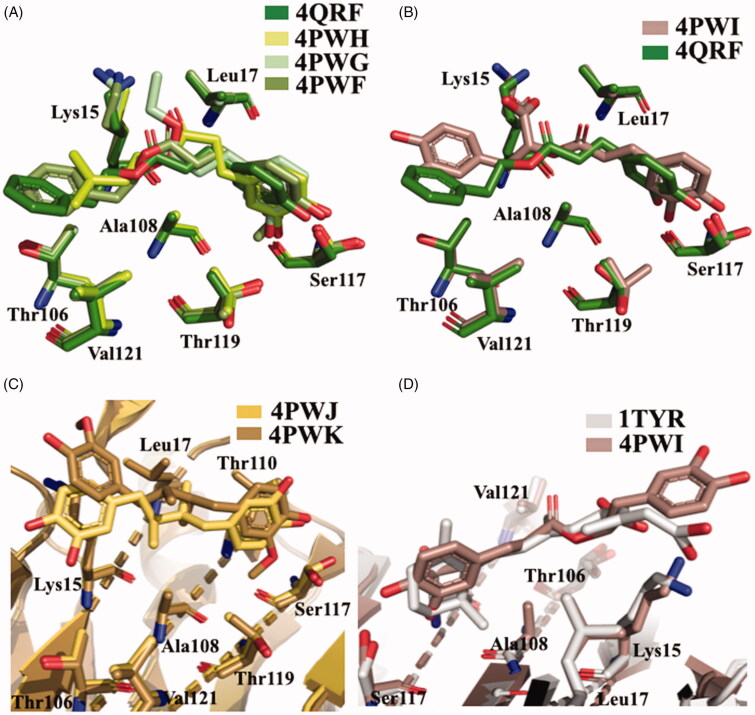
Structure analysis of caffeic acid, its derivatives, NDGA, and dihydroguaiaretic acid. (A) Superposition of V30MTTR-CAPE (4QRF), V30MTTR-1,1-dimethylallyl caffeate (4PWH), V30MTTR-ethyl caffeate (4PWG), and V30MTTR-phenethyl ferulate (4PWF) crystal complexes. (B) Comparison between V30MTTR-CAPE and V30MTTR-rosmarinic acid (4PWI) crystal complexes. (C) Superposition between V30MTTR-NDGA (4PWJ) and V30MTTR-dihydroguaiaretic acid (4PWK). (D) Superposition of V30MTTR-rosmarinic acid and TTR-retinoic acid (1TYR).
Figure 12.
Figure 12.
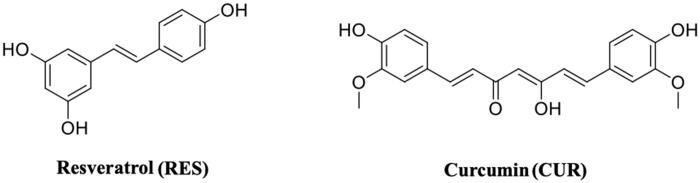
Molecular structures of resveratrol and curcumin.
Figure 13.
Figure 13.
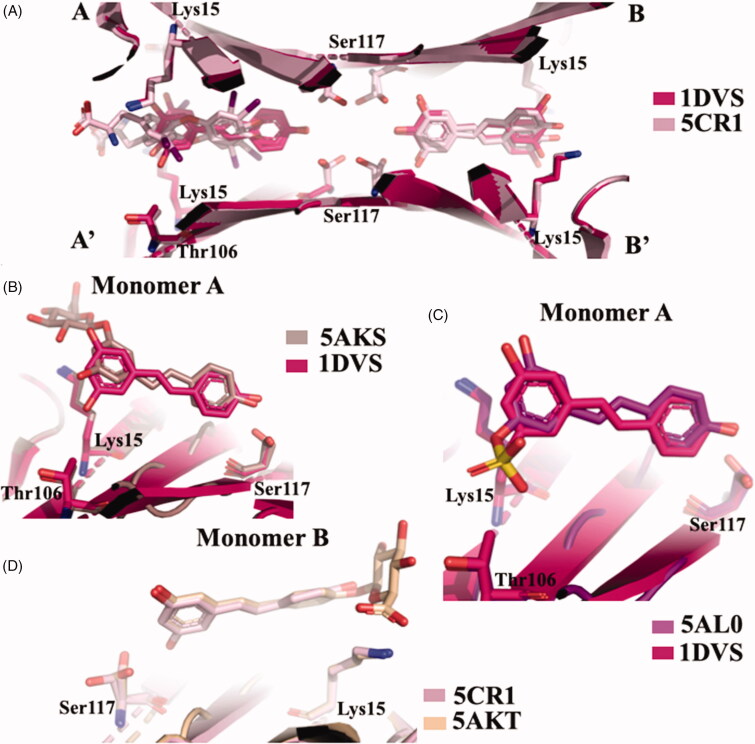
Structure analysis of resveratrol and its metabolic derivatives. (A) Superposition between the two crystal structures TTR-RES deposited at PDB (1DVS versus 5CR1). (B) Comparison between TTR-3-O-glucuronide complex (5AKS) and TTR-RES (1DVS). (C) Superposition of TTR-4’-O-glucuronide crystal complex (5AKT) and TTR-RES (5CR1). (D) Superposition of TTR-3-O-sulphate complex (5AL0) and TTR-RES (1DVS).
Figure 14.
Figure 14.
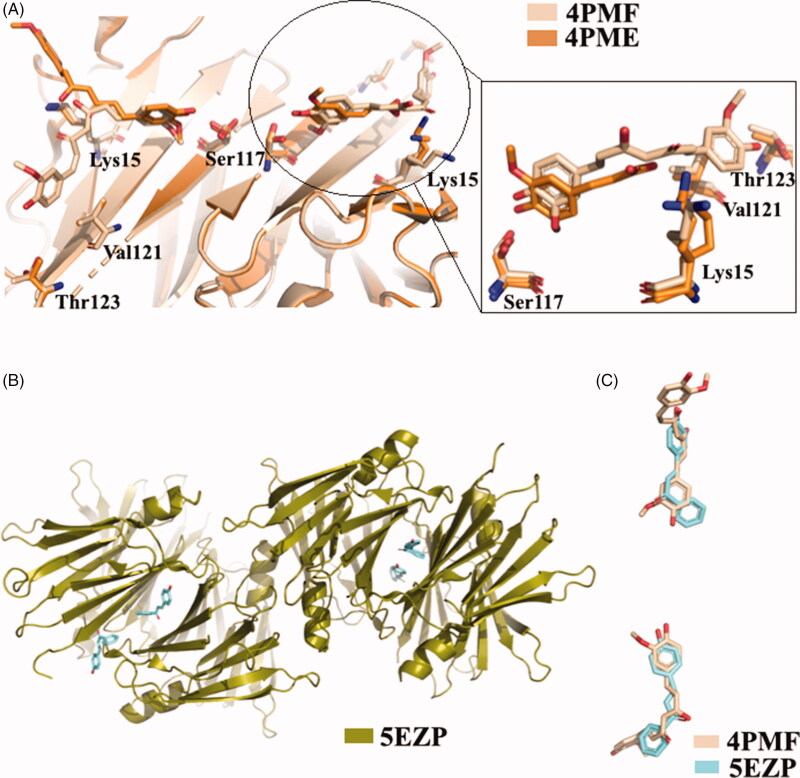
Structural analysis of TTR in complex with CUR, ferulic acid, and 4-hydroxychalcone derivatives. (A) Superposition of the two different TTR-CUR crystal complex 4PMF versus 4PME. (B) Asymmetric unit of trigonal TTR crystal in complex with hydroxychalcone derivative. (C) Comparison between curcumin and 4-hydroxychalcone ligand.

References

    1. Gordon MH. Dietary antioxidants in disease prevention. Nat Prod Rep 1996;13:265–73. - PubMed
    1. Ebrahimi A, Schluesener H.. Natural polyphenols against neurodegenerative disorders: potentials and pitfalls. Ageing Res Rev 2012;11:329–45. - PubMed
    1. Kamal M, Naz M, Jawaid T, Arif M.. Natural products and their active principles used in the treatment of neurodegenerative diseases: a review. Orient Pharm Exp Med 2019;19:343–23.
    1. Pandey KB, Rizvi SI.. Current understanding of dietary polyphenols and their role in health and current understanding of dietary polyphenols and their role in health and disease. Curr Nutr Food Sci 2009;5: 249–263.
    1. Hung H, Joshipura KJ, Jiang R, et al. Fruit and vegetable intake and risk of major chronic disease. J Natl Cancer Inst 2004;96:1577–84. - PubMed

MeSH terms

Supplementary concepts