Review
. 2020 Apr;10(2):325-335.
doi: 10.21037/cdt.2019.05.03.

Detection and management of arrhythmias in peripartum cardiomyopathy

Affiliations
Review

Detection and management of arrhythmias in peripartum cardiomyopathy

Julian Hoevelmann et al. Cardiovasc Diagn Ther. 2020 Apr.

Abstract

Peripartum cardiomyopathy (PPCM) is an idiopathic dilated cardiomyopathy, in which previously healthy women present with heart failure secondary to left ventricular (LV) systolic dysfunction during the last months of pregnancy or up to 5 months postpartum. PPCM occurs worldwide. The incidence seems to be increasing, possibly due to increasing awareness of the condition and diagnosis thereof. Women diagnosed with PPCM present with symptoms and signs of heart failure, thromboembolism or arrhythmia. Although the incidence of arrhythmias in this condition is not well documented, patients with PPCM often have rhythm disturbances. Indeed, life-threating arrhythmias contribute significantly to sudden cardiac death (SCD) in this population, especially when patients have poor systolic function. In this review, we summarize the evidence on atrial and ventricular arrhythmias in PPCM, as detected by various diagnostic modalities. Furthermore, we summarize the management of arrhythmias in PPCM, as recommended by contemporary guidelines.

Keywords: Ambulatory electrocardiographic monitoring (AECG); arrhythmia; cardioverter-defibrillator; electrocardiogram (ECG); peripartum cardiomyopathy (PPCM).


Conflict of interest statement

Conflicts of Interest: All authors have completed the ICMJE uniform disclosure form (available at http://dx.doi.org/10.21037/cdt.2019.05.03). The series “Cardiovascular Diseases in Low-and Middle-Income Countries” was commissioned by the editorial office without any funding or sponsorship. The authors have no conflicts of interest to declare.

Figures
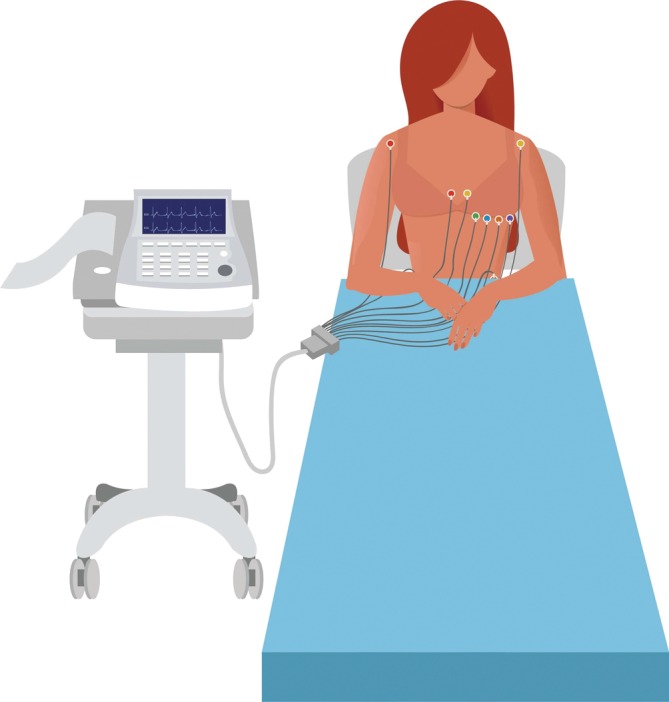
Figure 1
Figure 1
The 12-lead electrocardiogram forms part of the routine work-up of all patients who are diagnosed with peripartum cardiomyopathy. The test is non-invasive, widely available, inexpensive and easily performed.
Figure 2
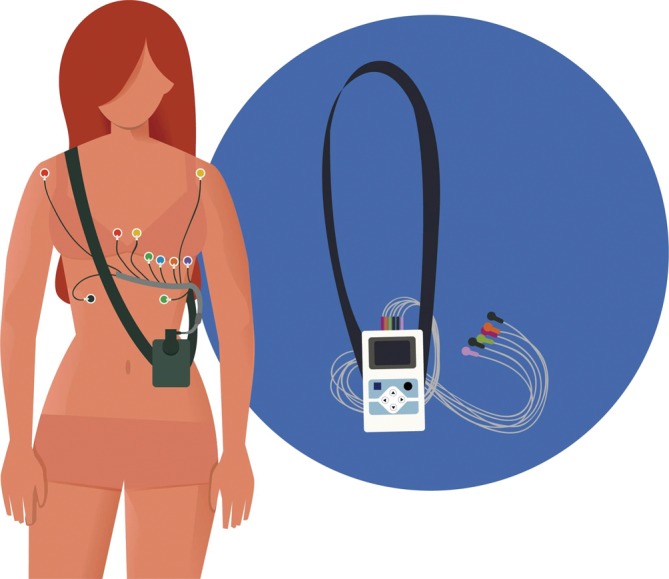
Figure 2
The Holter ECG is a form of continuous ambulatory ECG monitoring, which typically records data for 24 to 48 hours. The Holter ECG has a good yield of arrhythmias, but only if they occur frequently. ECG, electrocardiogram.
Figure 3
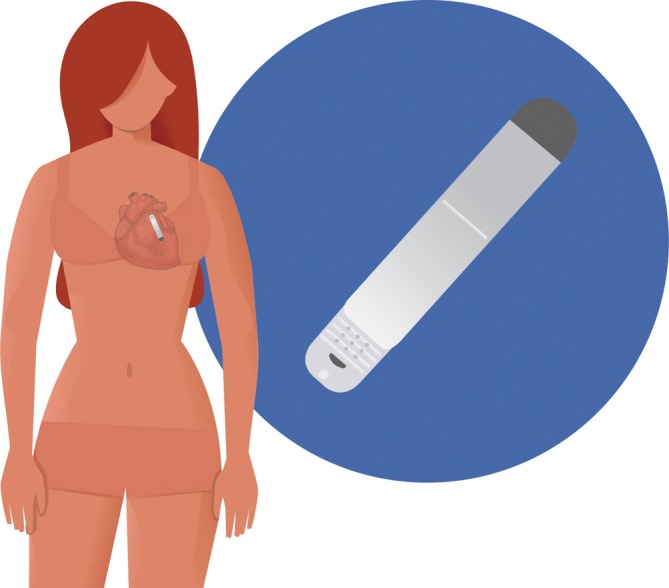
Figure 3
The implantable loop recorder (ILR) is a form of intermittent ambulatory ECG monitoring, which is implanted subcutaneously and can record up to 3 years’ data. ILRs should be considered when arrhythmias are thought to occur infrequently and when the Holter ECG is non-revealing. ECG, electrocardiogram.
Figure 4
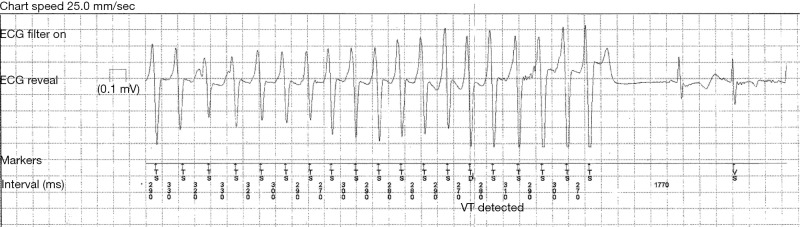
Figure 4
An episode of non-sustained ventricular tachycardia (VT) as recorded by an implantable loop recorder in a patient with peripartum cardiomyopathy. The non-sustained VT is recognised by the wide QRS complexes with short RR intervals (on the left). The last two beats (on the right) represent sinus rhythm with narrow QRS complexes.
Figure 5
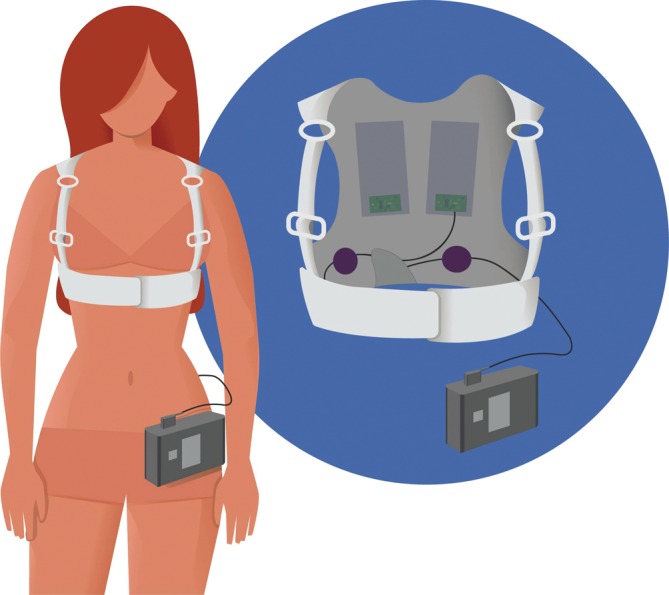
Figure 5
The wearable cardioverter-defibrillator (WCD) is a non-invasive device that is worn by patients with LVEF <35%. The WCD is able to deliver biphasic shocks when a life-threatening arrhythmia is detected and could be used as a ‘bridging’ strategy during the first 6 months of vulnerability to sudden cardiac death in PPCM, before a final decision towards implantable cardioverter-defibrillator (ICD) is made. PPCM, peripartum cardiomyopathy; LVEF, left ventricular ejection fraction.
Figure 6
Figure 6
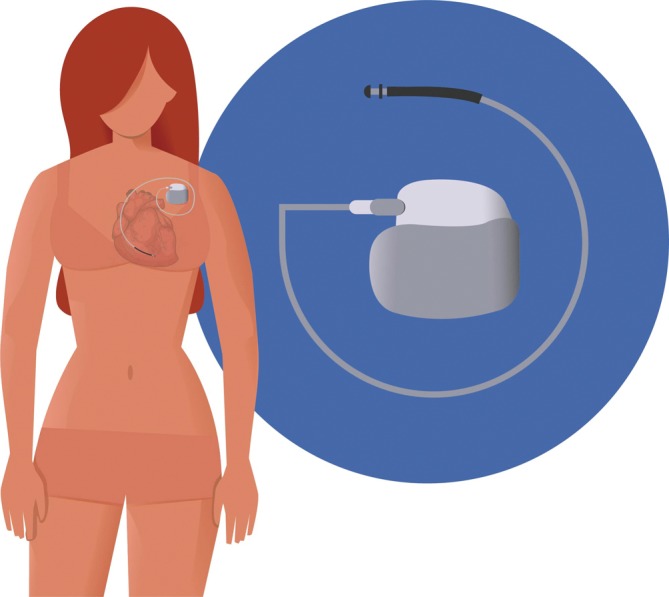
The implantable cardioverter defibrillator (ICD) delivers shocks when life-threatening arrhythmias are detected. In PPCM, ICD therapy is best reserved for patients without LV recovery (usually LVEF <35%) at follow-up. PPCM, peripartum cardiomyopathy; LV, left ventricular; LVEF, left ventricular ejection fraction.

References

    1. Sliwa K, Hilfiker-Kleiner D, Petrie MC, et al. Current state of knowledge on aetiology, diagnosis, management, and therapy of peripartum cardiomyopathy: a position statement from the Heart Failure Association of the European Society of Cardiology Working Group on peripartum cardiomyopathy. Eur J Heart Fail 2010;12:767-78. 10.1093/eurjhf/hfq120 - DOI - PubMed
    1. Isezuo SA, Abubakar SA. Epidemiologic profile of peripartum cardiomyopathy in a tertiary care hospital. Ethn Dis 2007;17:228-33. - PubMed
    1. Fett JD, Christie LG, Carraway RD, et al. Five-year prospective study of the incidence and prognosis of peripartum cardiomyopathy at a single institution. Mayo Clin Proc 2005;80:1602-6. 10.4065/80.12.1602 - DOI - PubMed
    1. Desai D, Moodley J, Naidoo D. Peripartum cardiomyopathy: experiences at King Edward VIII Hospital, Durban, South Africa and a review of the literature. Trop Doct 1995;25:118-23. 10.1177/004947559502500310 - DOI - PubMed
    1. Brar SS, Khan SS, Sandhu GK, et al. Incidence, mortality, and racial differences in peripartum cardiomyopathy. Am J Cardiol 2007;100:302-4. 10.1016/j.amjcard.2007.02.092 - DOI - PubMed