


A randomized clinical trial of a group cognitive-behavioral therapy to reduce alcohol use among human immunodeficiency virus-infected outpatients in western Kenya
- PMID: 32422685
- PMCID: PMC7671944
- DOI: 10.1111/add.15112
A randomized clinical trial of a group cognitive-behavioral therapy to reduce alcohol use among human immunodeficiency virus-infected outpatients in western Kenya
Abstract
Background and aims: Culturally relevant and feasible interventions are needed to address limited professional resources in sub-Saharan Africa for behaviorally treating the dual epidemics of HIV and alcohol use disorder. This study tested the efficacy of a cognitive-behavioral therapy (CBT) intervention to reduce alcohol use among HIV-infected outpatients in Eldoret, Kenya.
Design: Randomized clinical trial.
Setting: A large HIV outpatient clinic in Eldoret, Kenya, affiliated with the Academic Model Providing Access to Healthcare collaboration.
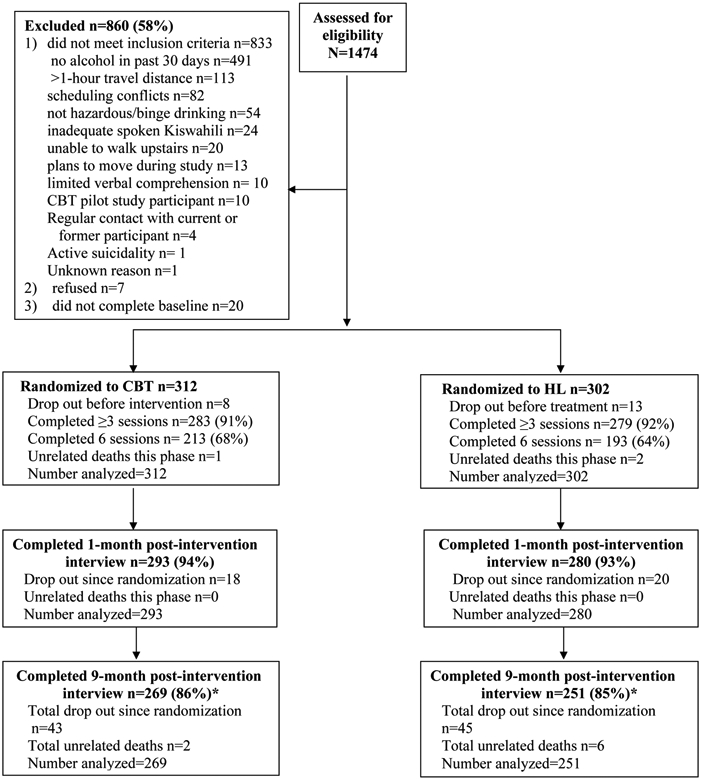
Participants: A total of 614 HIV-infected outpatients [312 CBT; 302 healthy life-styles (HL); 48.5% male; mean age: 38.9 years; mean education 7.7 years] who reported a minimum of hazardous or binge drinking.
Intervention and comparator: A culturally adapted six-session gender-stratified group CBT intervention compared with HL education, each delivered by paraprofessionals over six weekly 90-minute sessions with a 9-month follow-up.
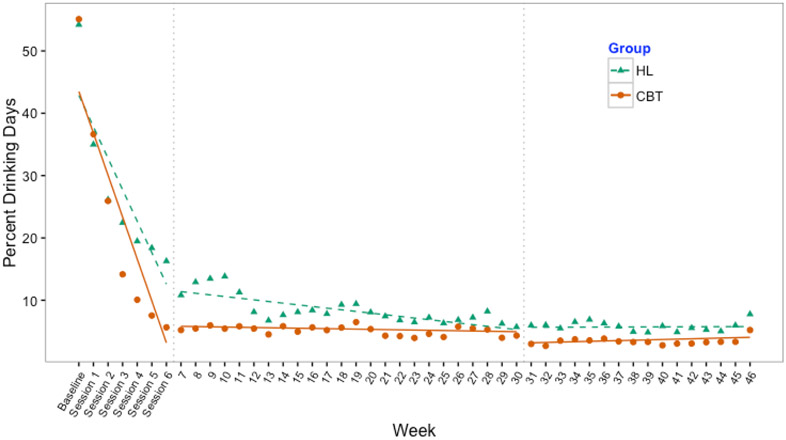
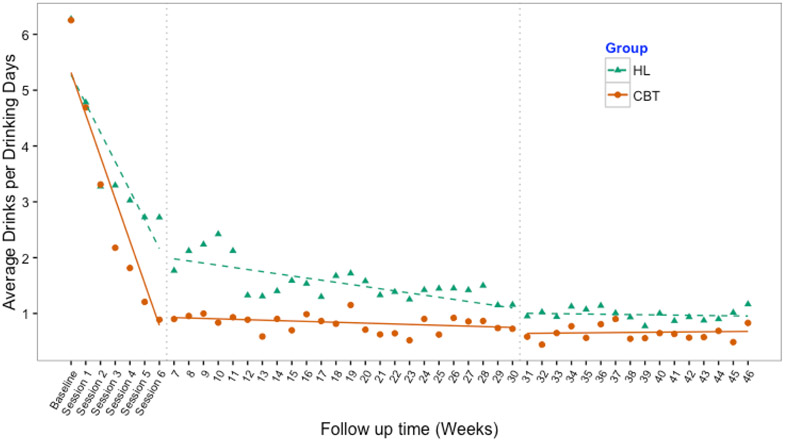
Measurements: Primary outcome measures were percentage of drinking days (PDD) and mean drinks per drinking day (DDD) computed from retrospective daily number of drinks data obtained by use of the time-line follow-back from baseline to 9 months post-intervention. Exploratory analyses examined unprotected sex and number of partners.
Findings: Median attendance was six sessions across condition. Retention at 9 months post-intervention was high and similar by condition: CBT 86% and HL 83%. PDD and DDD marginal means were significantly lower in CBT than HL at all three study phases. Maintenance period, PDD - CBT = 3.64 (0.696), HL = 5.72 (0.71), mean difference 2.08, 95% confidence interval (CI) = 0.13 - 4.04; DDD - CBT = 0.66 (0.96), HL = 0.98 (0.098), mean difference = 0.31, 95% CI = 0.05 - 0.58. Risky sex decreased over time in both conditions, with a temporary effect for CBT at the 1-month follow-up.
Conclusions: A cognitive-behavioral therapy intervention was more efficacious than healthy lifestyles education in reducing alcohol use among HIV-infected Kenyan outpatient drinkers.
Keywords: Alcohol; HIV; Kenya; cognitive-behavioral therapy; paraprofessional; randomized clinical trial.
© 2020 Society for the Study of Addiction.
Conflict of interest statement
We have no conflicts of interest to report
Figures
References
-
- (UNAIDS) UNAIDS. The Joint United Nations Programme on HIV/AIDS. The Gap Report 2014. [Available from: http://files.unaids.org/en/media/unaids/contentassets/documents/unaidspu....
-
- Othieno CJ, Kathuku DM, Ndetei DM. Substance abuse in outpatients attending rural and urban health centres in Kenya. East Afr Med J. 2000;77(11):592–5. - PubMed
-
- Saunders JB, Aasland OG, Amundsen A, Grant M. Alcohol consumption and related problems among primary health care patients: WHO Collaborative Project on Early Detection of Persons with Harmful Alcohol Consumption-I. Addiction. 1993;88:349–62. - PubMed
-
- World Health Organization. The Alcohol Use Disorders Identification Test: Guidelines for primary care. Geneva, WHO; 2001.
Publication types
MeSH terms
Grants and funding
LinkOut - more resources
Full Text Sources
Medical
Research Materials
