. 2020 May 14;9(5):424.
doi: 10.3390/antiox9050424.

Antioxidant Effects of Walnut (Juglans regia L.) Kernel and Walnut Septum Extract in a D-Galactose-Induced Aging Model and in Naturally Aged Rats

Affiliations

Antioxidant Effects of Walnut (Juglans regia L.) Kernel and Walnut Septum Extract in a D-Galactose-Induced Aging Model and in Naturally Aged Rats

Marius Emil Rusu et al. Antioxidants (Basel). .

Abstract

Antioxidant dietary intervention is considered a potential strategy in delaying age-related dysfunctions. In this study of 56 days, we assessed the antioxidant effects of walnut kernel (WK) and walnut septum extract (WSE) in a D-galactose (D-gal)-induced aging model and in a naturally aged rat model. Young Wistar rats, treated with D-gal (1200 mg/week), and old rats received daily WK or WSE added to the feed. After 8 weeks, blood, liver, and brain samples were collected and hematological, biochemical, oxidative stress biomarkers, histological, and immunohistochemical analyses were performed. Moreover, acetylcholinesterase activity was investigated in brain homogenates. The outcomes demonstrated significant improvement in cellular antioxidant activity and/or decrease of reactive oxygen species, advanced glycation end products, nitric oxide, malondialdehyde, or increase of glutathione after WK or WSE intake in both models. Additionally, WSE showed hypoglycemic effect, and both WK and WSE lowered acetylcholinesterase activity. Both diets could protect neurons against the induced senescence and could reverse the pathological conditions in the physiological aged brain. Thus, dietary supplementation with WK or WSE can maintain the liver and brain health and reduce the risk of age-related diseases, as well as delaying the onset of aging processes.

Keywords: AGEs; ROS; acetylcholinesterase; antiaging; brain; by-products; immunohistochemistry; liver; malondialdehyde; oxidative stress.


Conflict of interest statement

The authors declare no conflict of interest.

Figures
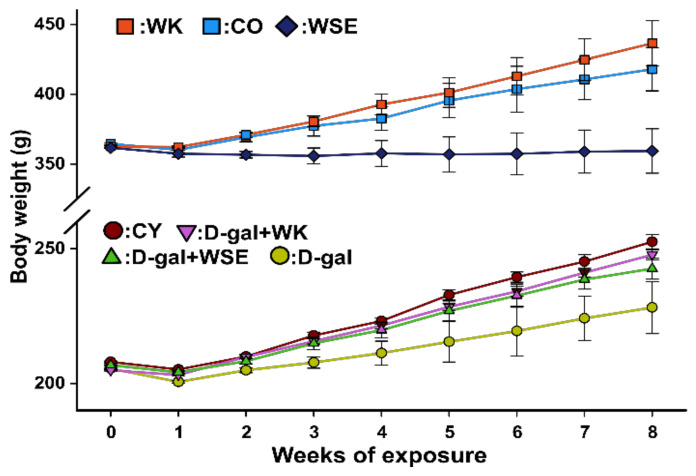
Figure 1
Figure 1
Body weight variation in D-gal-induced aging and naturally aged rats (n = 8) during the experiment (CO—control old; WK—walnut kernel; WSE—walnut septum extract; CY—control young; D-gal—D-galactose).
Figure 2
Figure 2
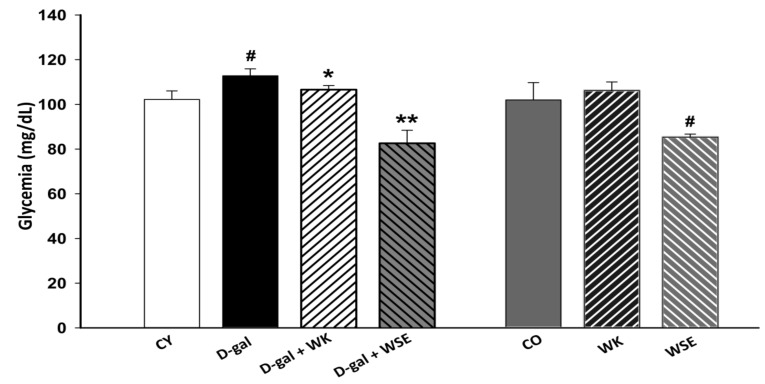
Glycemia levels in D-gal-induced aging and naturally aged rats (values expressed as mean ± SD; n = 8); # p < 0.05 compared to CY or CO; * p < 0.05 in D-gal + WK and ** p < 0.01 in D-gal + WSE compared to D-gal group (CO—control old; CY—control young; D-gal—D-galactose; WK—walnut kernel; WSE—walnut septum extract).
Figure 3
Figure 3
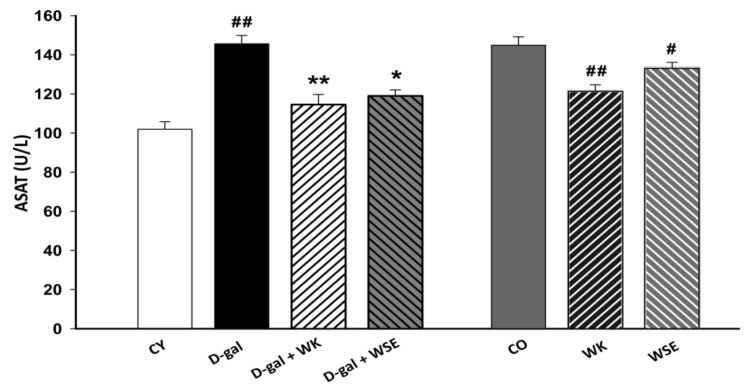
ASAT levels in D-gal-induced aging and naturally aged rats (values expressed as mean ± SD; n = 8); # p < 0.05 and ## p < 0.01 compared to CY or CO; * p < 0.05 and ** p < 0.01 compared to D-gal group (CO—control old; CY—control young; D-gal—D-galactose; WK—walnut kernel; WSE—walnut septum extract).
Figure 4
Figure 4
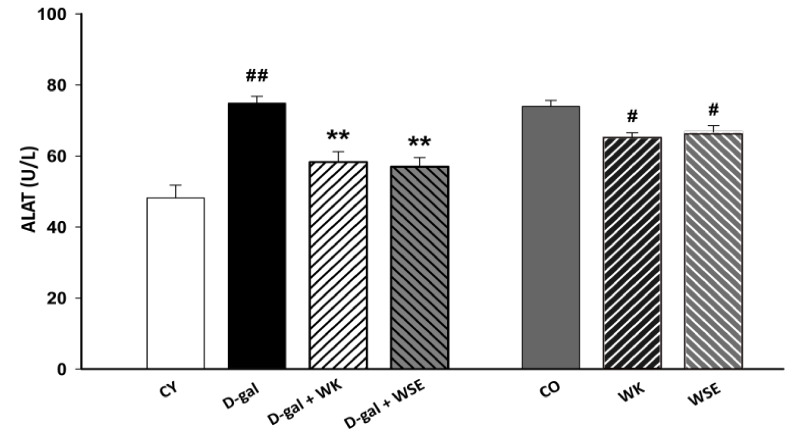
ALAT levels in D-gal-induced aging and naturally aged rats (values expressed as mean ± SD; n = 8); # p < 0.05 and ## p < 0.01 compared to CY or CO; * p < 0.05 and ** p < 0.01 compared to D-gal group (CO—control old; CY—control young; D-gal—D-galactose; WK—walnut kernel; WSE—walnut septum extract).
Figure 5
Figure 5
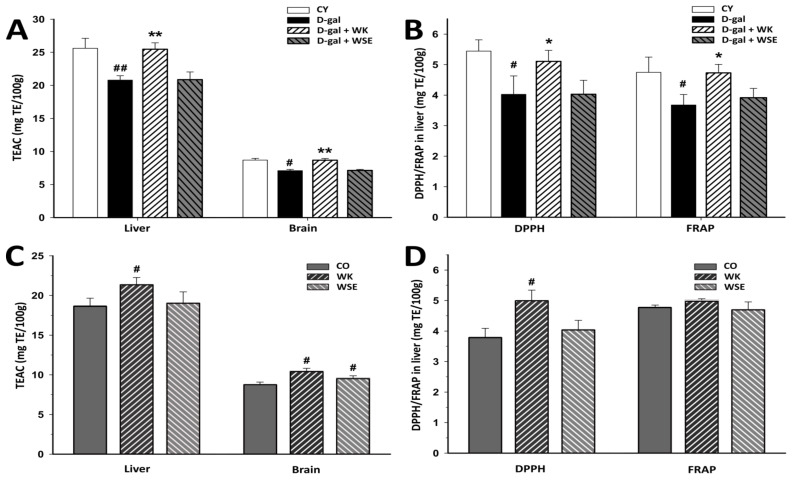
The effects of walnut kernels (WK) and a walnut septum extract (WSE) on antioxidant activity (values expressed as mean ± SD; n = 5); # p < 0.05 and ## p < 0.01 compared to control; * p < 0.05 and ** p < 0.01 compared to D-gal group (CO—control old; CY—control young; D-gal—D-galactose). (A) TEAC in D-gal-induced aging model; (B) DPPH/FRAP (in liver) in D-gal-induced aging model; (C) TEAC in naturally aged rats; (D) DPPH/FRAP (in liver) in naturally aged rats.
Figure 6
Figure 6
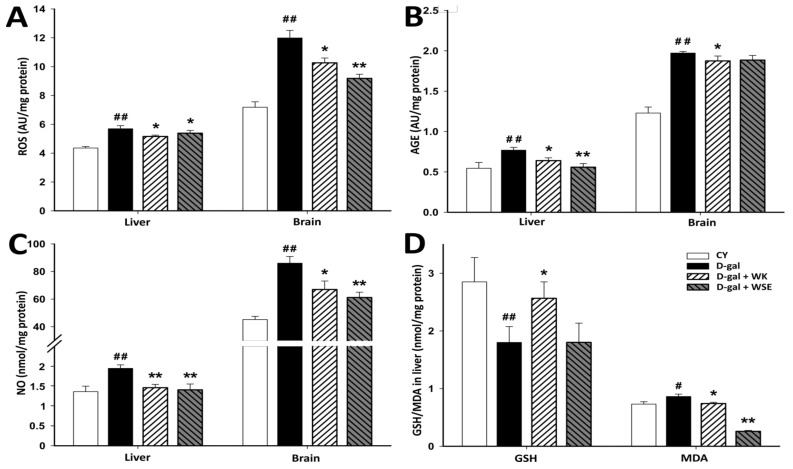
The effects of walnut kernels (WK) and a walnut septum extract (WSE) on oxidative stress biomarkers in D-gal-induced aging model (values expressed as mean ± SD; n = 5); # p < 0.05 and ## p < 0.01 compared to CY; * p < 0.05 and ** p < 0.01 compared to D-gal group (AGE – advanced glycation end products; CO—control old; CY—control young; D-gal—D-galactose; GSH—total glutathione; MDA—total malondialdehyde; NO—total nitric oxide; ROS—reactive oxygen species). (A) ROS; (B) AGE; (C) NO; (D) GSH/MDA in liver.
Figure 7
Figure 7
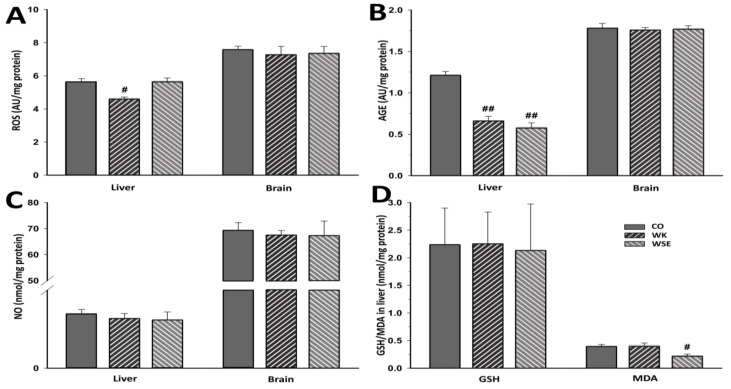
The effects of walnut kernels (WK) and a walnut septum extract (WSE) on oxidative stress biomarkers in naturally aged rats (values expressed as mean ± SD; n = 5); # p < 0.05 and ## p < 0.01 compared to CO (AGE – advanced glycation end products; CO—control old; GSH—total glutathione; MDA—total malondialdehyde; NO—total nitric oxide; ROS—reactive oxygen species). (A) ROS; (B) AGE; (C) NO; (D) GSH/MDA in liver.
Figure 8
Figure 8
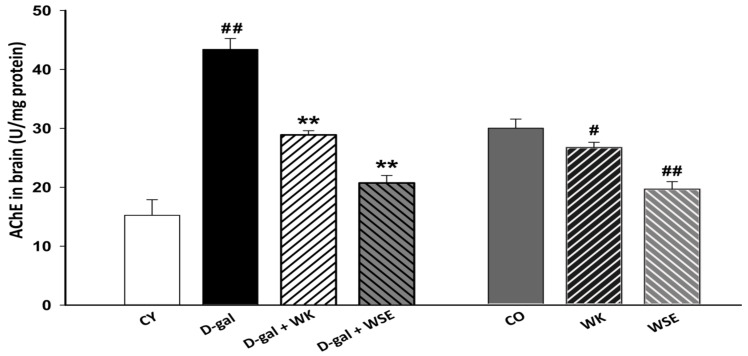
AChE level in the brain of D-gal-induced aging and naturally aged rats (values expressed as mean ± SD; n = 5); # p < 0.05 and ## p < 0.01 compared to CO or CY; ** p < 0.01 in D-gal + WK and D-gal + WSE compared to D-gal group (CO—control old; CY—control young; D-gal—D-galactose; WK—walnut kernel; WSE—walnut septum extract).
Figure 9
Figure 9
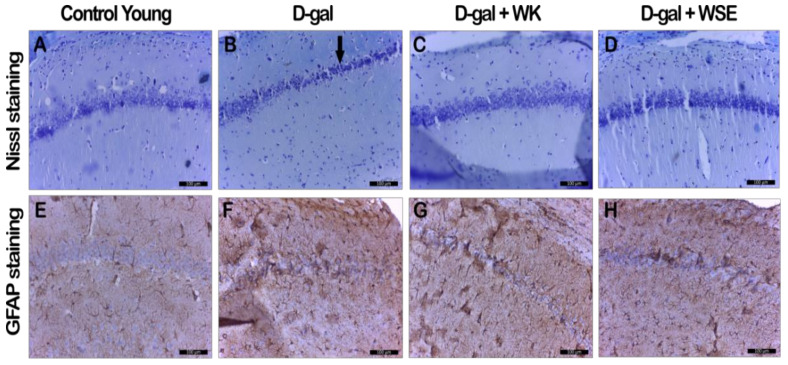
Histopathological and immunohistochemical changes observed in D-gal-induced aging rat groups in hippocampal CA1 region (D-gal—D-galactose; GFAP– glial fibrillary acidic protein; WK—walnut kernel; WSE—walnut septum extract). (AD) Nissl staining; (EH) GFAP staining.
Figure 10
Figure 10
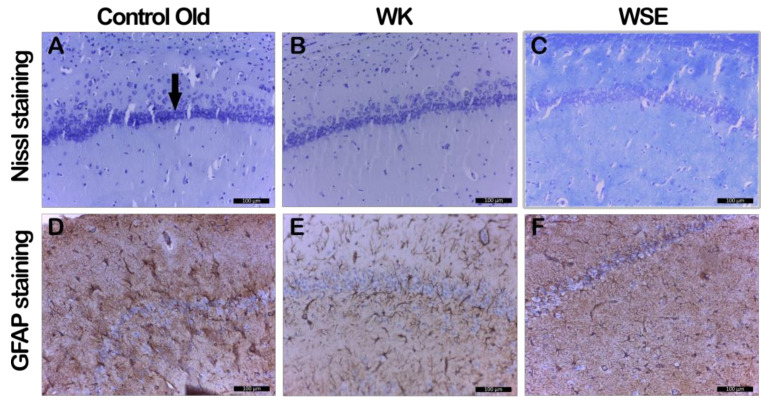
Histopathologic and immunohistochemical changes in naturally aged rats in CA1 region (GFAP– glial fibrillary acidic protein; WK—walnut kernel; WSE—walnut septum extract). (AC) Nissl staining; (DF) GFAP staining.
Figure 11
Figure 11
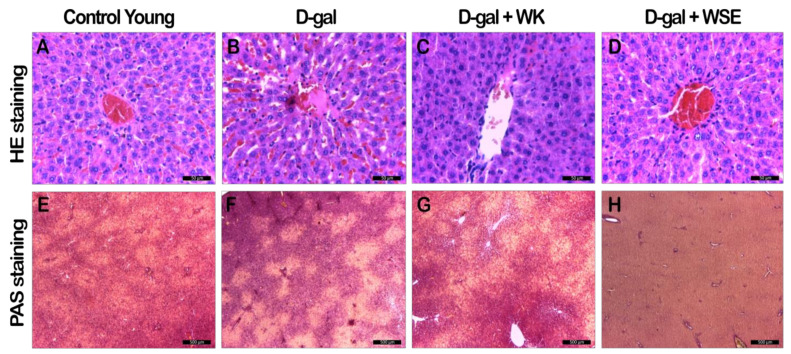
Hepatic HE and PAS staining analyses in D-gal-induced aging rat groups (D-gal—D-galactose; HE – hematoxylin-eosin; PAS – periodic acid-Schiff; WK—walnut kernel; WSE—walnut septum extract). (AD) HE staining; (EH) PAS staining.

References

    1. Zubair H., Azim S., Ahmad A., Khan M.A., Patel G.K., Singh S., Singh A.P. Cancer chemoprevention by phytochemicals: Nature’s healing touch. Molecules. 2017;22:395. doi: 10.3390/molecules22030395. - DOI - PMC - PubMed
    1. Rusu M.E., Mocan A., Ferreira I.C.F.R., Popa D.-S. Health Benefits of Nut Consumption in Middle-Aged and Elderly Population. Antioxidants. 2019;8:302. doi: 10.3390/antiox8080302. - DOI - PMC - PubMed
    1. Alasalvar C., Bolling B. Review of nut phytochemicals, fat-soluble bioactives, antioxidant components and health effects. Br. J. Nutr. 2015;113:S68–S78. doi: 10.1017/S0007114514003729. - DOI - PubMed
    1. Oliveira I., Sousa A., Ferreira I.C.F.R., Bento A., Estevinho L., Pereira J.A. Total phenols, antioxidant potential and antimicrobial activity of walnut (Juglans regia L.) green husks. Food Chem. Toxicol. 2008;46:2326–2331. doi: 10.1016/j.fct.2008.03.017. - DOI - PubMed
    1. Vieira V., Prieto M.A., Barros L., Coutinho J.A.P., Ferreira O., Ferreira I.C.F.R. Optimization and comparison of maceration and microwave extraction systems for the production of phenolic compounds from Juglans regia L. for the valorization of walnut leaves. Ind. Crop. Prod. 2017;107:341–352. doi: 10.1016/j.indcrop.2017.06.012. - DOI

LinkOut - more resources